
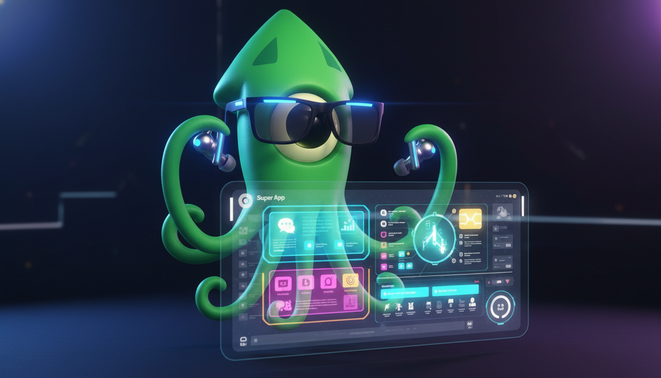
Wearable AI and the Evolving AI Ecosystem: From Wearables to Super Apps
The world is shifting away from interaction based on screens. We are moving toward a future of ambient computing. In this landscape, Wearable AI and the Evolving AI Ecosystem will redefine daily life. Technology now fits into smart glasses and earwear. This trend marks a departure from traditional handheld devices.
Instead of clicking buttons, users engage with technology through natural voice and vision. According to data from Fortune Business Insights, the market shows massive growth potential. Analysts expect the sector to grow from 62.7 billion dollars in 2024 to 359.3 billion dollars by 2034. (Fortune Business Insights) Such rapid expansion highlights the rising demand for seamless integration.
Therefore, the focus is shifting from simple hardware to complete software ecosystems. Consequently, these devices act as portals to advanced super apps. Because of this change, digital assistants are becoming more proactive. This transition allows AI agents to manage complex tasks autonomously.
As a result, personal computing is becoming invisible and constant. This article explores the forces driving this technological revolution. We will examine how hardware and software merge into a single intelligent experience.

The Hardware Struggle within the Wearable AI and the Evolving AI Ecosystem
The physical form of Wearable AI and the Evolving AI Ecosystem remains a major challenge for developers today. Creating a device that people actually want to wear requires a careful balance of style and function. For example, Meta found significant success with its Ray Ban Meta glasses. These glasses look like standard eyewear but offer powerful multimodal assistants. Because they feel familiar, users adopt them easily into their daily routines. This success shows that hardware must fit into existing social norms to thrive.
In contrast, the Humane AI Pin faced significant hurdles throughout its short life. The device attempted to replace smartphones with a laser projector and a voice interface. However, early reviews pointed to overheating and slow response times. Consequently, Humane shut down its device business after less than a year. They eventually sold their key assets to HP to pivot away from direct consumer hardware sales according to reports from The Verge. This failure proves that novelty alone cannot sustain a product in this competitive field.
As industry experts suggest, “The winners in wearable AI will not simply be the companies that make devices smaller or more futuristic, but the ones that can make AI work reliably inside tiny hardware.” This reality explains why some firms focus on audio. Products like Drops earbuds by Maxim Surkiz and Jenna Ahart prioritize low latency voice interaction. These AI powered earbuds aim to provide a discreet way to access smart assistants. For more on this, see What are AI Powered Health and Vision Wearables secrets? – Articles.
Technological trends indicate that reliability is the most important factor for success. You can explore How Technology trends 2026 reshape AI, wearables, memory shortages? – Articles to understand these shifts better. Companies must ensure that on device AI systems perform without lag. If a wearable is too slow, users will likely return to their phones. Therefore, the ecosystem relies on hardware that disappears into the background of daily life.
| Device Name | Parent Company | Market Status or Key Feature |
|---|---|---|
| Ray Ban Meta glasses | Meta | Successful integration with multimodal assistants |
| AI Pin | Humane | Business shut down and assets sold to HP |
| Drops earbuds | Maxim Surkiz and Jenna Ahart | Focused on low latency voice interaction |
Super Apps: The Brain of the Wearable AI and the Evolving AI Ecosystem
OpenAI aims to transform ChatGPT into a comprehensive super app before its public offering. This plan involves adding advanced coding tools and autonomous AI agents. Consequently, the application will handle more than just text queries. It will perform complex tasks across various digital platforms. Because of this shift, users may rely less on separate software programs. You can follow these updates on news sites like The Verge.
Google is also making massive investments to secure its position in the market. The company agreed to pay SpaceX 30 billion dollars for massive computing power through 2029. This partnership ensures that their models have the necessary infrastructure to scale. Therefore, low latency responses will become the standard for every user. Such power is essential for real time multimodal interactions. Business outlets like CNBC frequently track these multi billion dollar deals.
Furthermore, on device AI systems are changing how we interact with hardware. Multimodal assistants like Gemini now serve as the central hubs for personal computing. These systems process voice and visual data simultaneously. As a result, the device understands the context of the physical world.
This evolution was a major theme at recent technology trade shows. Read about these updates here: How Will AI at CES 2026 Change Your Tech? – Articles.
Finally, these assistants will manage our digital lives seamlessly. They connect wearables to broader cloud services instantly. Because they learn individual habits, the experience becomes highly personalized. Consequently, the ecosystem grows stronger with every interaction.
AI Permeating Every Object
AI design is no longer limited to silicon chips and screens. High tech engineering now improves simple objects in our physical world. Specifically, the Adidas Trionda ball for the FIFA World Cup shows this shift. Designers used wind tunnel experiments to optimize its flight path. Therefore, players can expect a more predictable and stable movement in the air. This level of precision was once reserved for aerospace technology.
Similarly, the partnership between NASA and Prada pushes boundaries in apparel. Astronauts will wear high tech underwear on future moon missions. These garments feature knitted ventilation tubes to regulate body temperature. Such innovation proves that every piece of clothing can become part of a larger system.
This trend reinforces the idea that Wearable AI is ultimately not just a hardware challenge, but an ecosystem one. Because every object becomes data driven, our environment becomes smarter. You can learn more about these developments in What are AI Powered Health and Vision Wearables secrets? – Articles.
The payoff of this integration is a world where everything works better. Consequently, users enjoy products that are perfectly tuned to their needs. For deeper insights into market shifts, read How Technology trends 2026 reshape AI, wearables, memory shortages? – Articles.
Ambient intelligence will soon surround us in every room and street. As a result, the boundary between the digital and physical worlds will vanish. We are entering an era of total optimization across all industries.
CONCLUSION
The integration of AI into wearables and super apps signals a fundamental change. We are leaving behind the era of screens. Instead, we are entering a period of ambient intelligence.
This change makes human computer interaction much more natural. Because devices now understand context, technology feels more human. Consequently, the technology disappears into the background of our lives.
As a result, the digital world blends seamlessly with our physical reality. This evolution creates endless possibilities for personal and professional growth. Therefore, staying ahead requires adopting these intelligent systems early.
Employee Number Zero LLC stands at the front of this movement. They specialize in creating AI powered growth systems for businesses. Furthermore, the team builds automation workflows that improve efficiency. Because these tools handle repetitive tasks, leaders can focus on creativity. Employee Number Zero LLC helps brands navigate the evolving AI ecosystem with ease.
Visit their blog at Employee Number Zero LLC Blog for sales and marketing automation solutions. By adopting these solutions, your company can achieve its full potential. Start your journey into the future of computing today.
Frequently Asked Questions (FAQs)
How fast is the wearable AI market growing?
The market for these devices is expanding at a remarkable speed. Analysts expect the sector to grow from 62.7 billion dollars in 2024 to 359.3 billion dollars by 2034. This growth shows that consumers are ready for technology that moves beyond the smartphone screen. Because of this demand, many companies are investing heavily in new hardware and software solutions.
What exactly is an AI super app?
A super app is a single platform that offers a wide variety of services and tools. For example, OpenAI plans to turn ChatGPT into a hub that includes coding tools and autonomous agents. Instead of using many different applications, you can manage your digital life in one place. Therefore, these platforms become the primary interface for users in the evolving ecosystem.
How do AI agents change the way we use technology?
AI agents are proactive assistants that can perform complex tasks on your behalf. They do not just wait for a command; they anticipate your needs based on context. Consequently, these agents can handle scheduling, research, or even technical coding projects without constant supervision. This transition represents a major shift toward autonomous digital help.
Why are on device AI systems important for wearables?
On device systems process data directly on the hardware instead of relying only on the cloud. This approach reduces latency and ensures that voice and vision interactions happen in real time. Because the AI works locally, it also improves user privacy and device reliability. As a result, wearables become much more useful for daily activities.
What role does ambient computing play in the future?
Ambient computing refers to a world where technology is always present but mostly invisible. It relies on sensors, voice control, and smart objects to assist users without requiring a handheld screen. Therefore, the boundary between the physical and digital worlds starts to disappear. This creates a seamless environment where intelligence is built into every interaction.