
How Generative AI and Process Automation Save Millions
In 2026, business survival comes down to a simple choice. Consequently, you must either integrate your systems or risk falling behind. Indeed, inefficiencies cost enterprise companies millions of dollars every single quarter. Specifically, a major culprit is siloed enterprise software. When your tools do not talk to each other, you create massive operational bottlenecks. Furthermore, data gets trapped in isolated systems. As a result, teams end up duplicating work. Therefore, profit margins shrink rapidly. Fortunately, a powerful solution exists today. Specifically, generative AI and process automation are fundamentally changing how businesses operate from the ground up.
Additionally, by deploying these modern tools, leaders can instantly bridge the gaps between disconnected systems. However, companies that still rely on purely human-executed workflows are losing ground. They simply cannot keep up with competitors who have automated those exact same functions. According to the 2026 Guide by The JADA Squad, adopting AI is no longer just a nice luxury to have. Instead, it is a strict survival imperative for any modern business. Therefore, if you want to scale effectively and stay profitable, you need to modernize your tech stack optimization strategy right now.
Why Modern Businesses Need Process Automation
Think about the daily grind of your average employee. For example, they spend hours copying data from an email into a customer relationship manager. Then, they move that same data into a billing platform. Consequently, this manual work drains energy and wastes valuable time. Fortunately, process automation steps in to handle these repetitive tasks. As a result, it frees up your human talent to focus on creative problem-solving and high-level strategy. Ultimately, the financial savings from this shift are absolutely staggering.
Transforming Operational Design with Process Automation
The era of simple, rule-based chatbots is officially over. Today, forward-thinking businesses are rapidly adopting agentic architectures. Consequently, this shift represents a massive leap forward in operational design. Instead of just answering basic questions, modern AI agents act as autonomous problem-solving entities. Specifically, they can execute complex, multi-step tasks entirely on their own. Therefore, they do not need a human to hold their hand or approve every single step.
As of July 2026, AI automation agencies are increasingly specializing in these agentic architectures. Furthermore, their main goal is to connect your existing enterprise tech stack. They seamlessly link CRMs, ERPs, and data warehouses together into one unified brain. According to the 2026 Guide by The JADA Squad, building sophisticated AI workflows no longer requires multi-year enterprise software deployments. Instead, capable agencies can actually build and deploy these systems in just a few weeks.
Real-World Agency Implementations
Several industry leaders are proving this new model works incredibly well. Take HatchWorks AI as a prime example. This Atlanta-based agency was founded in 2016 and now has about 120 employees. Additionally, they actively combine AI with automation to enhance daily business operations. By leveraging intelligent systems, they streamline enterprise software ecosystems highly efficiently. Consequently, they look at a messy web of software and turn it into a smooth, automated machine.
Similarly, Automation House takes a very practical approach. They utilize process automation tools and pre-built modules for their clients. Therefore, this smart strategy eliminates the need for complex software development from scratch. As a result, businesses can deploy AI agents much faster. They also see a much quicker return on their investment. If you want to understand how this connects to broader testing frameworks, check out How does AI-Powered Enterprise Automation Testing end manual tax?.
Ensuring Long-Term Success with Memory Management
Building these intelligent networks requires robust data frameworks. However, you cannot just plug an AI in and hope for the best. Prioritizing Why Enterprise AI Memory Management Drives Agentic Workflows? is critical for long-term success. Without proper memory management, AI agents lose context. Consequently, they forget past interactions and make costly errors. Therefore, good memory management ensures your AI acts like a seasoned employee who knows your business inside and out.
Ultimately, the integration of generative AI into daily operations is a total game-changer. These AI agents do not just follow strict, rigid rules. Instead, they dynamically adapt to new information as it comes in. For solo founders and enterprise leaders alike, this means unprecedented scalability. Consequently, your operational design must evolve to include these autonomous systems if you want to thrive.
Tech Stack Optimization Through Process Automation
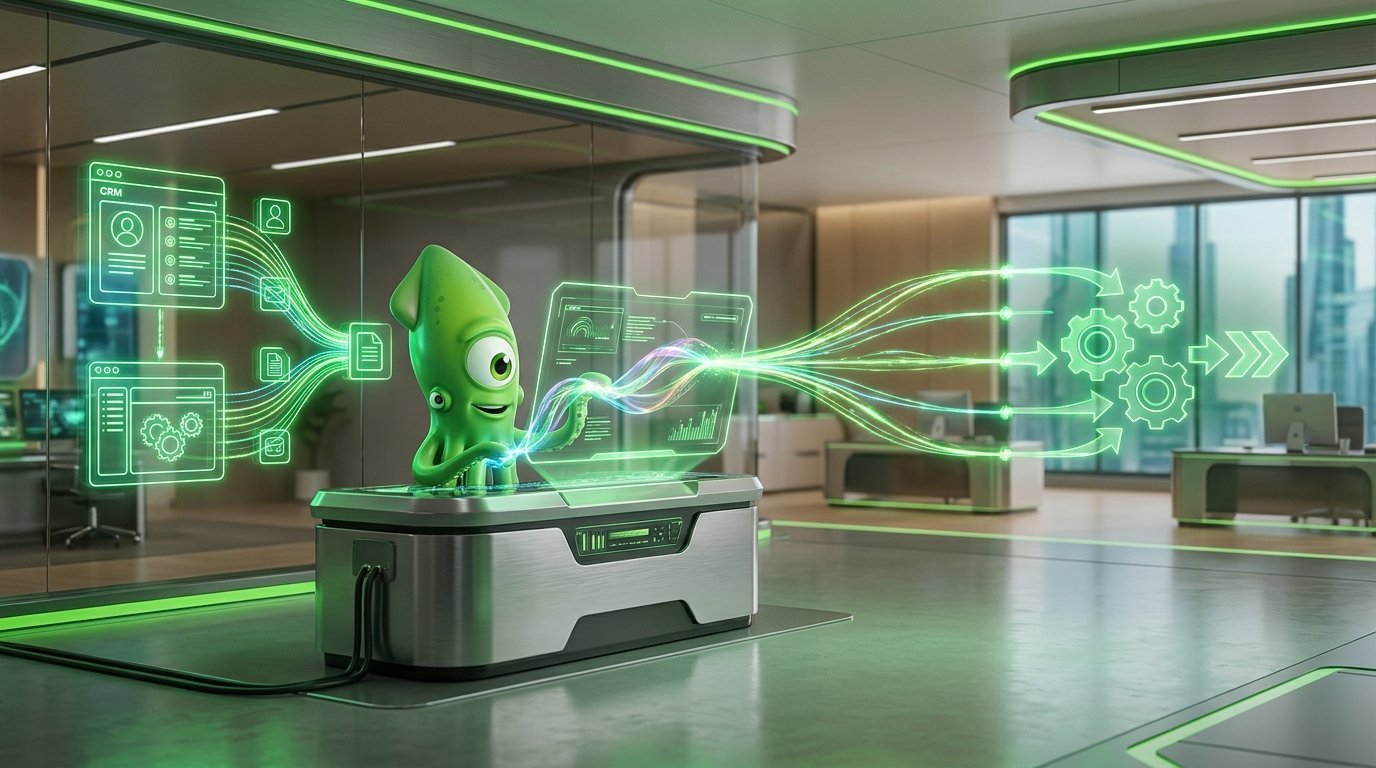
Optimizing your software ecosystem is vital for maintaining a competitive edge in today’s fast-paced market. Specifically, workflow automation makes this optimization process highly efficient. By combining generative AI with no-code integration platforms, businesses can connect disparate systems instantly. Consequently, this eliminates tedious manual data entry. It also drastically reduces the chance of human error.
Additionally, API integration plays a crucial role in modern tech stack optimization. APIs allow different enterprise software applications to communicate securely behind the scenes. In the past, you needed a massive team of expensive developers to build these custom connections. Today, however, things are very different. Visual builders and pre-configured templates do all the heavy lifting for you.
The Power of No-Code and AI in Process Automation
No-code platforms have completely revolutionized how we approach process automation. For example, tools like Zapier and Make empower non-technical founders to design complex logic. You do not need to know how to write a single line of code. For a deep dive into these specific platforms, read our Zapier vs Make vs n8n: Automation Guide. Furthermore, by integrating generative AI into these workflows, you unlock amazing capabilities. You can automatically draft personalized emails, summarize long reports, and qualify sales leads while you sleep.
Let us look at a practical example. Imagine a potential customer fills out a form on your website. In a traditional setup, that form sits in an inbox until a human reads it. With an AI-automated workflow, however, the system instantly grabs the data. The AI analyzes the lead’s intent. Consequently, it drafts a custom response, logs the details into your CRM, and alerts your sales team on Slack. All of this happens in seconds.
Therefore, this modern approach drastically lowers overhead costs. Automation House uses pre-built modules to bypass expensive custom software development. As a result, companies can take those saved funds and redirect them into growth and marketing initiatives. Ultimately, you get better results for a fraction of the cost.
To master these connections, you need to understand the underlying mechanics. You can learn more by reading The Ultimate Guide to API and System Integration. Additionally, mastering no-code integration ensures your business remains agile. Market demands shift rapidly in 2026. Therefore, your automated workflows must be able to pivot just as quickly to keep up.
Strategic Planning for Rapid Deployment
Deploying these automated systems requires careful planning. First, you need to map out your existing manual processes. Write down every step your team takes to complete a task. Next, identify the most time-consuming bottlenecks in that process. Finally, apply generative AI to handle the cognitive tasks within those bottlenecks. Consequently, this strategic approach guarantees maximum efficiency and rapid deployment across your organization.

The Financial Impact of Process Automation
The return on investment for AI automation is absolutely undeniable in 2026. Specifically, a recent market analysis shows that companies deploying generative AI workflows reduce their operational costs by up to 40%. Additionally, businesses utilizing agentic architectures report a 50% increase in task completion speed. Consequently, work gets done faster and cheaper.
Furthermore, a 2025 study on enterprise software revealed some shocking numbers. Human-driven data entry errors cost organizations billions of dollars annually. Mistakes happen when people are tired or bored. However, automated API integration reduces these costly errors by 99%. As highlighted by The JADA Squad’s 2026 Guide, teams that automate their core functions consistently outpace their competitors.
Here are some key 2026 statistics to keep in mind:
- 40% reduction in overall operational overhead.
- 50% faster task execution speeds across departments.
- 99% decrease in manual data entry errors.
- 30% boost in employee satisfaction due to less repetitive work.
Ultimately, the data proves that investing in process automation is not just a passing trend. Instead, it is a mathematically sound business strategy. These numbers highlight a massive competitive advantage for early adopters. Therefore, if you are not automating, you are simply leaving money on the table.
Comparing Traditional and AI-Automated Workflows
Understanding the difference between legacy systems and modern automation is crucial. Specifically, it helps you see exactly where your business might be losing money. We have outlined a direct comparison below. Consequently, this table highlights how generative AI transforms standard business operations from slow and clunky to fast and seamless.
| Feature | Traditional Workflow | AI-Automated Workflow |
|---|---|---|
| Execution Speed | Slow. It relies heavily on human availability and working hours. | Instant. It offers 24/7 autonomous execution without breaks. |
| Error Rate | High. It is very prone to manual mistakes and typos. | Near zero. It is highly consistent and accurate every time. |
| Integration | Siloed. It requires complex coding to connect different tools. | Seamless. It utilizes simple no-code integration platforms. |
| Deployment Time | Months to years of expensive development. | Weeks using pre-built modules and visual builders. |
Consequently, looking at this comparison, the choice becomes obvious. Traditional workflows are holding companies back. They drain resources and frustrate employees. In contrast, AI-automated workflows offer a clear path to better efficiency and higher profits.
Visualizing the AI-Integrated Tech Stack
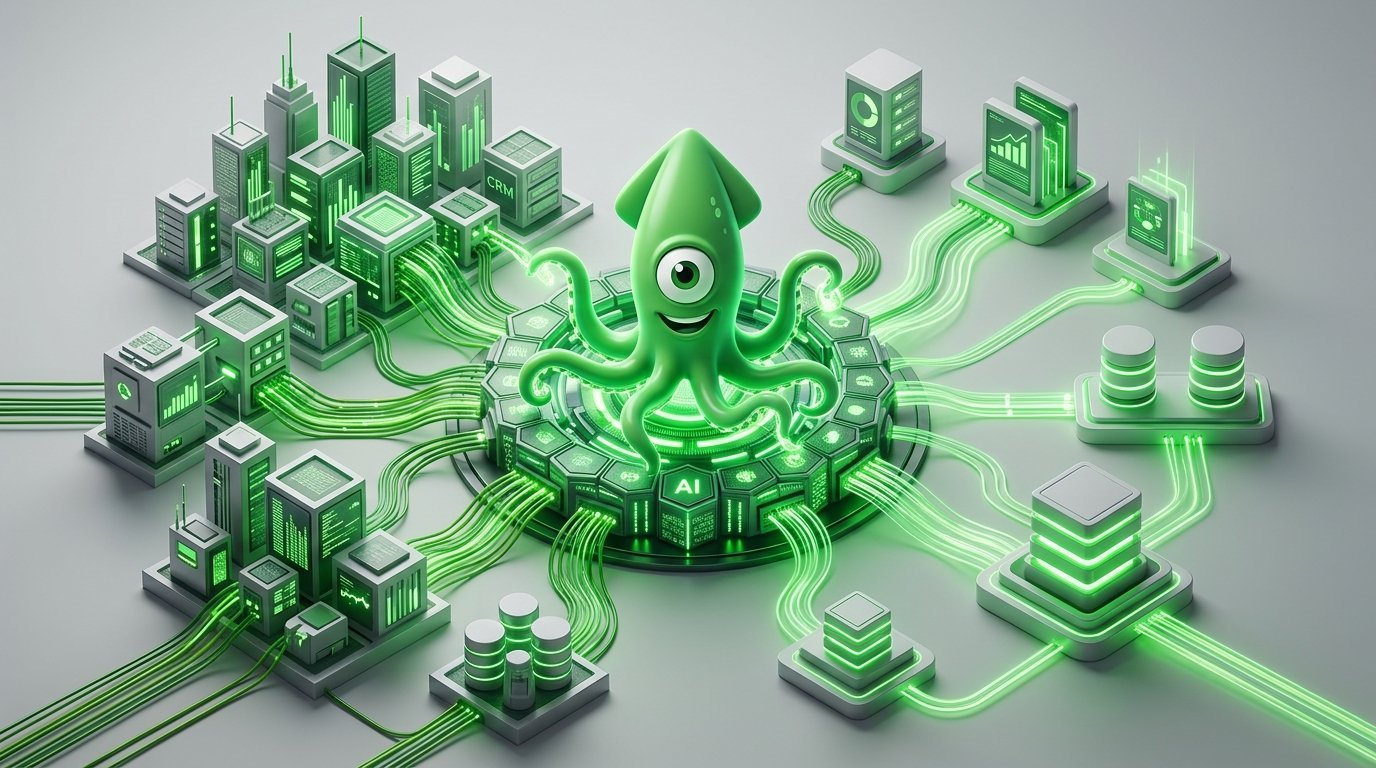
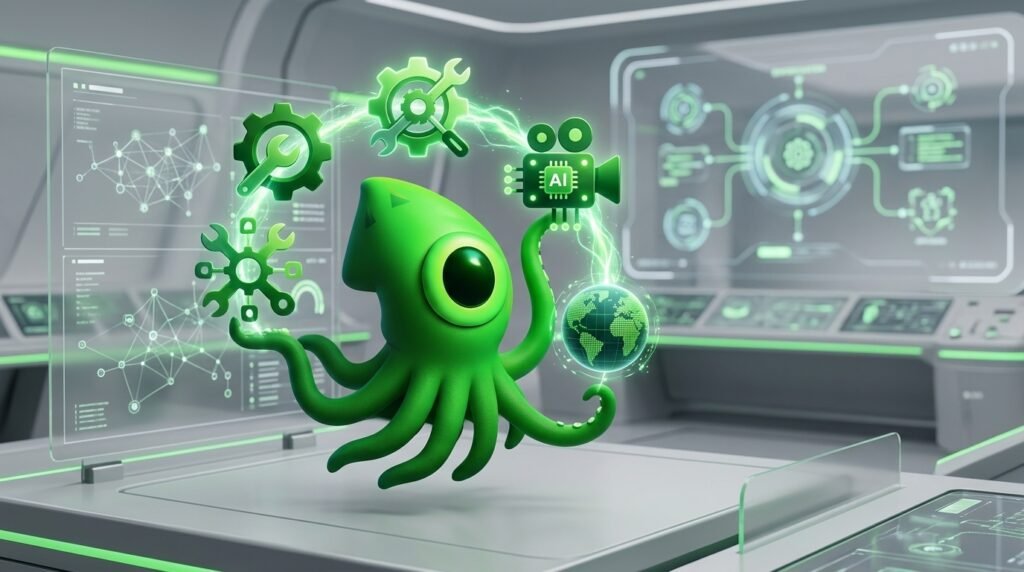
To fully grasp this transformation, try to imagine a central hub powered by generative AI. Specifically, think of this visual concept as an AI agent sitting at the core of a wheel. From this intelligent center, glowing data pathways extend outward. Consequently, they connect to various enterprise software nodes across your company.
First, one pathway connects directly to your CRM. It instantly updates customer records after a sales call. Next, another line links to your financial ERP. It autonomously processes invoices and tracks payments. Finally, a third connection routes to your internal communication platform. It triggers helpful team alerts when a project hits a milestone. Therefore, this infographic concept illustrates how API integration creates a unified, self-sustaining ecosystem. It perfectly demonstrates the true power of modern operational design.
Conclusion: Embrace the Automation Imperative
Generative AI and process automation are saving businesses millions of dollars right now. Specifically, the shift toward agentic architectures is completely redefining operational design for the better. Human-executed workflows simply cannot compete with the speed and accuracy of autonomous AI agents. Furthermore, utilizing no-code integration and API integration allows companies to bypass lengthy software development cycles entirely.
Additionally, agencies like HatchWorks AI and Automation House are proving that rapid deployment is possible today. The choice for business leaders in 2026 is brutally clear. Consequently, you must integrate your systems or risk failing. Do not let your company fall behind due to outdated, siloed enterprise software. Therefore, take action immediately. Audit your current manual processes to find the weak spots. Explore modern AI automation tools. Begin optimizing your tech stack today. Your future profitability depends entirely on the bold automation choices you make right now.
Frequently Asked Questions (FAQ)
What is an agentic architecture?
An agentic architecture is a modern system where AI agents operate autonomously. Instead of just generating text or answering simple prompts, these agents actively solve problems. Consequently, they make decisions and execute complex, multi-step tasks across different software platforms without needing human supervision.
Is no-code integration secure for enterprise data?
Yes, modern no-code integration platforms prioritize enterprise-grade security. Specifically, they use encrypted API integration to keep your data safe in transit. They also comply with strict data protection regulations like GDPR and SOC2 to ensure your sensitive business information remains completely secure at all times.
How long does it take to deploy AI automation?
According to 2026 industry data, capable agencies can deploy sophisticated AI workflows in just a matter of weeks. Consequently, this is a massive improvement over traditional enterprise software deployments, which often took months or even years to fully implement and test.
Will generative AI replace my entire workforce?
No, generative AI is specifically designed to augment human workers, not replace them entirely. By handling boring, repetitive process automation, AI actually frees up your team. Therefore, this allows your employees to focus their energy on high-level strategy, relationship building, and creative problem-solving.
One Comment