
The Future of Intelligent Workflows: AI Powered Enterprise Automation Testing at Scale
Manual testing in HR and ERP systems acts as a hidden tax on business growth. It pulls specialized teams from HR and IT away from strategic work. Consequently, this inefficiency drains resources and slows down critical releases. Organizations often struggle to keep up with frequent software updates. Manual models simply cannot keep pace with the modern digital landscape.
The adoption of AI Powered Enterprise Automation Testing provides a solution to these constraints. Specifically, this shift represents a fundamental change in how businesses approach quality assurance. Companies are moving away from fragile manual scripts. Instead, they are embracing intelligent systems that adapt to complex environments.
Modern platforms like the UiPath Test Cloud enable this transformation. Additionally, these tools allow organizations to scale their testing efforts without increasing head count. Intelligent workflows now handle repetitive validation tasks with high precision. As a result, human workers can focus on higher value initiatives instead.
Businesses must recognize that speed is a competitive necessity. Legacy testing methods create bottlenecks that hinder innovation. Therefore, transitioning to AI powered models is no longer optional. It is a strategic requirement for any enterprise aiming for global scale.
The manual validation of payroll or onboarding workflows consumes thousands of hours. Because of this, departments face constant delays in deploying new features. Strategic projects remain on the back burner while teams fix minor bugs. However, AI driven agents can now simulate user actions with remarkable accuracy.
Moreover, the technical debt from manual testing compounds over time. Errors in ERP systems lead to costly downtime or compliance issues. Enterprises need a more robust framework to manage these risks effectively. In contrast, AI powered testing provides the reliability that legacy frameworks lack.
The move toward autonomous validation signifies a departure from static logic. AI agents now learn from user interfaces and predict potential failures. Consequently, the reliance on rigid locators is decreasing. Finally, this evolution ensures that automated tests stay resilient even after major UI redesigns.
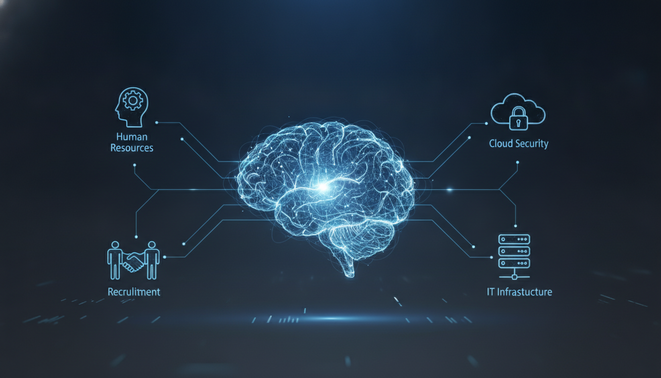
Mastering AI Powered Enterprise Automation Testing: Moving Beyond Scripts
Legacy frameworks rely heavily on static instructions to interact with web elements. For years, developers used Selenium to automate browser interactions. This tool requires precise locators like ID or CSS selectors to function correctly. However, modern enterprise applications change frequently and break these rigid scripts.
Similarly, Microsoft Playwright offers robust support for Chromium, Firefox, and WebKit engines. It provides powerful features for software testing automation across various platforms. Playwright is an open source tool that simplifies many complex tasks. Yet, it still relies on predefined logic to handle UI components.
When a developer updates an HR portal, the underlying code often shifts. Traditional tools struggle with these dynamic UI changes. Consequently, QA teams spend hours fixing broken tests instead of building new ones. This maintenance burden slows down the entire delivery pipeline.
As experts often say, “The best XPath isn’t the shortest one. It’s the one that still works after your app has been through six releases and three UI redesigns.” This quote highlights the fragility of manual selector strategies. Even advanced AI powered automation requires a move toward more resilient methods.
Agentic AI in software testing offers a path forward through intelligent discovery. Tools like Autopilot™ for testers use generative models to understand application intent. Additionally, these agents do not just follow a path. Instead, they look at the screen like a human user would.
Furthermore, the Agent Builder for testers allows teams to create autonomous workflows easily. These agents can navigate complex ERP systems like SAP or Workday without fragile locators. Because the AI understands the context, it adapts to layout shifts automatically. Therefore, the risk of test failure decreases significantly.
Moreover, AI Powered Enterprise Automation Testing leverages this semantic understanding to ensure stability. The system identifies a button by its purpose rather than its specific DOM path. If a label changes from Submit to Confirm, the agent continues its work. This level of adaptability represents the future of quality engineering.
As a result, organizations now achieve faster release cycles by reducing manual intervention. Automation becomes more than just a set of scripts. It transforms into a strategic asset that supports continuous improvement. By choosing agentic tools, businesses move beyond the limitations of legacy code.
of legacy code.
Selecting the Right Framework for Scale
Choosing the correct tool is vital for any large organization. While open source tools are powerful, they often lack the intelligence required for modern ecosystems. For instance, Microsoft Playwright is excellent for cross browser testing because it supports Chromium, Firefox, and WebKit. It also allows developers to work in JavaScript, Python, or Java. However, it still depends on manual scripts.
In contrast, the UiPath Test Suite introduces agentic capabilities. This platform reduces the burden on quality assurance teams. Because it uses AI to handle UI shifts, maintenance costs drop. Selenium remains a popular choice for basic tasks, yet it requires significant effort to keep running.
The following table summarizes the differences between these technologies.
| Tool Name | Primary Engine Developer | Cross Browser Support | AI Agent Capability | Maintenance Overhead |
|---|---|---|---|---|
| UiPath Test Cloud | UiPath Inc | Full browser and mobile support | Advanced Agentic AI with Autopilot | Low via self healing logic |
| Microsoft Playwright | Microsoft | Chromium Firefox and WebKit | Scripted with limited AI plugins | Medium due to manual updates |
| Selenium WebDriver | Open Source | Extensive via browser drivers | No native AI capabilities | High because of rigid locators |
Enterprises need reliability at scale. Open source tools provide a solid foundation for small projects. However, they struggle to manage the complexity of global ERP systems. Automated testing must evolve to stay effective in fast moving environments. Therefore, strategic leaders prioritize platforms that offer autonomous error correction.
Self healing tests ensure that minor changes do not halt production. Consequently, teams can release software with greater confidence. This efficiency is essential for maintaining a competitive edge. Ultimately, the choice depends on the specific needs of the business.
The Economic Toll of Manual HR and ERP Testing
Manual testing isn’t just a QA problem. It’s a hidden tax on every release. Many organizations continue to pay this tax without realizing its full impact. Specifically, complex workflows like Payroll validation and HR onboarding require extensive verification. These processes involve sensitive data and multiple integration points across the entire enterprise.
Specialized teams in HR, IT, and operations often bear the burden of these checks. Consequently, they are pulled away from strategic work to perform manual regression testing. Instead of focusing on talent development, HR managers verify row after row of data. This misallocation of resources hinders business growth and innovation. Therefore, the cost of manual labor far exceeds the simple hourly wage of the employees.
Enterprises running large systems like SAP and Workday face frequent software updates. Each change requires a full cycle of validation to prevent critical errors. If a payroll run fails, the legal and financial consequences are severe. Because of this risk, teams feel forced to perform exhaustive manual reviews. However, this approach is unsustainable as the complexity of modern software increases.
The adoption of intelligent workflows through UiPath helps organizations reclaim lost productivity. Specifically, agentic automation can navigate these intricate systems with high accuracy. These agents handle the repetitive verification of employee records and tax calculations. As a result, technical staff can return to high level architecture and system design.
Furthermore, the transformation of quality assurance allows for faster deployment cycles. Testing is no longer a bottleneck that prevents progress. Instead, it becomes a seamless part of the development lifecycle. By automating the verification of HR workflows, companies ensure both speed and compliance. Finally, this shift turns a business constraint into a competitive advantage.
CONCLUSION
Transitioning to agentic workflows is now a strategic necessity for the modern enterprise. Because digital landscapes evolve rapidly, businesses must adopt systems that learn and adapt. Legacy testing models create significant technical debt and slow down innovation. However, AI Powered Enterprise Automation Testing allows organizations to scale with confidence and precision. This shift ensures that high value teams remain focused on growth rather than maintenance.
EMP0 (Employee Number Zero, LLC) stands at the forefront of this technological revolution. They are a US based company providing full stack AI workers and advanced growth systems. Specifically, their brand trained digital agents integrate into existing teams to handle complex operations. These workers are not just scripts but intelligent partners capable of executing sophisticated tasks.
The EMP0 suite features several powerful tools designed for enterprise scale. For instance, the Content Engine automates high quality writing to maintain a strong market presence. Additionally, their Sales Automation systems streamline prospecting and lead management with ease. Revenue Predictions provide leaders with the data driven insights needed for accurate forecasting. Consequently, businesses can optimize their resources and drive sustainable success.
By embracing these intelligent workflows, companies can eliminate the hidden tax of manual labor. Therefore, the future belongs to those who leverage agentic solutions to outpace the competition. You can explore these innovative systems and discover more insights at EMP0 Articles. Visit the official site at EMP0 to learn how these AI workers can transform your organization. Finally, the move toward autonomous operations is the only way to achieve true global scale in the modern era.
Frequently Asked Questions (FAQs)
What is agentic automation?
Agentic automation involves the use of intelligent AI agents that understand context and intent. Unlike traditional scripts, these agents look at the user interface like a human does. They adapt to changes without needing manual updates to selectors. Consequently, they handle dynamic UI shifts with ease. This technology transforms quality assurance into a more resilient and efficient process.
What is the role of Playwright in browser automation?
Microsoft Playwright is an open source tool designed for modern web applications. It supports multiple engines including Chromium, Firefox, and WebKit. Furthermore, it allows developers to write tests in languages like JavaScript, Python, and Java. While it is powerful for cross browser testing, it still relies on scripted logic. Therefore, it requires manual intervention when significant UI changes occur.
What is the ‘hidden tax’ of manual testing?
The hidden tax refers to the drain on business growth caused by manual verification. Specifically, it pulls specialized teams from HR and IT away from their core strategic work. Instead of innovating, these professionals spend hours on repetitive regression tasks. This misallocation of resources slows down product releases significantly. As a result, the enterprise loses agility and its competitive edge in the market.
What recognition has UiPath received in document mining?
Forrester recognized UiPath as a Leader in the Document Mining and Analytics Platforms report for Q2 2026. Specifically, the company excels in document mining and analytics for the second quarter of the year. Additionally, the platform analyzes complex data from various business documents with high precision. Moreover, this capability is essential for processing the large volumes of information found in ERP systems. Finally, organizations trust these tools to manage their most critical data workflows effectively.
What are the benefits of the UiPath Test Cloud?
The UiPath Test Cloud helps organizations shift from manual models to AI powered testing. It provides a scalable environment for executing automated checks across multiple platforms. Moreover, the cloud infrastructure reduces the need for local hardware maintenance. It also integrates seamlessly with deployment pipelines to speed up software delivery. Consequently, teams can release higher quality software at a much faster pace.
Related Posts
Scale Your Business with an n8n Workflow
Scale Your Business with n8n AI Agents

One Comment
Comments are closed.