
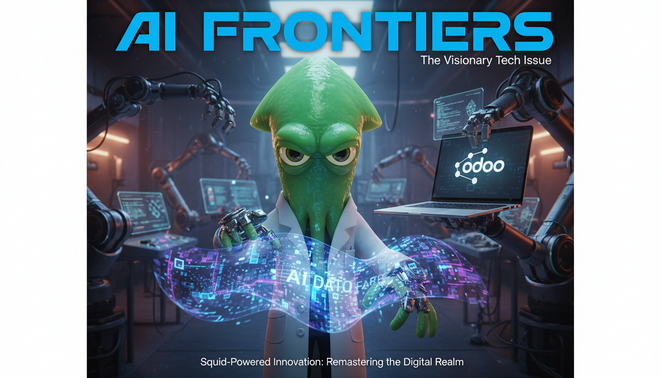
AI Data Fabric and Scientific Research Integration: The Next Frontier of Discovery
The landscape of modern science is shifting rapidly toward a new paradigm. In 1954, Belmont G. Farley and Wesley A. Clark ran the first neural network simulation at MIT. This experiment marked a humble beginning for digital intelligence in a controlled setting. Today, the rise of AI Data Fabric and Scientific Research Integration is transforming laboratories into autonomous engines of discovery.
This transition represents a significant leap from isolated software tests to integrated physical systems. We are moving beyond the era of simple digital modeling into a world of physical reality. Modern researchers now connect vast data streams into a cohesive framework. This approach allows institutions to break down silos and accelerate breakthroughs.
According to insights from Forbes, AI adoption is scaling at an unprecedented rate across global enterprises. Consequently, experts predict that half of companies will use AI in three or more functions by 2025. This statistic shows how deeply automation is penetrating every level of professional operations. Because information flows through these intelligent fabrics, scientific inquiry becomes faster and more precise. Therefore, the connection between raw data and robotic execution is the primary driver of progress.
Scientists are now using these advanced systems to solve complex global challenges. Because laboratories are evolving, the role of human judgment is shifting to oversee automated processes. Researchers no longer spend hours on manual testing because machines handle repetitive tasks. As a result, the focus shifts toward higher level strategy and creative problem solving. This integration ensures that the next generation of discovery is smarter and more efficient than ever before.
Robotics and Data Fabric Convergence

Laying the Groundwork: Why AI Data Fabric and Scientific Research Integration is Essential
Establishing a robust data foundation is the biggest hurdle for modern research. Currently, many organizations struggle with fragmented information systems. Only 20 percent of organizations consider their approach to data to be highly mature. This lack of maturity creates significant barriers to successful AI implementation. Consequently, companies cannot fully leverage the power of advanced analytics.
Irfan Khan from SAP highlights a critical risk in rapid AI deployment. He notes that speed without judgment does not help and can actually hurt us. Therefore, blindly accelerating processes without a solid data structure is dangerous. Instead, researchers must prioritize the creation of meaningful context. This context acts as the bridge between raw numbers and actionable scientific insights.
According to Khan, the opportunity is not just inventing context from scratch. Rather, it involves activating and connecting the context across your business that already exists. A well designed AI Data Fabric and Scientific Research Integration helps achieve this goal. This framework weaves together disparate sources into a unified web. As a result, valuable information becomes accessible to every robotic system in the lab.
Knowledge graphs and semantic layers play a vital role in this new architecture. These technologies help machines understand the relationships between different data points. Because they provide a shared vocabulary, different systems can communicate effectively. However, many leaders still underestimate these limitations in business transformation. Success requires a shift toward more sophisticated data management strategies.
By building a semantic layer, researchers can ensure their AI models stay grounded. This layer provides the necessary rules and logic for automated decision making. Furthermore, it prevents the system from generating irrelevant or incorrect results. Therefore, the data fabric becomes the nervous system of the autonomous laboratory. This structural foundation is essential for moving toward truly intelligent research environments.
From Digital Brains to Robotic Hands: Materializing Discovery
The true power of AI Data Fabric and Scientific Research Integration lies in its physical manifestation. Modern science requires more than just high performance computing. If you want AI to be the brain behind some of the science you are doing, you need the hands as well. This shift from pure simulation to robotic execution is defining the next era of innovation.
At MIT, researchers are actively bridging this gap between digital intelligence and physical action. Sili Deng has developed an autonomous system that can generate and test 700 new polymer blends in a single day. This level of output was previously impossible for human teams to achieve alone. Meanwhile, Hannes Stärk introduced the BoltzGen model for protein design. This model is revolutionary because it considers every single atom in a potential new protein and its target molecule.
The integration of these technologies helps researchers tackle the scary beast of scaling in chemistry. While scaling in AI is typically synergistic and positive, scaling in physical sciences remains a difficult challenge. Experts like Regina Barzilay and Faez Ahmed are leading efforts to ensure these advancements have a real world impact. Their work focuses on creating systems that can operate with both speed and scientific precision.
As laboratories become more autonomous, they must also navigate evolving legal landscapes. Organizations must stay informed about strategic innovation and regulatory vision to ensure long term success. By combining robotic hands with AI brains, scientists can accelerate the development of life saving drugs and new materials. This holistic approach ensures that digital breakthroughs translate into tangible physical results. Through this synergy, the boundaries of what is possible in the lab continue to expand.
Performance Benchmarks: Autonomous Research vs. Traditional Methods
Data accessibility is the cornerstone of modern research efficiency. More than two thirds of enterprises that deploy data fabrics report improved data accessibility and visibility. Because of this enhanced clarity, autonomous systems can process information at unprecedented speeds. Therefore, researchers can achieve results in hours that once took years. The success of AI Data Fabric and Scientific Research Integration depends on this high visibility.
| Research Domain | Traditional Timeline | AI Driven Timeline | Key Technology Used |
|---|---|---|---|
| Protein Folding | Years of manual work | Minutes or hours | AlphaFold2 and BoltzGen |
| Polymer Discovery | Months of testing | 700 blends daily | MIT Autonomous System |
| Drug Discovery | Over a decade | Rapid lead discovery | Jameel Clinic Models |
As organizations scale their operations, they must ensure their data structures remain mature. Moreover, the integration of data fabrics ensures that information is always ready for robotic analysis. This structural readiness allows scientists to focus on solving complex problems. As a result, the pace of scientific discovery continues to accelerate across all fields. Scientists at MIT are already proving that these systems can handle the most difficult challenges in chemistry.
CONCLUSION
The laboratory is changing from a slow manual bottleneck into a fast automated engine. Because researchers use AI Data Fabric and Scientific Research Integration, they find answers faster than traditional methods. However, reaching this level of efficiency requires a mature approach to data management. As a result, science moves at a speed we never imagined in the past century. Therefore, the connection between raw data and physical robotics is the primary driver of modern discovery.
Modern businesses need help to build these complex systems safely and effectively. Employee Number Zero LLC offers a robust solution for companies seeking sustainable growth. Therefore, EMP0 acts as a full stack brand trained AI worker that understands your specific needs. This system integrates seamlessly with existing teams to boost overall productivity and innovation. Because it functions as a digital colleague, it reduces the burden on human staff.
The company provides powerful tools such as the Content Engine for streamlined communication. Furthermore, it uses Revenue Predictions to guide important business strategy decisions. Because these tools are brand trained, they maintain a consistent voice across all platforms. Consequently, organizations can scale their operations without losing their unique identity or quality. This ensures that every growth cycle is both efficient and aligned with company values.
The future of discovery depends on the right combination of advanced technology and skilled people. Finally, explore the EMP0 Blog or check their n8n creator page for more insights on automation. Their vision for AI powered growth empowers businesses to reach their full potential. Therefore, starting your automation journey today ensures a competitive edge in an evolving market.
Frequently Asked Questions (FAQs)
What is AI Data Fabric and Scientific Research Integration?
It is a system that connects different data sources into a unified framework. This integration allows scientific laboratories to automate discovery processes across digital and physical domains. By weaving information together, researchers can eliminate silos and improve data visibility for robotic systems.
How fast can autonomous polymer testing systems operate?
Advanced autonomous systems developed at MIT can generate and test up to 700 new polymer blends in a single day. This speed far exceeds traditional manual testing methods because robots handle the repetitive labor around the clock. Consequently, the pace of material science discovery is accelerating rapidly.
Why is data maturity important for AI success in research?
Data maturity is essential because it provides the structural foundation for intelligent automation. Currently, only 20 percent of organizations consider their data approach to be highly mature. Without this maturity, AI systems lack the necessary context to make accurate scientific judgments or predictions.
What is the role of the BoltzGen model in protein design?
BoltzGen is an advanced protein design model that analyzes every single atom within a potential new protein. Because it considers the full molecular context, it can predict how molecules will interact with their targets. This precision helps scientists create more effective treatments for various medical conditions.
How does EMP0 help businesses automate scientific and operational insights?
EMP0 serves as a brand trained AI worker that helps companies deploy complex growth systems securely. Through tools like the Content Engine and Revenue Predictions, it automates high level analysis and communication tasks. As a result, businesses can scale their operations while maintaining scientific and strategic accuracy.