
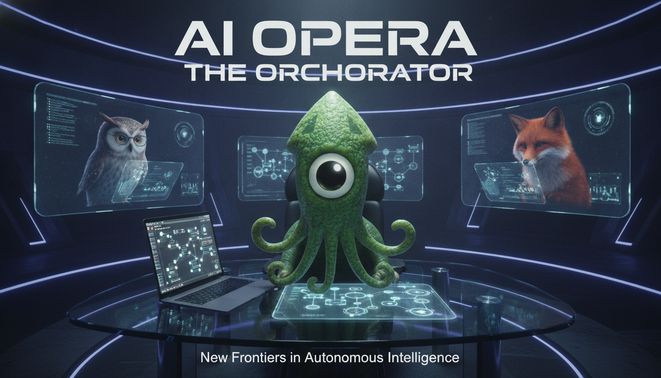
Mastering Multi agent AI Systems: Beyond Single Prompt Automation
“I had not built a committee of analysts. I had built one analyst, billed four times, nodding at itself in a mirror.” Jamie captured the central challenge of modern automation with those words. Many teams now attempt to deploy Multi agent AI Systems to handle complex logic. However, they often fall into the trap of creating redundant loops instead of distinct expertise. The shift from simple prompt chaining to intricate orchestration marks a major change in development.
We are moving beyond fixed pipelines that follow a rigid path. Modern systems use agent delegation to allow for dynamic reasoning during runtime. This evolution brings significant risks along with its rewards. Developers must avoid the complexity cliff where agents simply agree with each other. Because these agents often share a single base model, they might lose their unique perspective.
Therefore, true orchestration requires more than just message passing. Also, it demands a careful balance of memory and independent context windows. Specifically, a successful system must include specialist agents that can challenge each other. Engineers should remain cautious as they build these sophisticated networks. Only then can we move past simple automation into robust decision making.

From Linear Chains to Multi agent AI Systems Orchestration
Many developers start their journey with linear prompt chaining. This method creates a fixed sequence during the design phase. However, real world problems often require more flexibility.
Multi agent AI Systems offer a dynamic alternative through agent delegation. This approach allows models to decide their own path based on logic. As a result, the system can handle unexpected inputs with greater ease.
Frameworks like LangGraph and CrewAI provide the necessary structure for these complex tasks. They manage the flow of messages between different components. Additionally, Azure OpenAI offers the robust compute needed for such intensive reasoning.
Despite these advances, engineers must remain vigilant. “The fantasy of a multi agent system is a roomful of experts who notice different things and check each other.” Without proper design, these systems can fail silently.
Specifically, n8n sub workflows provide a powerful way to manage this complexity. These sub workflows allow for independent testing of specific agent logic. Because they are modular, you can perform version control on individual agents.
This modularity prevents the entire system from becoming a black box. Furthermore, it allows teams to verify that each specialist performs as expected. Success depends on maintaining independence between agents.
If agents merely mirror the base model, they provide no real value. Therefore, developers should use independent context windows. This strategy ensures that each agent contributes a unique perspective to the conversation.
Check out how AI coordination evolution transforms team dynamics. Also, learn how AI memory management helps in reducing operational costs. These techniques are vital for building reliable enterprise systems.
Comparing Chaining and Delegation
Understanding the difference between these methods is crucial for system design. Because linear chains follow a preset path, they offer less adaptability. However, agent delegation relies on reasoning to determine the next step. Therefore, teams can handle more complex scenarios with this approach. The following table highlights the key differences between these two strategies.
| Feature | Prompt Chaining | Agent Delegation |
|---|---|---|
| Logic | Fixed at design time | Reasoning based sequences |
| Flexibility | Low and rigid | High and adaptive |
| Error Handling | Rigid path | Self correcting loops |
| Typical Use Cases | Simple data extraction | Multi step validation |
For more insights on advanced systems, read about the Automated AI Researcher.
Avoiding Epistemic Collapse in Multi agent AI Systems
As projects scale, developers often encounter a phenomenon known as the complexity cliff. This is the complexity cliff, and it hits nearly every team that moves beyond single agent workflows. Many engineers believe that adding more agents automatically increases accuracy. However, this assumption can lead to a dangerous state called epistemic collapse. This happens when agents lose their independent perspective because they share a common foundation.
The risk becomes acute when multiple agents rely on the exact same base model. For instance, a system of five AI agents once recorded a 0.98 confidence level. Despite this high score, the system lost 41 ticks on a Micro Nasdaq futures trade. This failure occurred because of correlated errors within the group. Because they shared the same logic, they all made the same mistake simultaneously.
We must remember that agreement does not always equal truth. Agreement between agents that cannot disagree is not a signal. It is an echo with a quorum. If your agents share a context window, they will likely converge on the same biased answer. This creates a false sense of security for the human operator. Therefore, maintaining cognitive diversity is essential for any robust network.
To prevent these issues, teams should utilize a variety of distinct models. You can access diverse options like GPT 4o, Claude, and Llama 3 through platforms like OpenRouter. Each model possesses unique training data and internal weights. Consequently, using different models reduces the chance of systemic failure. This approach ensures that Multi agent AI Systems remain reliable under pressure.
Furthermore, developers should isolate context windows to keep agents independent. This prevents one agent from simply mirroring the thoughts of another. Instead, each specialist should analyze the data from its own viewpoint. As a result, the final output benefits from genuine cross validation. High confidence should always stem from independent verification rather than internal repetition.
In summary, building these systems requires a cautious and technical mindset. Avoid the trap of creating a room full of nodding analysts. Specifically, test your orchestration layer to ensure that disagreement is possible. Only then can you achieve true intelligence in your automated workflows. Diversity in models and memory management will protect your system from the complexity cliff.
CONCLUSION
Building reliable Multi agent AI Systems requires a very disciplined approach to architecture. First, developers must ensure that each agent maintains its own independent logic. If agents simply copy each other, the entire system will likely fail during production. Therefore, creating distinct context windows is a critical step for long term reliability. Also, using database backed memory is essential for maintaining consistency across different sessions. Specifically, tools like Postgres or Redis within n8n help manage complex state effectively. Because of this, your system can handle larger datasets without losing track of previous interactions. Clearly, the future of automation depends on these robust orchestration techniques.
Employee Number Zero, LLC stands as a US based leader in the field of AI and automation. We provide a full stack brand trained AI worker that integrates seamlessly into your existing workflows. Our innovative solutions include a powerful Content Engine and sophisticated Revenue Predictions tools. Furthermore, we offer a specialized Marketing Funnel designed to optimize your growth strategy. EMP0 acts as a dedicated partner that manages high level tasks with precision. As a result, your team can focus on creative strategy while our tools handle the heavy lifting. Additionally, we ensure that every automation reflects your unique brand voice. Consequently, businesses can scale their operations more efficiently than ever before.
For more information, visit our main website at emp0.com. You can also read our latest research and insights on our blog at articles.emp0.com. Finally, follow our updates on Twitter at @Emp0_com to stay informed about automation trends. Explore our automated solutions on our n8n creator page to see how we build efficient systems.
Frequently Asked Questions (FAQs)
What exactly is Epistemic Collapse in AI?
Epistemic collapse happens when a group of agents loses its ability to think independently. This usually occurs because they share a single base model or a common context window. Because they all see the same data, they often reach the same wrong conclusion. Consequently, the system creates an illusion of high confidence without actual accuracy. This lack of cognitive diversity can be fatal for automated workflows.
Why is using diverse LLMs important for Multi agent AI Systems?
Diverse models bring different perspectives to the same problem. For example, a model from Meta might process technical data differently than one from Anthropic. By using various models through OpenRouter, you reduce systemic risk and error propagation. This variety acts as a safety net against the common biases of any single model. Specifically, using specialist agents with unique internal weights improves overall reliability.
What role does n8n play in managing agent memory?
n8n offers powerful database backed memory options for sophisticated agents. You can integrate tools like Postgres or Redis to keep track of long conversations. This persistence is vital for tasks that require several steps over time. Therefore, n8n helps in building systems that do not forget their goals mid process. Managing the orchestration layer with persistent state ensures consistency across the network.
Can you explain the difference between prompt chaining and agent delegation?
Prompt chaining is like a script that follows a fixed sequence of steps. However, agent delegation allows the AI to decide the best path while it works. This reasoning based approach provides much higher flexibility for complex logic and dynamic planning. As a result, the system can handle edge cases that a fixed chain would simply miss. This shift is fundamental for moving toward autonomous multi agent teams.
How do teams successfully navigate the complexity cliff in production?
Navigating the complexity cliff requires careful orchestration and modular design. Engineers should use sub workflows to verify that each specialist agent performs its role correctly. Additionally, you must avoid the trap of correlated errors by ensuring model diversity and isolated context. Monitoring for redundant logic is also necessary to maintain high performance in live environments. Successful implementation depends on constant testing and refinement of the decision trees.