

Micro-franchising and accessibility as growth levers for startups
Micro-franchising and accessibility as growth levers for startups offer a practical, inclusive route to rapid growth. These models cut startup costs and reduce risk for new entrepreneurs. Micro franchising packages repeatable processes into affordable units. Meanwhile collaborative franchise models share branding and operational support across many small operators. Together they create low cost entrepreneurial paths that work for diverse populations, including people with disabilities.
Because these approaches rely on standardization, they scale quickly and predictably. As a result, startups can expand without heavy capital. Moreover, accessible design widens markets and boosts customer retention. Therefore, building accessibility from day one improves sales, search rankings, and enterprise credibility. It also reduces legal and remediation costs down the road.
This article explores practical steps, funding options, and design tips to launch micro franchises with accessibility baked in. You will learn tools, case examples, and a checklist to get started. By the end, you will see how inclusive franchising can become a powerful growth lever for your startup.
Micro-franchising and accessibility as growth levers for startups: what they are
Micro-franchising adapts traditional franchising to smaller units and lower startup costs. It packages a repeatable product or service into an easy-to-run format. Operators receive training, brand assets, and a playbook. As a result, entrepreneurs can launch businesses faster and with less capital.
Micro-franchising explained
Micro-franchising often targets local markets and MSMEs. Typically, it reduces barriers by offering low upfront fees, simplified operations, and bundled supplies. For example, a cleaning micro-franchise might include uniforms, marketing templates, and supplier contacts. This lowers operating risk and preserves brand recognition.
Advantages include
- Lower startup costs compared to full franchises
- Faster time to revenue
- Standardized quality control and training
- Easier access to shared marketing and procurement
Startup costs and funding opportunities
Startup costs vary by sector. However, many micro-franchises keep initial investment under twenty five thousand dollars. Because fees stay low, small loans and microfinance often work. In addition, startups can seek government grants, crowdfunding, or partnership financing. For franchisor founders, offering flexible payment plans boosts recruitment.
Collaborative franchising and co-franchising models
Collaborative franchising shares brand, logistics, and tech among several operators. Therefore partners split costs for real estate, inventory, or software. For instance, co-franchises can share a single storefront but operate distinct micro-units under one roof. This reduces rent pressure and increases foot traffic.
Practical tips and resources
- Start with a simple operations manual and live training
- Track brand metrics to protect recognition and quality
- Seek guidance from industry bodies such as the International Franchise Association
- Learn franchising basics at Entrepreneur
- Design accessibility early by following WCAG guidelines and the DOJ rule
These approaches create inclusive, low-cost paths to entrepreneurship. As a result, startups and MSMEs can scale faster while serving diverse communities.
| Model | Startup cost | Scalability | Accessibility | Brand recognition | Funding opportunities | Typical target audience |
|---|---|---|---|---|---|---|
| Traditional franchising | High, often more than 100,000 dollars | High, grows through corporate investment | Moderate, depends on franchisor policies | Strong, established national or international brand | Bank loans, franchise investors, corporate financing | Experienced entrepreneurs and investors |
| Micro-franchising | Low, often under 25,000 dollars | Fast local scaling with low overhead | High, can be tailored for people with disabilities | Growing, benefits from bundled marketing and standards | Microloans, grants, crowdfunding, partner financing | First-time entrepreneurs, MSMEs, community operators |
| Collaborative franchising | Low to moderate, shared costs reduce burden | Flexible, scale by pooling resources and locations | High, shared accessibility standards possible | Shared brand equity among partners | Joint financing, cost sharing, government support | Small operators, cooperatives, social enterprises and nonprofits |
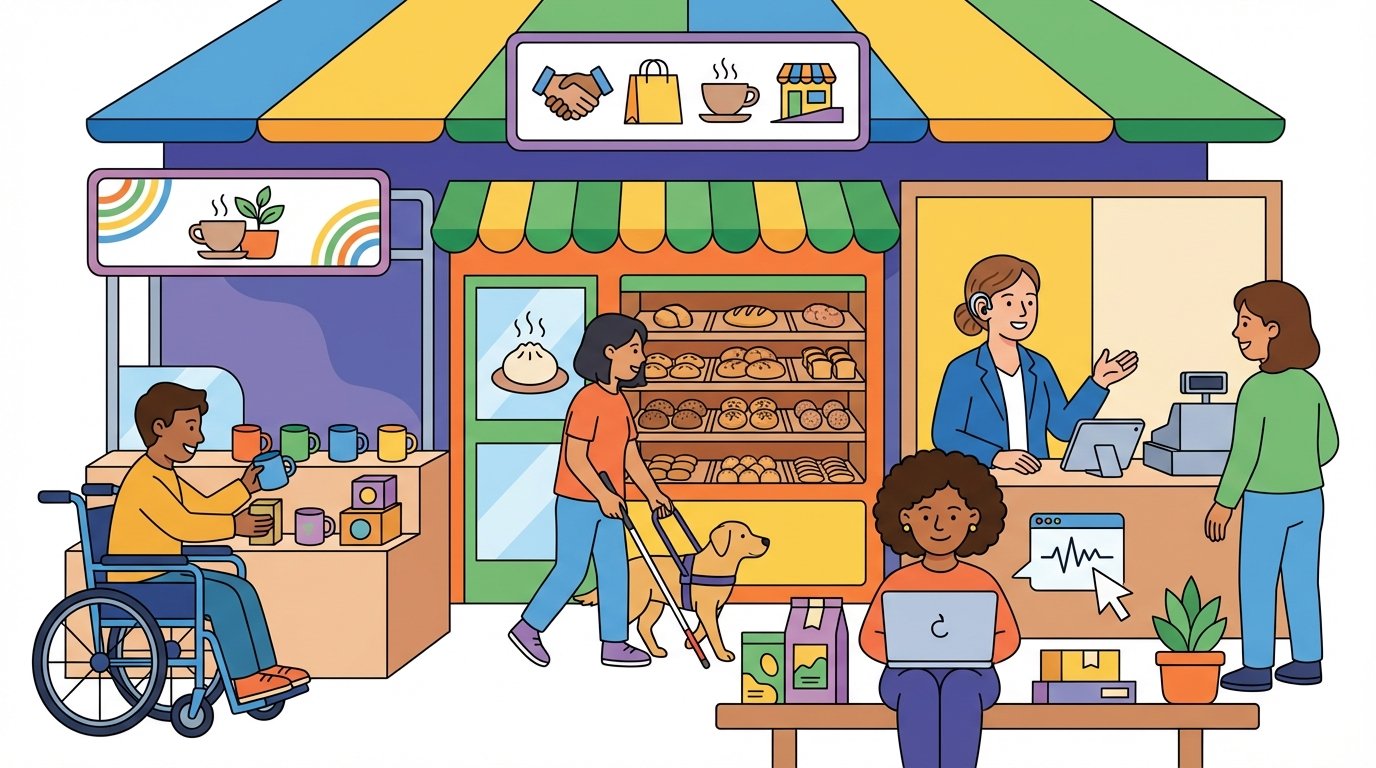
Accessibility as a growth lever for startups
Accessibility acts as a powerful growth lever for startups. Because 70 million U.S. adults, or 28.7 percent, live with disabilities, accessible design expands your market. Therefore, startups that invest in a11y gain immediate reach and customer loyalty.
Regulations raise the bar for digital products. The Department of Justice’s April 2024 rule sets deadlines for WCAG 2.1 Level AA compliance here. Larger jurisdictions must comply by April 2026. Smaller jurisdictions must comply by April 2027. As a result, ADA compliance is now a procurement and legal prerequisite.
Legal risk has grown rapidly. In 2024, over 4,000 accessibility lawsuits were filed, and 67 percent targeted companies with annual revenue below 25 million dollars here. Moreover, forty one percent of federal cases in 2024 were against companies with prior accessibility litigation. Consequently, small startups face meaningful legal exposure.
The business benefits are clear. Accessible websites can see 40 to 60 percent increases in organic search traffic after improvements. A 2024 study analyzed over 63,000 websites. Sites that scored above 75 out of 100 outperformed peers in revenue here. Therefore, accessibility improves SEO and drives sales.
Accessibility also accelerates enterprise sales. Large buyers expect accessible demos, VPATs, and compatibility with assistive technology. For example, tests with NVDA and VoiceOver help prove keyboard navigation and screen reader support. Providing these assets shortens due diligence.
Costs are manageable when planned early. Building accessibility in often adds 10 to 15 percent more design time and 15 to 20 percent more development time. However, retrofitting can cost 150,000 to 200,000 dollars and take months. As one expert said, “Building accessibility in costs a fraction of what retrofitting requires.”
Start with these practical steps
- Follow WCAG 2.1 Level AA at here
- Run manual screen reader and keyboard tests
- Publish a VPAT and accessibility statement
- Budget for continuous a11y testing and remediation
Because accessibility reduces legal risk and widens markets, it becomes a strategic growth lever.
Conclusion: inclusive growth through micro-franchising and accessibility
Micro-franchising and collaborative franchising offer accessible, affordable pathways to entrepreneurship. Because they lower startup costs and standardize operations, they suit first-time founders and MSMEs. Moreover, when startups pair these models with accessibility best practices, they unlock wider markets and stronger enterprise sales.
In practice, accessible micro-franchises improve organic reach and reduce legal risk. For example, building a11y into digital products can boost organic traffic by 40 to 60 percent. Therefore, small operators gain market credibility and better go-to-market outcomes. As a result, funders and enterprise buyers take notice during due diligence.
EMP0 helps startups scale this way with AI and automation solutions. Specifically, EMP0 provides full-stack AI workers and growth systems that automate marketing, operations, and accessibility checks. Visit EMP0 to learn more at EMP0 and read practical guides at this link. Also explore workflow integrations at this resource for automation examples.
Start small, design inclusively, and scale collaboratively. By doing so, your startup can drive growth while creating real economic opportunities for diverse communities.
Frequently Asked Questions (FAQs)
What is micro franchising and collaborative franchising and why do startups use them?
Micro franchising packages a repeatable business into a smaller, low cost unit. Because it simplifies operations, first time founders launch faster. Collaborative franchising shares brand, space, and technology among several operators. As a result, partners cut rent and inventory costs while keeping shared brand recognition.
How much do micro franchises cost and what funding options exist?
Many micro franchises require under twenty five thousand dollars to start. Therefore small loans, microfinance, and crowdfunding often cover early costs. In addition, startups can pursue government grants or deferred payment plans from franchisors. As a result, these models reduce financial barriers for MSMEs.
What accessibility rules must startups follow and what is a VPAT?
Startups must track disability rules such as the DOJ web rule and aim for WCAG 2.1 Level AA compliance. See the DOJ web rule and WCAG at the provided links. A Voluntary Product Accessibility Template, or VPAT, documents how a product meets accessibility criteria. Therefore enterprises often request a VPAT during vendor review.
What are the main business benefits of investing in accessibility now?
Investing in a11y expands your market because about seventy million U S adults have disabilities. Accessible sites can see forty to sixty percent increases in organic traffic after fixes. Moreover, higher accessibility scores correlate with better revenue performance across large samples. Consequently, accessibility improves SEO, enterprise sales, and legal risk mitigation.
How do I implement accessibility in a micro franchise quickly?
Start by following WCAG 2.1 Level AA guidelines and include accessibility in your MVP. Then run keyboard and screen reader tests with NVDA or VoiceOver. Publish an accessibility statement and a VPAT. Finally, schedule ongoing testing and training so accessibility stays current.