Mastering the Enterprise Automation Strategy for Modern Reliability
A recent New York Post report highlights a significant challenge in the modern workplace. Only 37 percent of workers strongly agree they have the right tools to do their best work. This lack of support creates friction and slows down critical operations. Consequently, leaders must adopt a robust Enterprise Automation Strategy to align technology with human potential. This strategic approach acts as a vital bridge between fragmented systems and actual business outcomes.
Strategic automation does not just mean adding more software to the pile. Instead, it involves creating a cohesive environment where different parts work together seamlessly. This process transforms isolated tasks into fluid and reliable workflows. As a result, teams can focus on innovation rather than fixing broken processes. For example, organizations often need a specialized AI agents infrastructure strategy to handle complex digital tasks.
Reliable systems provide the foundation for scaling operations without increasing complexity. Therefore, the goal is to build a structure that supports growth and stability simultaneously. Effective orchestration is the heart of this transformation. Consider this vital perspective on modern efficiency. The real question is whether you can orchestrate what you already have, your systems, your data, your people, into outcomes that are governed, observable, and adaptive.
This quote emphasizes the need for a holistic view of the corporate landscape. Businesses must move beyond simple task automation to achieve true operational excellence. Furthermore, this shift requires a focus on governance and visibility across all platforms. Additionally, the right strategy empowers employees to contribute more effectively. However, reaching this level requires careful planning and a forward looking mindset.
A forward looking mindset is essential for staying competitive in today’s market. You must evaluate how your current infrastructure supports your future objectives. Because the digital world changes rapidly, your strategy must remain flexible and responsive. High reliability is not a static state but a continuous pursuit. Through better integration and smarter workflows, enterprises can unlock hidden potential within their existing resources. This path leads to a more agile and resilient organization.

Building a Resilient Enterprise Automation Strategy through Test Automation
Modern software delivery requires a focus on quality and speed. Reliable systems depend on a solid Enterprise Automation Strategy. Automated testing serves as the backbone of this approach. It ensures that new updates do not break existing features. Consequently, teams often use Regression Testing to maintain stability.
These tests run within Continuous Integration and Delivery Pipelines. Additionally, automation makes these workflows more predictable and efficient. As a result, developers can identify errors earlier in the cycle. Because speed is critical, companies seek tools that simplify complex tasks. One such tool is Playwright which provides immense technical advantages.
Playwright supports Chromium, Firefox, and WebKit from a single API. This capability allows developers to test their apps across different engines easily. Furthermore, specialized platforms like HeadSpin enhance these efforts. HeadSpin provides access to actual devices in over fifty locations worldwide. It also supports over sixty testing frameworks to meet diverse needs.
This level of coverage is essential for Mobile UI Automation. Users expect apps to perform perfectly on every device and network. Therefore, testing on physical hardware ensures a better user experience. However, technical tools are only part of the equation. Teams must also understand the broader production AI agent and RAG architectures involved.
Strategy guides the implementation of these powerful tools. Organizations must avoid reckless deployments to protect their reputation. The following perspective summarizes the current landscape well. Automation is no longer a nice to have for active product teams. It is part of how modern software delivery stays fast without becoming reckless.
Effective testing builds trust between the business and its customers. When software works as intended, user satisfaction naturally increases. Moreover, automated processes reduce the manual burden on quality engineers significantly. This allows experts to focus on complex problem solving instead. Ultimately, a resilient strategy leads to more reliable and scalable software in the long run.
Popular Automation Tools Comparison
Successful automation requires choosing tools that match your technical needs. Therefore, teams should evaluate frameworks based on their specific strengths. For example, some solutions prioritize web browsers while others focus on physical hardware. The following comparison highlights key features of popular enterprise tools. Because the landscape evolves quickly, selecting flexible platforms is essential for long term reliability.
| Tool or Framework | Primary Focus | Key Enterprise Benefit |
|---|---|---|
| Playwright | Multiple Browser Testing | Single API support for Chromium and Firefox and WebKit |
| Selenium | Web Browser Automation | Open source standard for diverse testing environments |
| n8n | Workflow Orchestration | Provides over 1000 integrations for business and AI tools |
| HeadSpin | Real Device Testing | Access to real hardware in over 50 global locations |
The Future of Enterprise Automation Strategy: Agentic Workflows
The landscape of technology is shifting toward more integrated and intelligent systems. By 2030, experts predict that the global system integration market will exceed 700 billion dollars. This massive growth highlights the importance of a unified Enterprise Automation Strategy. Many organizations now look toward agentic automation to solve complex business problems. Because these advanced tools go beyond simple task execution, they provide more value to teams.
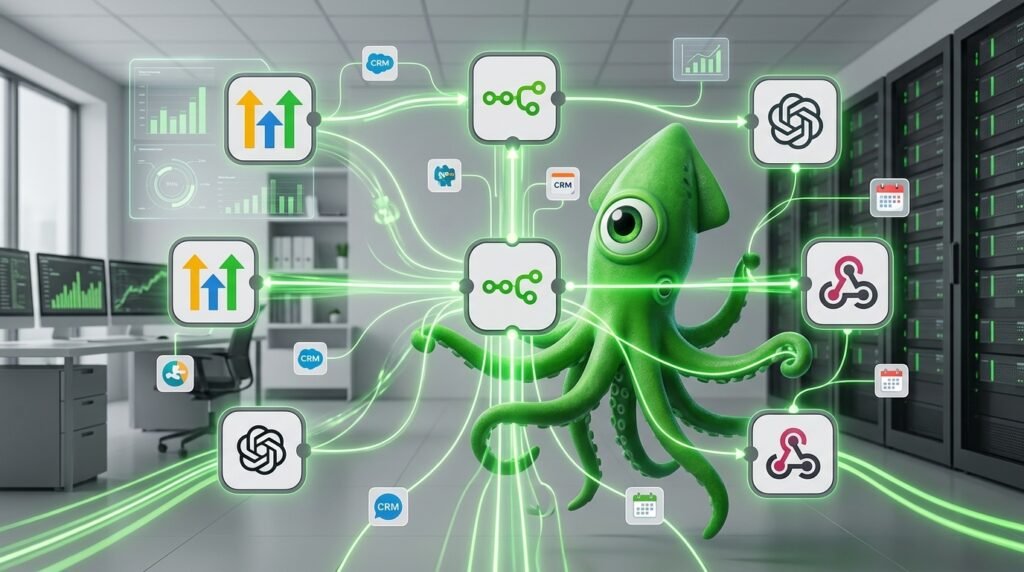
Visual workflow orchestration allows teams to map out these complex journeys clearly. It provides a transparent view of how data flows across various departments. Furthermore, the upcoming integration of n8n inside SAP Joule Studio marks a major milestone. The industry expects this availability in the third quarter of 2026. Such partnerships enable companies to leverage AI model integration and strategic acquisition benefits directly within their existing software.
Establishing a modern AI Workflows Architecture is no longer optional for growth. Businesses must refine their Process Intelligence to identify bottlenecks and efficiency gaps. Consequently, these insights drive better automation choices across the entire organization. Jan Oberhauser believes that automation should empower people rather than replace them. He notes that test automation is not about replacing testers. It is about moving repeatable verification work into fast reliable systems so teams can ship with more confidence.
Reliable systems allow human workers to focus on creative and high value tasks. Therefore, the shift toward agentic workflows represents a significant leap in productivity. However, companies must plan their implementation carefully to avoid fragmentation. Teams can now build adaptive processes that respond to real time changes. As a result, the entire enterprise becomes more resilient and competitive. This evolution ensures that technology serves the strategic goals of the business effectively. Finally, a forward looking approach guarantees long term success in an increasingly digital world.
Conclusion: Achieving Unified Reliability
Ultimately, a unified Enterprise Automation Strategy eliminates fragmentation and drives significant efficiency across the organization. By connecting disparate systems, businesses can create a more resilient operational framework. This strategy ensures that every tool serves a specific purpose within the larger ecosystem. Therefore, leaders must prioritize orchestration to avoid wasted resources and technical debt. As a result, the entire enterprise becomes more agile and responsive to market changes.
Reliable workflows reduce the risks associated with manual errors and data silos. Because technology evolves quickly, a flexible approach is necessary for long term success. Teams that embrace this mindset can scale their operations with greater confidence. Furthermore, the integration of intelligent agents adds a new layer of capability to existing software. This evolution marks the next phase of corporate productivity and growth.
When selecting partners for this journey, consider the value of expert guidance. EMP0 (Employee Number Zero, LLC) is a US based provider of AI and automation solutions. They offer specialized tools like a Content Engine, Marketing Funnel, and Sales Automation. As a full stack and brand trained AI worker, EMP0 helps clients multiply revenue effectively. EMP0 deploys these growth systems directly on client infrastructure to ensure security and control.
A strategic approach requires balancing human expertise with machine speed. Consequently, businesses must choose tools that complement their existing workflows. Consider this final thought on building high performing teams. The strongest teams do not choose one over the other. They use both, on purpose. This balance is the key to mastering modern reliability and achieving sustainable success.
For more information on transforming your operations, visit the EMP0 blog. You can explore detailed guides and insights to improve your business processes. Additionally, stay updated with the latest trends by visiting these platforms regularly. Finally, through better automation, your team can achieve remarkable results today.
Frequently Asked Questions (FAQs)
How long does a typical ERP replacement take to implement?
Replacing an Enterprise Resource Planning system is a major undertaking for any large organization. Typically, this process takes between three and five years to complete. Following this implementation, businesses often experience an extended stabilization period to ensure everything works correctly. Because these systems are complex, careful planning is essential for a smooth transition. Therefore, companies should prepare for a long term commitment when upgrading their core software.
When will n8n become available within SAP Joule Studio?
Industry experts are looking forward to the general availability of n8n inside SAP Joule Studio. This integration is currently planned for the third quarter of 2026. As a result, SAP users will gain access to powerful workflow orchestration tools directly. This partnership aims to simplify how teams build and manage their automated processes. However, organizations should start planning their integration strategy now to take full advantage of this update.
What percentage of workers believe they have the tools needed to do their best work?
According to a recent report from the New York Post, many employees feel unsupported by their technology. Only 37 percent of workers strongly agree they have the tools required to perform at their highest level. This suggests a significant gap between existing software and actual employee needs. Consequently, adopting a better Enterprise Automation Strategy can help close this gap. By providing better tools, companies can improve both productivity and worker satisfaction.
What are the primary technical advantages of using Playwright for automation?
Playwright offers several unique benefits for modern development teams focusing on Test Automation. One major advantage is its ability to support Chromium and Firefox and WebKit from a single API. This allows developers to test applications across multiple browser engines without switching tools. Additionally, Playwright provides fast and reliable execution for complex web interactions. Because it simplifies the testing lifecycle, teams can deliver high quality software much faster.
What is the projected size of the global system integration market by the year 2030?
The demand for connected digital ecosystems continues to grow at a rapid pace. Forecasters predict that the global system integration market will exceed 700 billion dollars by 2030. This growth reflects the increasing need for companies to link their fragmented data and systems. Furthermore, a solid AI Workflows Architecture will be a key driver for this expansion. Businesses must invest in scalable solutions today to remain competitive in this massive future market.