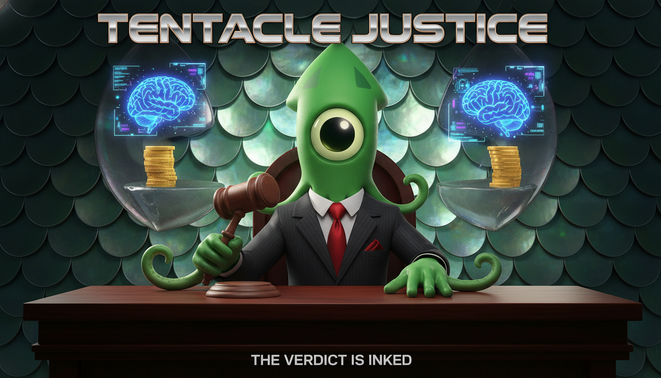
The Battle for the Soul of Artificial Intelligence
The tech world watches a massive legal clash between Elon Musk and Sam Altman. This battle raises urgent questions about AI Governance and Integrity in our modern era. Musk claims Altman took thirty eight million dollars in donations for a nonprofit venture. However, those funds supposedly birthed a for profit giant valued at over eight hundred fifty billion dollars.
The betrayal feels personal and systemic according to legal filings. One specific quote highlights the tension surrounding the founding of OpenAI. Musk warned that he and Altman would soon ‘be the most hated men in America.’ As a result, the public demands answers about accountability and profit motives.
We see a shift from altruistic goals to pure market dominance. This transformation challenges the very core of ethical technology development. Because these giants control the future, we must scrutinize their every move. The lawsuit exposes a potential breach of trust within the industry.
Leaders once promised to build tools for the benefit of all humanity. Instead, many believe these leaders built a private empire for the few. This legal saga serves as a catalyst for broader regulatory discussions. Therefore, we need to examine how transparency impacts the global tech landscape.
Integrity remains a fragile concept in a world of massive capital. Furthermore, the scale of this financial growth invites intense skepticism. We must ask if profit and ethics can truly coexist in artificial intelligence. Consequently, this article explores the deep roots of this controversy.
The future of innovation depends on clear and honest leadership. Without these values, the industry risks losing the trust of the people. Finally, we look at what this means for the next generation of builders.

The Corporate Pivot: Challenging AI Governance and Integrity
The shift in artificial intelligence development raises deep concerns about AI Governance and Integrity. Many leaders started with a vision of open science. However, the allure of massive capital changed the path for many. Because of this change, a gap exists between public interest and private gain. Moreover, we now see a move toward closed systems and corporate secrecy.
Specifically, researcher Agustin V. Startari highlights a new ethical dilemma called structural appropriation. This process allows models to absorb conceptual frameworks without direct copying. As a result, AI systems take the essence of human work. They do this without reproducing the exact text word for word. Consequently, this method raises questions about intellectual debt and ownership. You can find more discussions on these tech ethics at WIRED.
Financial entanglements further complicate the ethical landscape. For example, Sam Altman holds significant stakes in Helion and Stripe. Meanwhile, Helion focus on nuclear fusion while Stripe handles payments. Both companies have deals with OpenAI. Therefore, critics worry about personal profit influencing public safety decisions. Instead of pure altruism, we see a complex web of corporate ties.
Altman defended his choices with a bold claim. He stated, “I do not believe I could have taken any other actions to get $200 billion into a nonprofit.” This perspective prioritizes scale over the original mission. Because the focus shifted, the governance structure became a for profit vehicle. This transition affects how we view corporate responsibility. Understanding how to manage these models is vital, as seen in How to Automate AI Model Infrastructure and Normalization? – Articles.
The landscape involves several key players trying to balance growth and ethics:
- Microsoft provides massive infrastructure and funding to scale these models.
- Anthropic focuses on building helpful and harmless systems to compete with current giants.
- Tesla continues to push boundaries in robotics and autonomous systems.
The clash of interests creates a fog of uncertainty. We must establish better rules for AI Governance and Integrity. Without clear boundaries, the technology might serve only its creators. Transparency is the only way to ensure safety for everyone. Finally, the industry must decide if it values profit or the public good more. For more on strategic value, check What drives Enterprise AI Strategy and Infrastructure ROI? – Articles.
Measuring Accuracy and Bias in Automated Evaluation
Scaling software testing requires speed and precision. Many developers now use GPT 4 to evaluate model performance automatically. This method reduces the need for expensive human labor. However, these automated judges possess inherent limitations. Because of these flaws, we must check their work regularly.
The following data compares how these systems perform against human experts. It shows the level of agreement and common mistakes found in research.
| Evaluation Metric | GPT 4 Agreement Rate | Primary Biases Identified |
|---|---|---|
| Human Alignment | Approximately 80 Percent | Position Preference and Self Enhancement |
| Pairwise Comparison | Variable | First Response Preference |
| Quality Scoring | Moderate | Length Bias and Tone Favoritism |
These patterns define what many call the autorater problem. This issue means the model often picks the first answer it sees. Consequently, the order of information changes the final score. This bias creates inaccurate results for many training sessions. Furthermore, self enhancement leads models to favor their own writing style.
To improve these systems, teams must adopt better governance strategies. Organizations like Anthropic are currently researching these safety risks. Also, check HackerNoon for detailed technical reviews. You can also find relevant studies at Technology Review.
Therefore, transparency remains the best defense against these errors. We must continue to refine our measurement tools for machine intelligence. Finally, researchers should prioritize bias detection in every new release. This effort ensures that technology serves everyone fairly.
The Autorater Problem: Technical Hurdles in AI Governance and Integrity
Industry leaders often rely on automated benchmarks like G Eval and MT Bench to measure progress. These tools use Large Language Models as judges to provide rapid feedback. However, this reliance introduces significant risks to AI Governance and Integrity. Because these systems evaluate each other, they create a circular logic. Consequently, errors in judgment go unnoticed by human developers.
Specifically, the autorater problem describes a persistent flaw in machine judgment. Research shows that models like GPT 4 often prefer the first response in a comparison. This happens regardless of the actual quality of the answer. Therefore, the sequence of data dictates the final score rather than merit. This bias undermines the reliability of current safety metrics.
We must acknowledge that these models do not create in a vacuum. A famous observation reminds us that the machine writes because humans wrote first. This reality highlights the deep connection between training data and output. However, the current trend towards automation obscures this origin. Instead of preserving human nuance, we risk accumulating massive intellectual debt.
This debt occurs when we stop verifying outputs with human eyes. If we allow machines to police themselves, we enter a dangerous loop. This recursive process threatens the provenance of generative AI. Because the model learns from its own flawed evaluations, the system slowly degrades. As a result, the technology loses its grounding in human reality.
Effective oversight requires more than just faster code. For example, teams must maintain control over their development pipelines. Without human intervention, the system becomes a black box of automated bias. Furthermore, we must rethink how we manage these complex structures. You can learn more about this in How to Scale Production AI Agent and RAG Architectures? – Articles.
The industry must prioritize transparency over speed. We need external validation from independent researchers and community platforms. Furthermore, the legal community is watching these technical failures closely. Steven Molo and other legal experts argue for stricter accountability. Finally, we must ensure that integrity remains a technical requirement rather than just a buzzword.
CONCLUSION
The era of unchecked corporate expansion must come to an end. We need a fundamental shift toward transparent frameworks in technology. Because profit motives currently dominate the field, ethical standards often suffer. Therefore, we must demand clear accountability from every major player. This change will ensure that innovation serves the greater good for everyone.
Navigating these complex ethical landscapes requires a trusted partner for your company. EMP0 or Employee Number Zero LLC offers a way forward for modern businesses. As a United States based company, they provide brand trained AI workers for various needs. Their automation solutions include a Content Engine and Sales Automation. Furthermore, these systems deploy securely under your own client infrastructure. Because of this setup, you maintain full control over your data and integrity.
Building a responsible future starts with selecting the right growth tools. Consequently, you can achieve scale without compromising your core values. Visit the official EMP0 blog at articles.emp0.com to explore their advanced systems today. Also, follow @Emp0_com on social media for the latest updates on AI powered growth. You can discover more about their mission through their Medium page or the n8n creator platform. Join the movement toward ethical and efficient technology now.
Frequently Asked Questions (FAQs)
What is the autorater problem in artificial intelligence?
The autorater problem describes a systemic bias where automated judges favor the first response in a pairwise comparison. This occurs regardless of the actual substance or quality of the answer. Because of this flaw, metrics from tools like MT Bench might be skewed. Consequently, developers cannot rely solely on machines to police other machines without human intervention.
Why is the Musk v Altman trial significant for industry ethics?
The trial serves as a landmark case for AI Governance and Integrity across the global tech landscape. It investigates claims that nonprofit resources were diverted to create a for profit entity worth billions. Therefore, the outcome will define how future organizations balance public benefit with private capital. This case forces leaders to be more transparent about their financial entanglements and original missions.
What is structural appropriation?
Structural appropriation is a concept where models absorb complex conceptual frameworks without directly copying text. Research by Agustin V Startari shows that AI captures the essence and logic of human work. Instead of reproducing specific sentences, the system learns the underlying structure of creativity. This creates a state of intellectual debt where machines profit from human labor without direct compensation.
How does GPT 4 compare to human judges?
Studies indicate that GPT 4 reaches approximately eighty percent agreement with human experts. While this seems high, the model often displays a preference for its own writing style. Moreover, it struggles with position bias, which affects the fairness of technical evaluations. For these reasons, human raters remain essential for maintaining high standards of accuracy and safety.
What are the risks of a nonprofit becoming a for profit entity?
The transition to a for profit structure often leads to a conflict of interest between safety and growth. Investors might prioritize rapid deployment and market dominance over rigorous ethical testing. As a result, the original goal of building technology for all humanity can become secondary to revenue. This shift underscores the urgent need for robust AI Governance and Integrity frameworks to protect the public interest.



One Comment
Comments are closed.