
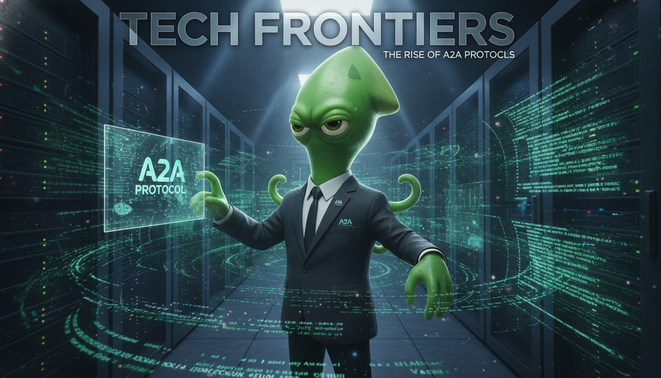
Why prioritize Agent-to-Agent (A2A) Protocol and Appium 3 Migration?

    Automation

    Agent to Agent (A2A) Protocol and Appium 3 Migration: The New Standard for Enterprise Automation

    Modern enterprises now face a major turning point in technology history. The traditional era of isolated automation scripts is finally ending. Businesses must instead embrace the power of autonomous agentic systems to remain competitive.

    This evolution requires a solid framework for communication and testing. The Agent to Agent (A2A) Protocol and Appium 3 Migration defines the new standard for software architecture. These protocols ensure that intelligent agents collaborate effectively across diverse platforms.

    Because digital ecosystems grow more complex every day, simple scripts can no longer manage modern workloads. Consequently, organizations need robust tools like the A2A protocol to bridge the gap between separate AI systems. This open standard allows different agents to speak a common language.

    Similarly, the transition to Appium 3 modernizes mobile automation by removing legacy features. For example, the removal of TouchAction interactions makes way for the W3C Actions API. You can read more about these requirements on the official W3C WebDriver page.

    Leaders must understand these changes to build scalable and secure automated workflows. Implementing these standards is critical for operational success in 2026. Therefore, engineers must focus on upgrading their infrastructure to support Node.js versions and Express v5.

    These upgrades provide the speed and security required for real time agent collaboration. As a result, businesses can achieve a higher level of orchestration that was previously impossible. Modern frameworks use mTLS for encryption to protect sensitive data. Additionally, the Appium 3 documentation provides clear guidance on the latest requirements.

    the latest requirements.

    Foundations of the Agent to Agent (A2A) Protocol

    Google introduced the A2A protocol in April 2025 as a major open standard for communication. This framework allows diverse AI systems to interact without human interference. Because it provides a unified language it significantly reduces operational friction in enterprise settings. The agent to agent protocol also called the Agent2Agent or A2A protocol solves this problem by giving different agentic systems a common language for collaboration.

    The technical stack relies on established internet technologies to ensure maximum stability. Specifically the protocol uses HTTP as the primary transport mechanism for all data. It utilizes JSON RPC for structured messaging between different agent entities. Furthermore developers implement Server Sent Events to facilitate continuous streaming updates in real time. This combination ensures that agents remain synchronized during complex tasks.

    Security is a central pillar for this new standard to protect corporate assets. Organizations use mutual Transport Layer Security to maintain encrypted connections. Additionally the protocol fully supports OpenID Connect for identity verification. It also works with JSON Web Tokens and OAuth for flexible authentication. These security layers protect data while allowing agents to perform specialized actions across the network.

    A unique feature of this architecture is the agent card concept. This card provides a detailed description of the identity and capabilities of an agent. Consequently other systems can instantly determine if a specific agent fits a required task. Although some compare it to other tools A2A remains technically distinct. For instance A2A handles interoperability between the agents themselves. In contrast the Model Context Protocol manages the connection between a client and its resources. Therefore both protocols serve different but essential roles in the automation landscape.

    A minimalist tech visual showing three geometric nodes connected by glowing light pulses on a dark background.

    The Impact of Agent to Agent (A2A) Protocol and Appium 3 Migration on Mobile QA

    The shift to modern automation standards creates a more reliable testing environment. Because of this change the Agent to Agent (A2A) Protocol and Appium 3 Migration represent a critical step. These standards help quality assurance teams improve their results. This update forces a move away from fragile and outdated methods. Experts like Piali Mazumdar emphasize that these changes align with global mobile standards. Consequently companies must adapt their testing pipelines to avoid operational failure.

    One of the most significant changes involves the underlying infrastructure requirements. Specifically Appium 3 requires modern environments to operate correctly. You must use Node.js version ^20.19.0 or version ^22.12.0 or even version >=24.0.0 and above. Additionally the internal server engine transitioned from Express v4 to Express v5. This upgrade improves performance and security across the entire automation stack. Therefore engineers must verify their environment variables before starting the migration process.

    Mobile interaction logic also sees a massive overhaul in this version. The framework removes support for legacy TouchAction based interactions entirely. Instead developers must now use the W3C Actions API for all gestures. This move ensures that mobile tests remain consistent with web standards. As a result automation engineers can create more stable and predictable scripts. Vishnu Dass notes that this transition reduces the maintenance burden for large test suites.

    The role of drivers like UiAutomator2 and XCUITest remains central to the ecosystem. However these drivers now operate within a more disciplined architectural framework. Since the platform demands stricter compliance they handle mobile elements with greater precision. This change allows agentic systems to interact with mobile applications more effectively. Furthermore the integration of Express v5 provides better error handling for these drivers. Testing teams will notice improved reliability when executing tests across multiple devices.

    Organizations must view this migration as an opportunity for architectural improvement. Because legacy code often slows down innovation cleaning up old interactions is beneficial. For instance moving to the W3C standard creates a more future proof environment. Although the initial setup requires effort the long term gains in speed are substantial. Therefore teams should prioritize these upgrades to support the next generation of AI agents.

    Feature Comparison: Appium 2.x vs Appium 3.0

    The following table outlines the major technical shifts required for the latest automation standards. These updates ensure better compatibility with modern agentic systems.

    Feature Appium 2.x (Legacy) Appium 3.0 (Modern)
    Internal Server Engine Express v4 Express v5
    Interaction API TouchAction (Legacy) W3C Actions API
    Recommended Node.js Version Older versions (e.g. v16 or v18) ^20.19.0, ^22.12.0, or >=24.0.0
    Driver Architecture Mixed Compliance Strict W3C WebDriver Standard
    Security Protocols Basic Authentication mTLS, OIDC, and OAuth Support

    This technical evolution reflects the broader industry movement toward standardized protocols. Because Appium 3 adopts Express v5 it handles asynchronous work more efficiently. Consequently developers experience fewer crashes during long running tasks. You can find more details on the Appium migration guide. Furthermore the mandatory switch to the W3C Actions API removes inconsistencies across different mobile platforms. Use this table to plan your infrastructure upgrades effectively.

    CONCLUSION

    The implementation of the Agent to Agent Protocol and Appium 3 Migration marks a new era for enterprise automation. Because these frameworks provide a unified language for AI agents they solve many implementation hurdles. These protocols allow different systems to collaborate without constant human intervention. Therefore companies can focus on strategic growth instead of fixing broken scripts.

    Furthermore these standards are essential for managing asynchronous work in high volume environments. Since many automated tasks take time to complete reliable streaming updates are necessary. The A2A protocol provides this capability through server sent events. As a result businesses can maintain visibility into complex operations at all times. This shift ensures that every agent stays synchronized across the network.

    If your organization wants to leverage these advanced technologies you need a trusted partner. Employee Number Zero LLC is a US based full stack agency. We provide brand trained AI workers to optimize your business operations. Our solutions include a comprehensive Content Engine and sophisticated Marketing Funnels. Additionally we offer Revenue Predictions to help you plan for the future.

    We help clients multiply their revenue through secure infrastructure based growth systems. Our team ensures that your automation remains compliant with the latest standards. Consequently you can scale your business with total confidence. You can follow our updates on our Blog for more information. Also connect with us on Twitter to see our latest innovations. We invite you to learn about modern server frameworks for technical depth.

    Frequently Asked Questions (FAQs)

    What is the difference between the Agent to Agent protocol and the Model Context Protocol?

    The Agent to Agent protocol manages the interoperability between the agents themselves. In contrast the Model Context Protocol handles the connection between a client and its resources. Therefore A2A focuses on how agents communicate while MCP focuses on resource access. Both protocols are necessary for a complete automation ecosystem.

    Which Node js versions do I need to run Appium 3?

    Appium 3 requires modern versions of Node js to function correctly. Specifically you must use versions 20.19.0 or 22.12.0 or even versions greater than 24.0.0. Additionally you need npm 10 or later for a successful installation. Because these versions offer better performance they are the new industry standard.

    How does the Agent to Agent protocol handle security for enterprise systems?

    Security in the Agent to Agent protocol relies on several robust layers of protection. Organizations use mutual Transport Layer Security for encrypted communication. Furthermore the system supports OpenID Connect and JSON Web Tokens for identity verification. It also integrates with OAuth to ensure that only authorized agents access sensitive data.

    Why did the developers remove legacy TouchAction interactions in Appium 3?

    Developers removed TouchAction interactions to favor the W3C Actions API. This move ensures that mobile automation follows the same standards as web testing. Because the legacy method was often unreliable this change improves test stability. Consequently engineers can write cleaner code that works across multiple platforms.

    What is the role of JSON RPC in agentic messaging within the A2A framework?

    JSON RPC serves as the primary language for structured messaging between different agents. It allows systems to exchange data in a format that is easy to read and parse. Since it works over HTTP it is compatible with most existing web infrastructure. As a result agents can send and receive complex commands without technical conflicts.