Overcoming the Legacy Software Trap
Legacy enterprise software often feels like a massive trap. As of 2026, many companies still struggle with severe manual bottlenecks. Consequently, these outdated systems drain valuable resources and slow down overall growth. However, modern business transformation requires unprecedented speed. Therefore, business leaders must adapt quickly to stay competitive. In fact, relying on old manual methods is a guaranteed path to operational failure.
To fix this problem, you need intelligent workflow automation. Specifically, you must leverage AI to connect your disconnected tools. Today, we will share seven actionable enterprise software workflow automation hacks. These proven strategies will help you reclaim thousands of lost hours. Moreover, they will boost your bottom line significantly. Ultimately, you will learn how to turn sluggish processes into lightning-fast, automated systems. Here is how you can transform your operations immediately.
Revolutionizing Systems with AI Agents
Hack 1: Deploy Agentic Architectures
First, deploying agentic architectures is absolutely crucial. AI automation agencies are increasingly specializing in agentic architectures today. This advanced approach requires deep technical depth and expert operational design. Furthermore, AI agents can autonomously handle complex, multi-step tasks. Therefore, your team can finally focus on high-level strategy instead of tedious data entry. Consequently, this shift drives massive productivity gains.
Hack 2: Connect Core Tech Stacks
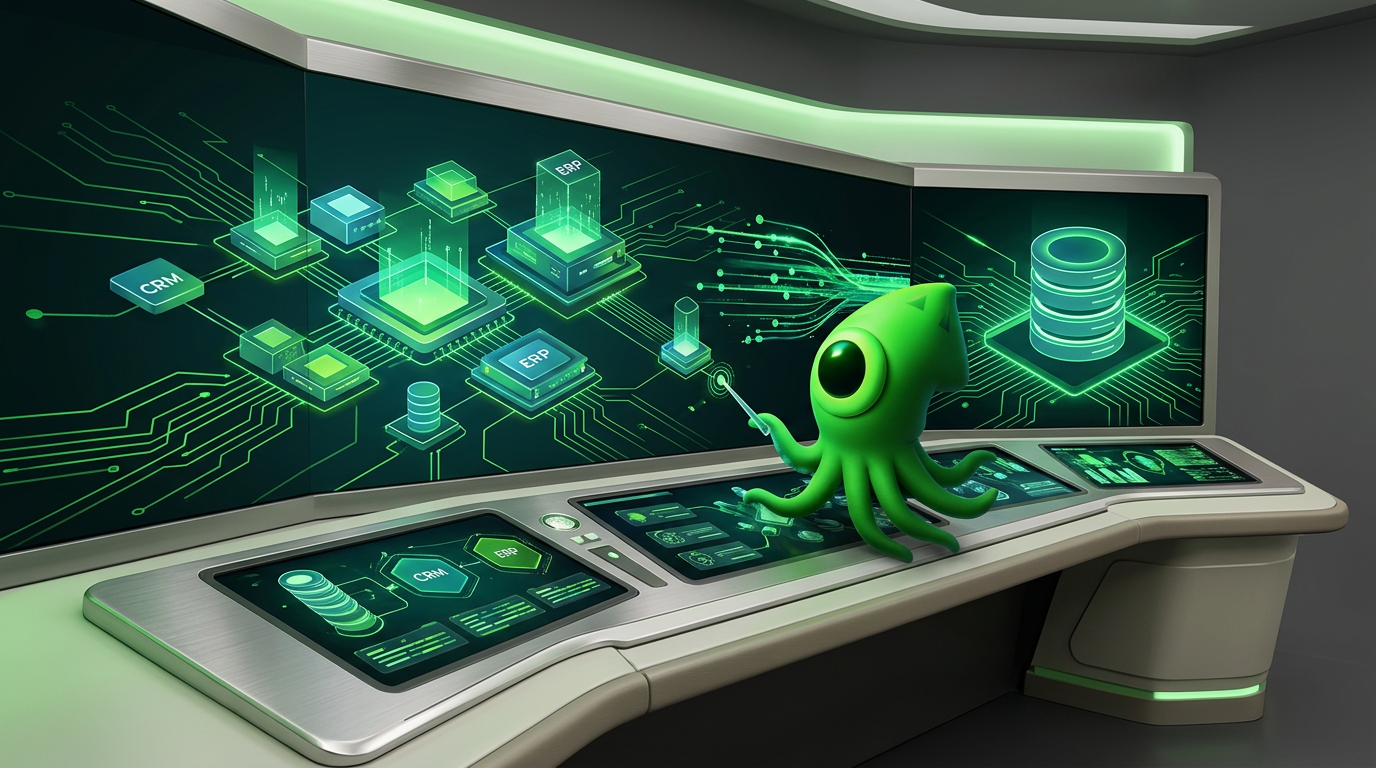
Next, you must integrate your systems. A core competency of modern AI automation agencies is connecting existing technology stacks. For instance, you must link CRMs, ERPs, communication platforms, and data warehouses. Consequently, this enables seamless, automated data and decision flows across your enterprise. If you want to dive deeper, How Process Automation and AI Save Millions details this strategy perfectly. Furthermore, accurate data integration prevents costly AI hallucinations. You can read more about data integrity in Why is AI Data Reliability Ruining Your Agents?.
Hack 3: Utilize Rapid AI Deployment Tools
Finally, leveraging modern platforms is a game-changer. By 2026, utilizing the right software stack is non-negotiable. Alongside APIs from OpenAI, Anthropic, and Google, sophisticated AI workflows are built rapidly. In fact, you can now deploy them in weeks rather than years. Here are the essential tools for 2026:
- Make and n8n: Ideal for complex, visual workflow building.
- Zapier: Perfect for rapid, simple API connections.
- LangChain: Essential for structuring advanced AI logic.
Therefore, you no longer need to wait years for custom software. For a comprehensive comparison of these tools, check out our Zapier vs Make vs n8n: Automation Guide.
Scaling with Modules and Smart Recruitment
Hack 4: Use Pre-Built Modules
Building everything from scratch is entirely outdated. Instead, smart companies leverage existing frameworks. For example, Automation House utilizes an integrated in-house team to provide tailored process automation tools. Furthermore, they offer pre-built customized modules. Consequently, this eliminates the need for complex software development entirely. Therefore, your business transformation happens smoothly and cost-effectively.
Hack 5: Combine AI with Automation Creatively
Innovation requires a highly blended approach. For example, HatchWorks AI excels in this specific area. Founded in 2016 and headquartered in Atlanta, GA, they have a team size of approximately 120 employees. Specifically, they focus on creatively combining AI with automation. Thus, they deliver highly tailored enterprise solutions. Consequently, pairing predictive AI with robotic process automation yields incredible results. This hybrid model handles both cognitive and repetitive tasks flawlessly.

Hack 6: Optimize Tech Recruitment
Scaling your automation requires the absolute right talent. Therefore, you must hire strategically in 2026. DevsData operates as a boutique tech recruitment and software agency. Specifically, they help scale in-house developer teams effectively. As a result, you get the exact skills needed to maintain your advanced systems. Furthermore, partnering with specialized recruiters ensures your team stays ahead of industry curves.
Hack 7: Master Workflow Automation Platforms
Finally, you must standardize your automation environment. Whether you use GoHighLevel or n8n, platform consistency is key. To understand this dynamic better, read GoHighLevel vs n8n: Ultimate Workflow Automation. Ultimately, standardizing your platforms reduces long-term maintenance costs. Moreover, it drastically simplifies new employee training. Next, ensure your team fully understands API limits. Thus, your automated workflows will never crash during peak operational hours.
The 2026 ROI of Enterprise Automation
The financial numbers behind AI automation are truly staggering. According to a 2026 industry report, companies deploying agentic architectures see massive returns. First, operational costs drop significantly across all departments. In fact, automated data flows reduce manual entry errors by nearly 100%. Furthermore, businesses using platforms like Make and LangChain launch products 40% faster. Consequently, this speed-to-market advantage is absolutely crucial for survival.
Additionally, leveraging modern APIs from OpenAI and Google yields a 300% increase in productivity. Therefore, investing in customized modules is not just an optional upgrade. Instead, it is a strict survival imperative for modern enterprises. Ultimately, the data clearly proves that strategic AI automation drives undeniable business transformation.
Manual vs. Automated Workflows
Here is a clear, structured comparison of enterprise software processes in 2026.
| Metric | Manual Enterprise Workflows | AI-Automated Workflows |
|---|---|---|
| Deployment Speed | 1 to 3 Years | 2 to 4 Weeks |
| Data Error Rate | High (Human Error) | Near Zero |
| System Scalability | Limited by Headcount | Infinite (API Driven) |
| Cost Predictability | Highly Volatile | Highly Stable |
As shown above, the automated approach wins decisively. Furthermore, it provides unmatched reliability for scaling operations. Thus, your enterprise software strategy must evolve immediately.
Visualizing Agentic Architectures
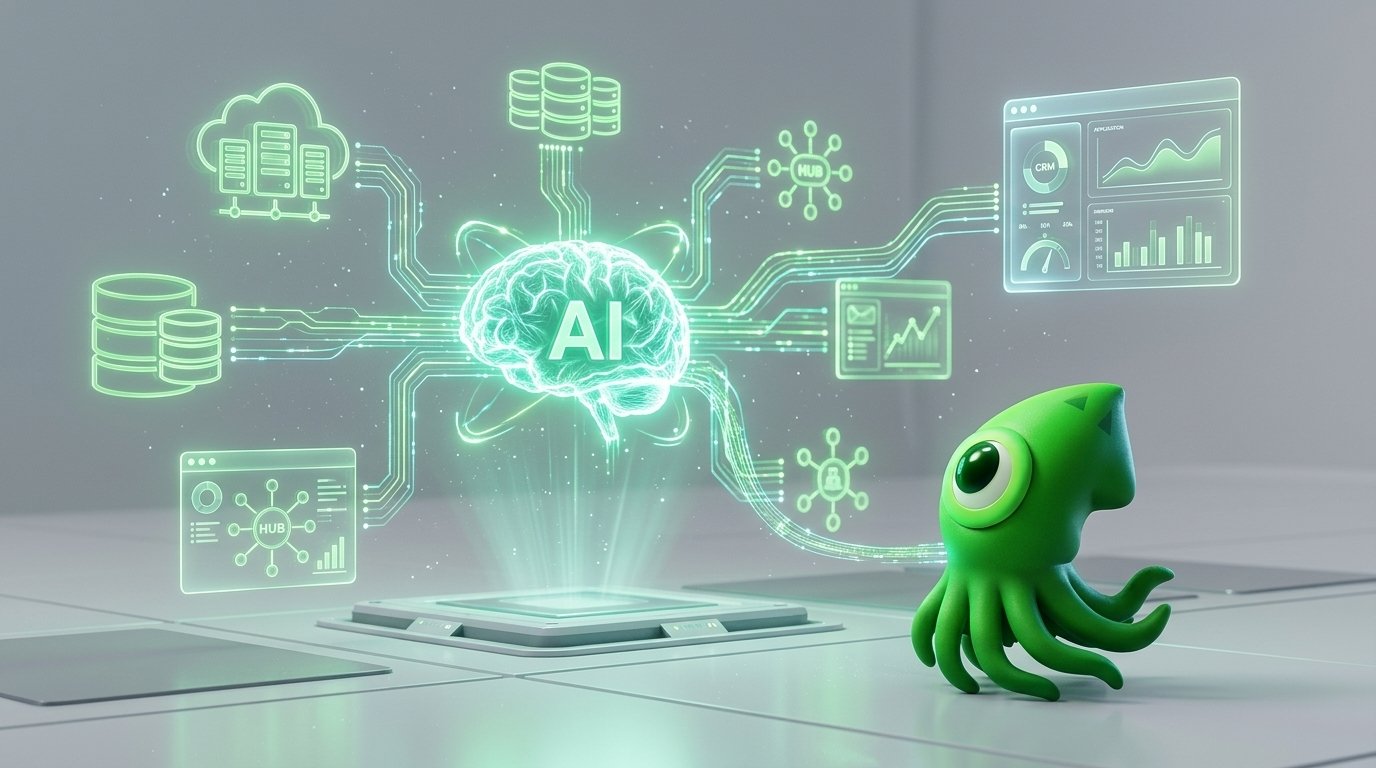
Understanding these systems visually is highly beneficial for leaders. Imagine a central hub representing your core AI agents. Next, glowing arrows flow outward to various enterprise software nodes. For example, one arrow points directly to your CRM. Meanwhile, another connects seamlessly to your ERP. Furthermore, a secure data warehouse sits firmly at the foundation.
Consequently, this illustrates a perfect, bi-directional data flow. In addition, small icons represent LangChain and OpenAI APIs powering the underlying logic. Therefore, this mental diagram highlights how interconnected modern automation truly is. Ultimately, it shows a perfectly synchronized digital ecosystem.
Transform Your Enterprise Today
In conclusion, legacy enterprise software does not have to be a bottleneck. By implementing these seven hacks, you can completely revolutionize your operations. First, deploy agentic architectures and connect your core tech stacks immediately. Next, utilize rapid AI deployment tools and leverage pre-built modules. Furthermore, combine AI creatively, optimize your tech recruitment, and master workflow platforms.
Consequently, you will achieve unprecedented operational growth and efficiency. Therefore, do not wait for your competitors to act first. Instead, start upgrading your systems today. Embrace AI automation now and secure your company’s future.
What are agentic architectures?
Agentic architectures are highly advanced AI systems. Specifically, they use autonomous AI agents to manage complex workflows without human intervention. Consequently, they can plan, execute, and adjust tasks dynamically based on real-time data.
How fast can we deploy AI automation in 2026?
Using modern platforms like Make, n8n, and LangChain, deployments are incredibly rapid. In fact, alongside APIs from OpenAI and Anthropic, you can launch sophisticated enterprise workflows in just a few weeks rather than years.
Do we need to build custom software from scratch?
No, you absolutely do not. For instance, agencies like Automation House provide pre-built, customized modules. Thus, you avoid complex software development entirely while still achieving tailored business transformation.
Why is specialized tech recruitment important for automation?
Maintaining advanced enterprise software requires highly specific technical skills. Therefore, utilizing boutique agencies like DevsData ensures you hire the exact right talent. Consequently, this helps scale your in-house developer teams effectively.