

Cut AI Costs and Latency with Prompt Caching: Practical Strategies for LLM Driven Products
Are your artificial intelligence applications becoming too expensive to operate? As large language models (LLMs) grow more powerful, the associated costs and latency often increase as well. Each time a user interacts with a chatbot or a complex Retrieval Augmented Generation (RAG) pipeline, you incur expenses for the computational power required to process the request. Consequently, these repetitive calculations can strain your budget and result in slow response times, creating a frustrating user experience. But what if a technique existed to dramatically reduce these issues without sacrificing the quality of your AI’s output?
This is where prompt caching offers a powerful solution. Prompt caching is a vital optimization method that makes LLM driven products both faster and more economical. The concept is straightforward: instead of repeatedly processing identical parts of a prompt, the system stores and reuses the results of common instructions. This simple adjustment can lead to significant improvements. Therefore, this article will explore practical strategies for implementing prompt caching effectively. We will cover the fundamental principles and advanced techniques that empower you to minimize unnecessary expenses and provide a seamless experience for your users.
Understanding How Prompt Caching Works
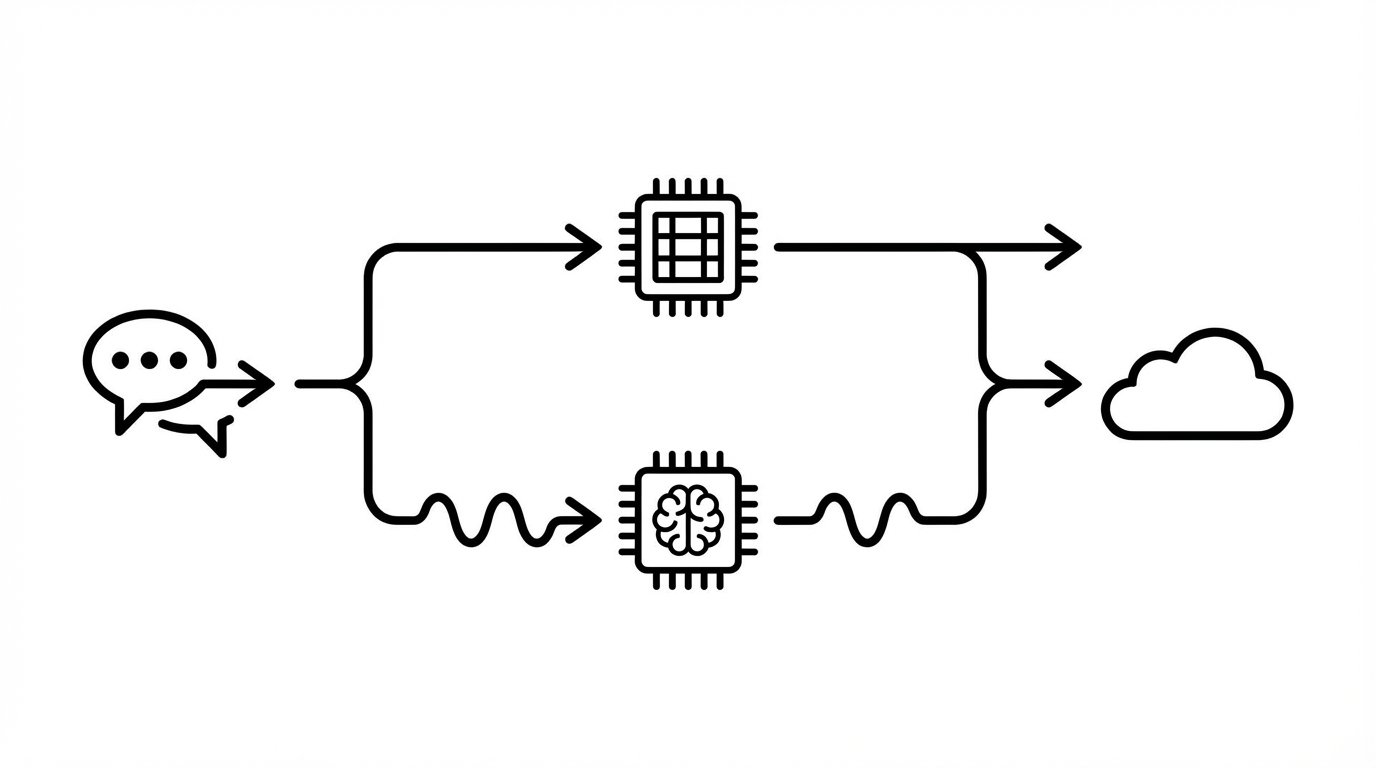
Prompt caching is a powerful strategy to make LLM applications more efficient. At its core, the technique involves storing the results of computations for parts of a prompt that are used repeatedly. When the same part appears in a new request, the system retrieves the stored result instead of processing it again. This process significantly reduces latency and lowers API costs. Because the final output remains unchanged, you gain efficiency without any drop in accuracy. This is especially useful in applications like chatbots or agents that rely on structured LLM workflows. For example, you can see how this works in multi agent incident response systems.
Core Techniques: KV Caching and Prefix Caching
Two primary methods drive prompt caching: KV caching and prefix caching. KV caching operates at a low level by storing intermediate attention states, known as key value pairs, directly in the GPU’s memory. This prevents the model from recomputing these states for every new request. On the other hand, prefix caching focuses on the initial text of a prompt. If multiple prompts share an identical beginning, or prefix, the system computes it once and reuses that computation for all subsequent prompts. For instance, a travel assistant might always start with the same system instructions, making it a perfect candidate for this method.
Imagine a travel planning assistant. The initial prompt might be, “You are a helpful travel planner. Create a 5 day itinerary for Paris focused on museums and food.” This entire block of text is the prefix. When one user asks for this itinerary and another requests the same, the system can reuse the cached result for the prefix. It only needs to process the unique parts of each user’s request. As a result, the response is delivered much faster and at a lower cost.
Caching can be implemented at various layers of the AI system to maximize benefits. The most common types include:
- Token Level Reuse: Caching the computations for individual tokens or short phrases.
- Internal Model States: Storing intermediate calculations within the model’s attention layers, which is what KV caching does.
- Full Prompt Caching: Reusing the entire output when an identical prompt is submitted multiple times.
Practical Strategies to Maximize Prompt Caching Efficiency
To get the most out of prompt caching, you need a thoughtful approach. Simple adjustments to how you structure prompts and manage your system can yield massive improvements in speed and cost. Therefore, focusing on best practices is essential for building scalable and efficient LLM driven products.
Structuring Prompts and System Instructions
How you design your prompts directly impacts caching success. The most important rule is to create a stable and reusable prefix. To achieve this, you should always place static content like system instructions at the very beginning.
- Place Static Content First: Instructions like “You are an expert Python code reviewer” should always come before any user specific input. This creates a predictable prompt prefix that the system can cache.
- Move Dynamic Content to the End: Any information that changes from user to user, such as their specific question or data, should be appended at the end of the prompt.
- Avoid Dynamic Prefixes: Never include dynamic elements like timestamps, user IDs, or session keys in the prefix. Even a small change will prevent the cache from recognizing a match.
- Serialize Data Consistently: When working with structured data formats like JSON, always ensure the keys are serialized in the same order. Different ordering will result in a different text representation, causing a cache miss.
Monitoring the Cache Hit Rate
You cannot improve what you do not measure. For this reason, monitoring your cache hit rate is critical. This metric reveals the percentage of requests that successfully leverage a cached entry. A high hit rate confirms your strategy is working, while a low rate signals a need for optimization. If your rate is low, analyze the prompts that cause misses. You might find opportunities to standardize them further.
Managing Memory Tiering and Eviction
Caching is not without its technical hurdles. One of the biggest constraints is the finite amount of GPU memory (VRAM) available for storing KV caches. As your application scales, you will need strategies to manage this limited resource. Effectively managing memory is crucial, especially when evaluating the performance of different models like in a ChatGPT 5.2 vs Claude 4.5 Opus comparison.
When memory fills up, a cache eviction policy decides which entries to discard. A common policy is Least Recently Used (LRU), which removes the data that has not been accessed for the longest time. For more complex systems, memory tiering offers a scalable solution. This approach uses multiple layers of storage. The most frequently accessed data stays in fast VRAM, while less used entries are moved to slower CPU RAM or even disk storage. This strategy ensures your application remains fast without being limited by expensive GPU memory. You can learn more about caching techniques from technology leaders like IBM.
| Feature | KV Caching | Prefix Caching | Token Level Reuse |
|---|---|---|---|
| Definition | Stores intermediate attention states (key value pairs) in GPU memory to avoid recomputing them. | Reuses the computation for a shared initial sequence of tokens (the prefix) across multiple prompts. | Caches the computational results for individual tokens or very short, common phrases. |
| How it Reduces Latency | Dramatically speeds up generation by avoiding redundant internal calculations for cached tokens. | Skips the entire processing step for the shared prefix, leading to faster initial responses. | Provides minor speed improvements by reusing results for frequently occurring tokens. |
| How it Cuts Costs | Lowers the total number of computations, directly reducing the operational cost per API call. | Reduces the number of tokens processed per request, which lowers API expenses significantly. | Offers minimal cost savings because the scope of reuse is very small and less frequent. |
| Best Usage Scenarios | Multi turn conversations (chatbots), generating long text sequences, and complex agent interactions. | RAG pipelines, applications with fixed system instructions, and chatbots with consistent opening prompts. | General purpose applications where certain keywords or phrases are extremely common. |
| GPU Memory Impact | High. It directly consumes VRAM to store the attention states, which can be a limiting factor. | Moderate. The impact depends on the length and quantity of the prefixes being stored in memory. | Low to Moderate. It requires memory to store the cache, but the impact is generally smaller. |
| Implementation Complexity | High. This method requires deep integration with the model’s inference logic and memory management. | Moderate. It involves building logic to identify, manage, and serve the shared prompt prefixes. | Low. This can often be implemented as a simple lookup table or dictionary. |
Conclusion: A Faster and More Affordable AI Future
In conclusion, prompt caching is no longer just an option but a critical necessity for building scalable and successful LLM driven products. The core principle is simple yet powerful: by eliminating redundant computations, you can dramatically improve performance. This technique allows AI applications like chatbots, agents, and RAG pipelines to respond faster and operate at a fraction of the cost. Most importantly, these gains in efficiency and cost reduction are achieved without altering the final output, preserving the high quality user experience you aim to deliver. As a result, embracing prompt caching is a fundamental step toward creating sustainable and responsive AI systems.
Implementing these advanced strategies requires deep expertise. At EMP0, we specialize in delivering high performance AI and automation solutions that help our clients multiply their revenue. We deploy secure, full stack AI systems directly within your infrastructure, giving you full control over your data and operations. Our team leverages cutting edge techniques like prompt caching to ensure your applications are not only powerful but also cost effective and incredibly fast. To see our expertise in action, you can read our latest insights on our blog at articles.emp0.com and explore our automation work at n8n.io/creators/jay-emp0.
Frequently Asked Questions (FAQs)
What exactly is prompt caching?
Prompt caching is an LLM optimization technique designed to make artificial intelligence applications faster and more affordable. The fundamental idea is to store and reuse the computational results of frequently repeated parts of a prompt. For instance, if many users interact with a chatbot that starts with the same set of instructions, the system processes those instructions once, saves the result in a cache, and then retrieves that result for all future requests. This approach completely avoids redundant processing, which is a common issue in many AI systems. Therefore, prompt caching is a key strategy for improving the overall efficiency of LLM driven products without changing the final output or accuracy.
What are the primary benefits of using prompt caching?
The main advantages of implementing prompt caching are significant reductions in both latency and operational costs. By reusing pre computed results, the system can generate responses much faster, which leads to a dramatic latency reduction and a smoother, more engaging user experience. This speed is especially noticeable in interactive applications like chatbots. Furthermore, because caching minimizes the number of tokens that need to be processed for each request, it directly leads to cost reduction. Fewer computations mean lower API bills and less demand on your hardware. These performance gains can be a major competitive advantage, similar to how different models are benchmarked for speed and efficiency in comparisons like ChatGPT 5.2 vs Claude 4.5 Opus. Ultimately, you get a faster, cheaper, and more scalable application.
Are there any challenges or downsides to implementing prompt caching?
While prompt caching offers powerful benefits, there are some technical challenges to consider. The most significant is the management of GPU memory (VRAM). Advanced techniques like KV caching store intermediate attention states directly in VRAM, which is a finite and expensive resource. As the number of cached entries grows, you can run into memory limits. To handle this, you need a smart cache eviction policy, such as Least Recently Used (LRU), to decide which entries to discard when the cache is full. Another challenge is implementation complexity. While simple prefix caching is relatively straightforward, integrating deep caching mechanisms into the model’s inference logic requires specialized expertise and careful engineering to avoid introducing bugs or performance bottlenecks.
In which AI applications is prompt caching most effective?
Prompt caching is most effective in applications where prompts contain a substantial amount of repeated content. This makes it ideal for several common use cases. Chatbots and conversational agents are prime examples, as they often begin every conversation with the same system instructions that define their persona and capabilities. Similarly, RAG pipelines benefit greatly because the contextual information and instructions provided to the model are often consistent across many user queries. Finally, AI agents designed to perform structured tasks also rely on a fixed set of rules or instructions that can be cached. In all these scenarios, the presence of a large, static prompt prefix allows the system to maximize the cache hit rate and achieve the best results.
How can I get started with implementing prompt caching in my product?
Getting started with prompt caching involves a few practical steps. First, you should analyze the prompts used in your application to identify the static and dynamic parts. Look for common system instructions or shared context that appears in multiple requests. Second, restructure your prompts to place all the static, reusable content at the beginning to create a stable prompt prefix. Any user specific information should be moved to the end. Third, choose a caching technique that fits your needs; prefix caching is often the easiest to implement initially. Finally, it is crucial to monitor your cache hit rate. This metric will tell you how effective your caching strategy is and help you identify opportunities for further optimization.