
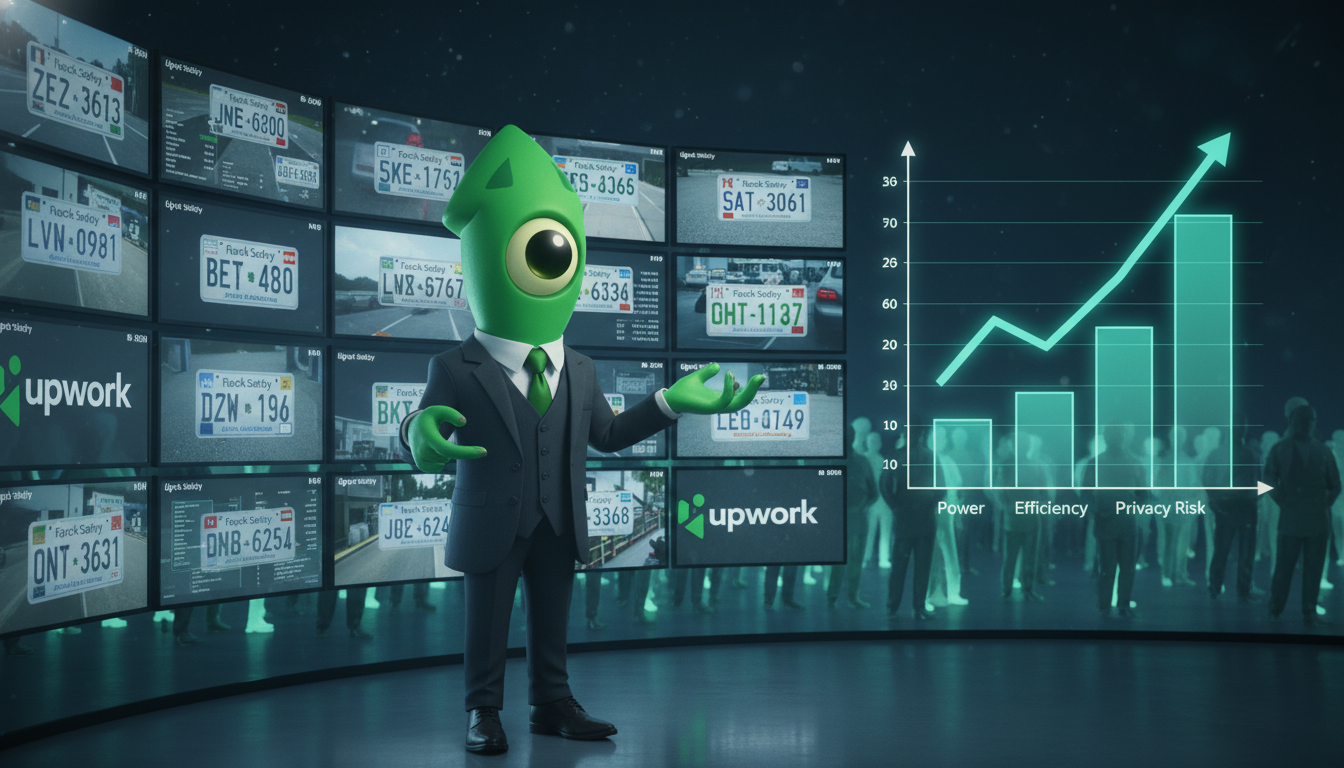
Overseas gig workers training Flock’s surveillance AI are shaping how machines watch public spaces. They work from abroad to label images and audio used to teach algorithms. In many cases, they review footage of people, vehicles, and license plates across US cities. Because their work feeds the models, the human choices directly shape detection and error patterns.
Reports show Flock operates cameras in thousands of US communities. However, some annotators located in the Philippines were hired through Upwork to perform tasks. Tasks included tagging car wrecks, gunshots, reckless driving, and even screaming. Exposed dashboards revealed metrics like annotations completed. They also showed annotator tasks remaining in queue.
These details raise urgent privacy and civil liberty concerns. Authorities can search cameras nationwide to trace vehicles, often without a warrant. As a result, activists filed lawsuits, including actions by the ACLU and the Electronic Frontier Foundation. After journalists contacted Flock, the exposed panel disappeared and Flock declined to comment. Therefore, this article investigates the human labor behind surveillance AI and the stakes for rights and accountability.
Overseas gig workers training Flock’s surveillance AI: who they are
Many of the people labeling Flock footage work overseas, often in the Philippines. Because firms used gig platforms like Upwork, contractors accepted short tasks to tag images and audio. They classify license plates, pedestrians, riders, and sounds such as car wrecks or gunshots. Exposed dashboards even showed metrics like annotations completed and annotator tasks remaining in queue. For more on the exposure, see the investigative report at this report.
Overseas gig workers training Flock’s surveillance AI: why this workforce choice matters
- Scale and cost: Hiring gig annotators lets companies label vast amounts of data quickly, and therefore cheaper than local hires. This accelerates model deployment.
- Context and error risks: However, annotators abroad may lack local context about US license plates or behaviors. As a result, labeling errors can embed biases into models.
- Privacy and oversight: Outsourcing sensitive footage raises legal and ethical questions because contractors see identifiable movements across US cities. Civil liberties groups have challenged warrantless searches; see this challenge and this lawsuit.
Ultimately, the choice to use overseas annotators shapes what the AI detects and misses. Therefore, transparency, stronger safeguards, and accountable audits must follow.

| Approach | Cost | Efficiency | Accuracy | Scalability | Privacy risk | Context knowledge |
|---|---|---|---|---|---|---|
| Overseas gig workers training Flock’s surveillance AI | Low to moderate cost | High throughput for large datasets | Variable; depends on instructions and quality control | Very scalable via gig platforms | High; contractors see identifiable US footage | Limited local context; may miss subtle US cues |
| In-house teams | High cost from salaries and benefits | Moderate; capacity grows with hiring | Generally higher with expert oversight | Scales slowly with hiring cycles | Lower if access is tightly controlled | Strong contextual and domain expertise |
| Automated methods (synthetic labels and self-supervised) | Moderate upfront engineering cost | Very fast once deployed | Variable; struggles with edge cases and nuance | Extremely scalable at low marginal cost | Lower human exposure but models can embed biases | Low nuance; needs human validation |
Key takeaways
- Overseas gig workers offer speed and scale, therefore they reduce labeling cost and time.
- However, they raise privacy and contextual risks, because workers may view identifiable footage across US cities.
- Investigations showed exposed annotation dashboards and foreign annotators; see this article.
- Civil liberties groups have sued over warrantless searches and mass camera use; see this press release and this lawsuit.
- Therefore, companies should pair crowd labeling with strict controls, audits, and local validation.
Overseas Gig Workers Training Flock’s Surveillance AI
Overseas gig workers training Flock’s surveillance AI bring measurable benefits, but they also create real tradeoffs.
Benefits
- Faster labeling and AI training efficiency: Gig annotators allow rapid throughput on platforms like Upwork. As a result, teams can iterate models faster and ship features sooner.
- Lower direct costs: Outsourcing reduces payroll burdens and overhead. Therefore, startups scale data labeling without heavy fixed costs.
- Global talent pool and flexibility: Companies tap diverse workers across time zones. This supports round the clock annotation and faster cycles.
- Practical coverage of edge cases: With many annotators, projects can surface rare events. For example, a crowd can flag unusual audio like car wrecks or screaming.
Challenges and Risks
- Context gaps and accuracy issues: Annotators abroad may not grasp US license plate norms or local gestures. Consequently, models can mislabel vehicles or people.
- Privacy and legal exposure: Contractors often view identifiable footage, which increases data risk. Investigations showed exposed dashboards and foreign annotators; see this article.
- Quality control burdens: Therefore, firms must build audits, consensus checks, and gold-standard tests to ensure reliability.
- Ethical and civic harms: Because cameras trace movement nationwide, warrantless searches fuel civil liberties fights. The EFF and ACLU have documented and challenged such systems; see this lawsuit and this press release.
In short, the surveillance AI workforce drawn from the gig economy in tech boosts speed and scale. However, it demands stronger safeguards, transparency, and local validation to prevent harms.
Conclusion
Overseas gig workers training Flock’s surveillance AI play a decisive role in how surveillance systems learn to see and hear. Because these annotators label images and audio from US cities, their judgments shape model behavior and error patterns. However, exposed dashboards and reports show the work flows through gig platforms and sometimes reaches overseas contractors.
This workforce delivers speed, scale, and cost savings. For example, rapid annotation lets teams iterate features like audio event detection more quickly. But quality and privacy risks also appear. Annotators may miss local context, and contractors can view identifiable footage. Therefore, the tradeoffs demand strong audits, stricter access controls, and routine accuracy checks.
Looking ahead, policymakers, companies, and researchers must balance innovation with accountability. Companies should combine crowd labeling with local validation and independent audits. As a result, surveillance AI can improve while respecting rights and reducing harm.
EMP0 helps businesses adopt AI safely and profitably. Employee Number Zero builds AI powered growth systems and automation under client infrastructure. Their services focus on secure deployment that multiplies revenue while maintaining control. For more about EMP0 see Website, Blog, Twitter X Medium, n8n.
Frequently Asked Questions (FAQs)
Can overseas gig workers training Flock’s surveillance AI view identifiable data?
Yes. Contractors who label footage may see license plates and faces. As a result, private movements can be exposed to workers abroad. Investigations found annotators in the Philippines and exposed dashboards with metrics. For details, see this article.
Do gig annotators affect AI accuracy and bias?
Absolutely. Annotator decisions determine labels that train models. However, lack of local context can introduce mislabels and bias. Therefore, firms need consensus checks and gold-standard audits.
What roles do gig workers play in a surveillance AI workforce?
They tag images and audio, mark events like car wrecks and gunshots, and assess uncertainty. Gig economy in tech platforms such as Upwork often source this labor. Because tasks scale quickly, teams can train models faster, improving AI training efficiency.
What legal or privacy risks should communities expect?
Outsourced annotation increases data exposure and regulatory risk. Civil liberties groups have sued over mass camera use; see this lawsuit and this case. Therefore, transparency and strict access controls are essential.
How will this model evolve and what are alternatives?
Automated labeling and in-house teams can reduce exposure over time. However, humans remain vital for edge cases. Therefore, a hybrid approach with audits offers the best trade-off.