

Imagine a camera watching you in your bathroom; privacy stakes feel immediate and personal. Kohler Dekota toilet cameras lack true end-to-end encryption. That claim raises clear privacy concerns for users and installers alike. End-to-end encryption typically means only the devices at each end can decrypt data, not an intermediary server. In other words, a server should not be able to read or process the raw images or metadata.
However, Dekota encrypts data only from the device to Kohler’s server. There, the company decrypts and processes images to provide features and analytics. As a result, the service can access readable files, which creates different risks than true end-to-end protections. Therefore, potential buyers should treat marketing language with caution and compare technical specifications.
Moreover, this gap matters for data security, smart device privacy, and legal compliance. Next, we will examine the evidence, the practical risks to users, and steps you can take to protect privacy around toilet camera products and similar connected devices.
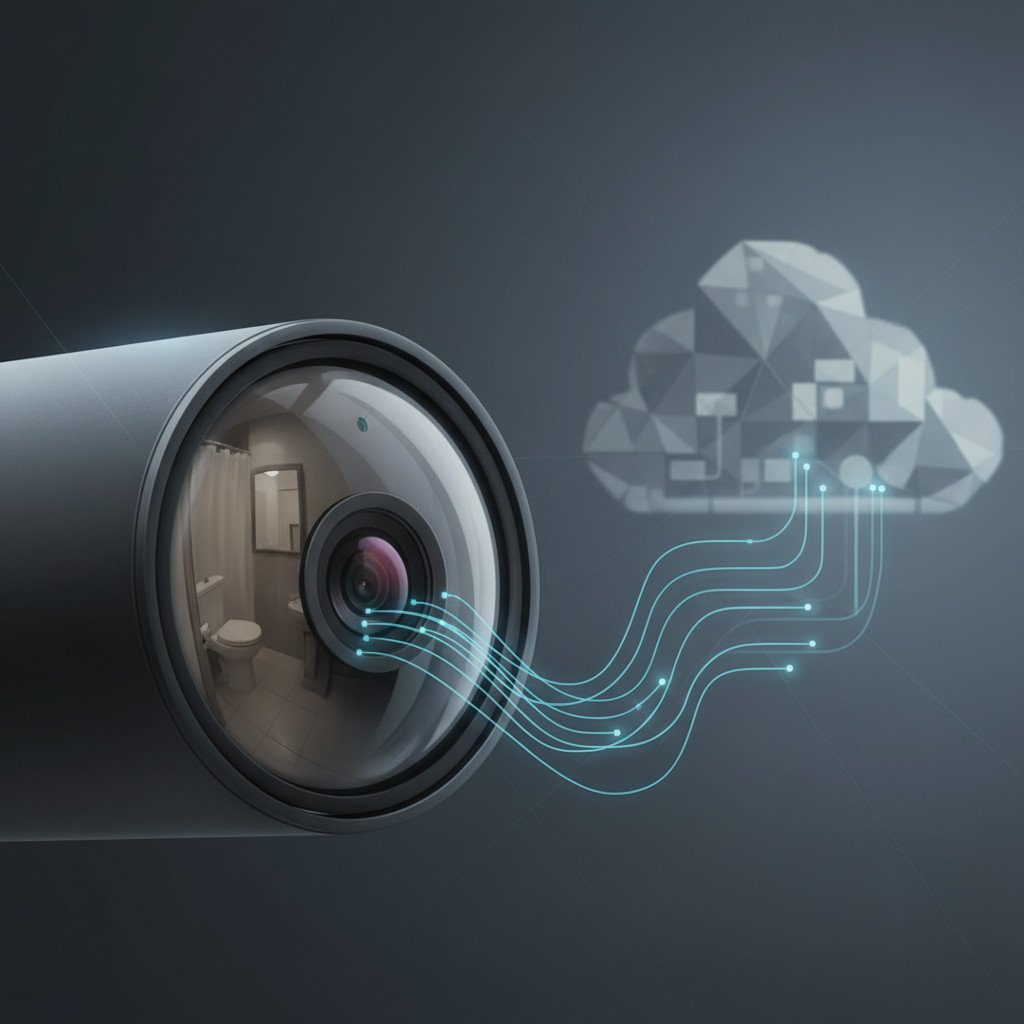
What is end-to-end encryption and why Kohler Dekota toilet cameras lack true end-to-end encryption
End-to-end encryption, often shortened to E2EE, means only the endpoints can read the data. In an E2EE system, a message or image is encrypted on the sender’s device. Then it stays encrypted until the recipient’s device decrypts it. Therefore, intermediaries, including service providers and servers, cannot decrypt the content. The Electronic Frontier Foundation explains this clear model and why it matters for private communications at this link.
Why this matters for privacy and data security
End-to-end encryption limits access and reduces attack surface. Because servers cannot read the data, insider threats and server breaches pose less risk. Additionally, E2EE helps meet privacy expectations and regulatory requirements by protecting sensitive content at rest and in transit. NIST discusses the technical model in its guidance and draft materials at this link.
Why the absence of E2EE in devices like Kohler Dekota raises concern
Kohler Dekota encrypts data from the device to Kohler’s servers, but then those files are decrypted and processed. As a result, Kohler’s backend can access raw images and metadata. This design increases exposure to breaches, insider access, and lawful or administrative data requests. Moreover, after incidents like the Salt Typhoon intrusions, agencies urged wider encryption adoption; reporting on that guidance is available at this link.
Benefits of true end-to-end encryption
- Keeps content confidential between endpoints
- Reduces risk from server breaches and insider threats
- Limits legal exposure for providers and users
- Preserves user trust and brand reputation
- Simplifies compliance with privacy rules
Because smart devices collect intimate data, E2EE matters more now. Therefore buyers should verify technical specs, ask vendors for cryptographic proofs, and prefer devices that protect data beyond transit encryption.
| Feature | Kohler Dekota | Ring (Amazon) | Arlo | Wyze | Google Nest |
|---|---|---|---|---|---|
| Encryption type | TLS in transit and encryption at rest on server; server decrypts images for processing. Sources: TechCrunch and Ars Technica | TLS and AES for transport and storage. E2EE optional on supported devices. See Tom’s Guide | AES 256 and TLS for transit; cloud storage encrypted. See Arlo KB | TLS and AES used; no universal E2EE. Security and VerifiedView explained at Wyze | TLS and AES encryption; no general E2EE for Nest cams. Specs: Google Store |
| Privacy protections | Company decrypts on backend; claims controls and governance but not E2EE | User-controlled E2EE optional; enabling limits features | Cloud-first model; local storage possible with hub | VerifiedView and account protections; limited E2EE | Cloud-first design; strong access controls but not E2EE |
| Data storage options | Cloud storage; backend processes images | Cloud with optional local vault features | Cloud plus local hub options | Cloud and local microSD on some models | Cloud storage; limited local options |
| User control over keys | No customer keys; vendor controls keys and processing | User-held keys when E2EE enabled | Vendor-held keys; local options vary | Vendor-held keys; VerifiedView ties content to account | Vendor-held keys; no user E2EE |
| On-device processing | Limited; backend does image analysis after decryption | Some on-device functions; many features rely on cloud | On-device ML in some models; many features in cloud | Increasing on-device ML like VerifiedView | On-device ML for alerts; many features rely on cloud |
| Third-party audits transparency | Limited public audit information; vendor statements only | Ring publishes some security info and guides | Arlo publishes security practices and KBs | Wyze publishes security pages and testing claims | Google publishes device specs and security guidance |
Real-world implications and risks: Kohler Dekota toilet cameras lack true end-to-end encryption
A lack of end-to-end encryption changes who can access images. Because Kohler decrypts data on its servers, the company can read raw files. As a result, any breach or insider access can expose intimate footage.
Investigations show Kohler’s backend decrypts and processes images for features and analytics. See reporting at TechCrunch Report. This design creates distinct attack surfaces. For example, an attacker who compromises the server or cloud storage can obtain readable files. Moreover, vendor employees and contractors may access data during maintenance or analysis.
Concrete scenarios of risk include:
- Remote breach of cloud storage exposing bathroom images and metadata, because servers hold decrypted files.
- Insider misuse where an employee views or copies footage for malicious use.
- Law enforcement or foreign legal requests that compel access to readable files on the vendor backend.
- Supply chain or third-party compromise that lets attackers pivot into vendor systems.
State actors and stealthy malware increase concern. The BRICKSTORM advisory shows long dwell times and deep access in real incidents. See Cyber.gc Report. Therefore systems that decrypt on servers remain attractive targets.
Users lose meaningful control without true E2EE. They risk private exposure, blackmail, reputational harm, and legal complications. To reduce risk, disable unnecessary cameras, prefer local storage, require vendor key control, and demand cryptographic proof of claims. Ultimately, buyers should assume that anytime a server can decrypt intimate footage, privacy decreases and risk rises.
Conclusion
The evidence shows Kohler Dekota toilet cameras lack true end-to-end encryption. Because Kohler decrypts footage on backend servers, privacy risks increase. Therefore buyers should demand technical documentation and cryptographic proof before purchase. True end-to-end encryption limits exposure to breaches, insiders, and legal access.
EMP0 builds secure AI and automation solutions that prioritize data protection. For example, EMP0 integrates privacy by design, access controls, and key management. Moreover EMP0 offers audit trails and compliance tooling to reduce regulatory risk. Learn more at EMP0 and read technical posts at technical posts. Explore automation recipes at N8N automation recipes for practical integrations.
As a result, companies can deploy AI safely and maintain customer trust. Therefore choose vendors that give you control of encryption keys and data. Contact EMP0 to assess architecture or to implement secure automation patterns. Security audits and third-party testing help verify vendor claims. Customers should read privacy policies and ask about retention limits.
Frequently Asked Questions (FAQs)
Do Kohler Dekota toilet cameras use true end-to-end encryption?
No. Kohler encrypts data in transit but decrypts it on its servers. As a result the company can access raw images and metadata. Therefore Dekota does not meet the strict definition of end-to-end encryption.
Why does the absence of E2EE matter for privacy?
Because servers can read decrypted files, breaches and insiders pose greater risk. Moreover lawful requests and third-party compromises can expose sensitive footage. Users lose technical control over who can view intimate data.
Could hackers access Dekota footage if the server is breached?
Yes. If attackers gain server or cloud access, they can obtain readable files. Additionally supply chain or credential theft may let attackers pivot to vendor systems. Consequently server-side decryption increases attack surface.
What practical steps can users take to reduce risk?
Disable unnecessary cameras and limit placement in private spaces. Prefer devices with local storage or user-held keys. Also enforce strong passwords, use multi-factor authentication, and keep firmware updated. Finally request cryptographic proof from vendors.
How should businesses evaluate claims that devices are encrypted?
Ask for technical documentation and key management details. Require third-party audits or whitepapers that show cryptographic design. Moreover insist on options for customer key control and minimal data retention. If vendors will not provide proof, consider alternatives that prioritize true E2EE.