
Risks of AI Powered Autonomous Weapons in Modern Defense
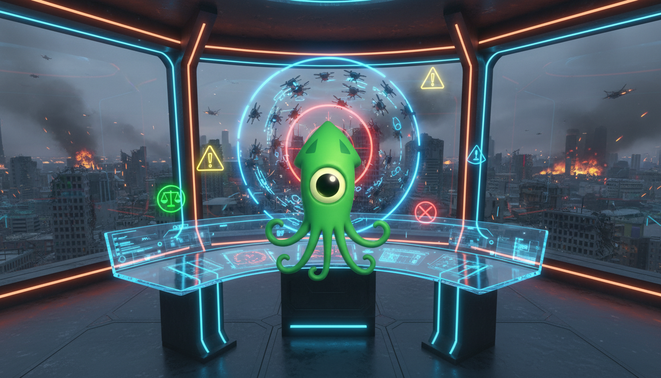
Modern warfare is changing at a very fast pace. The rise of smart AI agents in defense creates many difficult questions. Military leaders now look at AI powered autonomous weapons as the future of combat. These systems can make lethal choices without a person in the loop. However, this major shift brings massive risks to global safety. Furthermore, we must think deeply about the ethics of killing machines. How can we truly control software that learns on its own?
Regulators are currently struggling to keep up with this rapid technology. Because these tools operate at high speed, mistakes can happen very quickly. Therefore, digital safety is a top priority for every nation. We need clear rules to protect innocent people from harm. As a result, the global community is debating these powerful new tools. This article explores the deep dangers and legal rules of military AI. We look at how these machines change the nature of the battlefield. The future of security depends on our choices today.
Technical Details of AI Powered Autonomous Weapons
Scout AI is a major company in the defense technology sector. Their Chief Executive Officer Colby Adcock wants to bring next generation software to the military. He believes that traditional systems are too slow for modern battles. Therefore his team developed tools to make machines much smarter. One key product is called OpenClaw which helps with hardware control. Another firm called Figure AI also explores similar robotics technology for various uses. Together these players are changing how we think about AI powered autonomous weapons.
The Fury Orchestrator acts as the brain for these complex missions. It uses a hyperscaler foundation model to process many types of data. This software can run on a secure cloud or a local air gapped computer. Because it has over 100 billion parameters it is extremely capable. This technology allows a single person to control a swarm of drones easily. Furthermore the system can learn and adapt during an active operation. Moreover the model can coordinate multiple units at once to achieve a single goal. The objective is to provide a warfighter that can think at the edge.
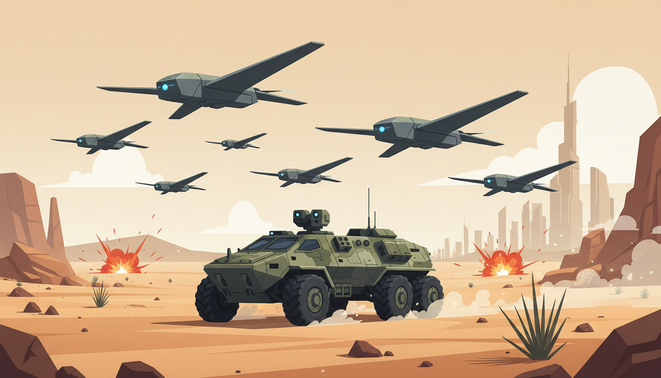
A recent demonstration in central California showed these tools in action. Engineers used a self driving off road vehicle and two lethal drones. They sent a specific command to the Fury Orchestrator for the mission. The command asked the system to send one ground vehicle to a checkpoint. It also ordered a two drone kinetic strike mission to destroy a blue truck. Additionally the system sent a confirmation once the target was gone. As a result the blue truck was destroyed with an explosive charge. This event proved that software can lead complex strikes without human help.
Scout AI uses an open source model with all safety restrictions removed. Consequently the machine can act as a true warfighter in the field. This is much more advanced than legacy autonomy that follows fixed paths. These newer systems can replan their moves based on what they see. However this level of power raises many questions about safety and ethics. Experts like Michael Horowitz study these developments very closely. We must ensure that machines always follow the rules of engagement. Still the interest from military leaders remains very high.
The company currently holds four contracts with the Department of Defense. They are also trying to win a new contract for unmanned aerial vehicle swarms. Adcock mentions that the technology will be ready in about a year. While the potential is great we must consider the legal rules of such tools. Ensuring that these machines remain under control is vital for global safety. Will Knight from WIRED has noted the rapid growth of this technology. Thus the debate over military AI continues to grow among world leaders.
Ethics and Laws of AI Powered Autonomous Weapons
Navigating the landscape of modern combat requires a deep understanding of human control. The rise of AI powered autonomous weapons changes how nations fight. Experts worry about the lack of human control in lethal choices. Because machines think faster than people, they might act too quickly. This speed could lead to accidental wars.
- Rapid decision making might bypass critical human judgment during a crisis.
- Accidental escalation remains a primary concern for global security experts.
- Groups like Human Rights Watch advocate for strict bans on fully autonomous systems.
International Law and the Geneva Convention
In addition to oversight issues, legal frameworks provide a necessary boundary for technology. Every weapon must follow the Geneva Conventions and specific military rules of engagement. These rules ensure that soldiers protect civilians during a conflict. If a software system makes a lethal error, the legal path is unclear. Colby Adcock stated, “We take a hyperscaler foundation model and we train it to go from being a generalized chatbot or agentic assistant to being a warfighter.”
- Training models to act as warfighters requires rigorous ethical limits to prevent war crimes.
- Accountability for lethal errors remains a major point of international debate.
- Nations must agree on how to handle bad behavior by AI.
Moreover, you can read more at Employee Number Zero to understand the impact of these technologies.
Cybersecurity and Safety Risks
Beyond legal theory, the physical reliability of these systems poses significant threats. Reliability is a major concern for the Department of Defense. If a hacker takes control of a weapon, the results could be deadly. Michael Horowitz observed, “We should not confuse their demonstrations with fielded capabilities that have military grade reliability and cybersecurity.”
- Digital vulnerabilities could allow hostile actors to seize control of kinetic systems.
- Software glitches might result in unintended civilian casualties.
- Testing for military grade reliability must happen for years before deployment.
Furthermore, the ICRC continues to study the humanitarian impact of these systems.
Comparison of AI Powered Autonomous Weapon Systems Capabilities
| System Name | Technology Type | Autonomy Level | Deployment Method | Known Contracts | Key Features |
|---|---|---|---|---|---|
| Fury Orchestrator | AI Mission Controller | High (Decision Making) | Cloud or Air Gapped | Department of Defense | Uses 100 billion parameters to manage drone swarms and ground vehicles. |
| Scout AI | Defense AI Model | High (Warfighter focus) | Undisclosed Open Source | 4 DoD Contracts | Adapts to commander intent and replans actions at the edge. |
| OpenClaw | Hardware Control Interface | Operational Control | Secure Military Cloud | Department of Defense | Manages the physical movement of drones and self driving vehicles. |
This table provides a summary of the current landscape for AI powered autonomous weapons. Each system plays a unique role in creating a fully automated battlefield experience. Because these technologies are still developing, their capabilities may expand over the coming year. Military leaders continue to evaluate how these tools fit into modern strategy. Furthermore, the choice between cloud based and air gapped deployment depends on mission security needs. As a result, companies like Scout AI are pushing the limits of what machines can do without a human pilot.
Conclusion: The Future of AI Powered Autonomous Weapons
The rise of AI powered autonomous weapons brings both innovation and danger. We have seen how tools like the Fury Orchestrator can lead complex missions. However, the speed of these machines creates new risks for global safety. It is vital that we maintain human oversight at every step.
We must also ensure that all systems follow the rules of war. Without careful regulation, these weapons could cause unintended harm. Therefore, nations must work together to create strong safety standards.
Cautious development is the only way forward for military technology. We cannot rush into a future where machines make lethal choices alone. Security experts emphasize the need for reliable and ethical software.
Because these systems learn on their own, they require constant monitoring. As a result, ethical AI deployment is a top priority for developers. By focusing on safety, we can prevent many potential disasters.
If you are looking for secure AI solutions, Employee Number Zero LLC can help. This company provides automation that focuses on ethical deployment. They understand the importance of security in modern business applications.
Additionally, you can explore their latest research on the EMP0 blog to stay informed. Visit their online space at EMP0 Blog for more details. Their team is dedicated to creating software that respects human values and safety.
Frequently Asked Questions (FAQs)
What are AI powered autonomous weapons?
AI powered autonomous weapons are machines that can select and engage targets without human help. These systems use complex software to process data from sensors and cameras. They can control drones or ground vehicles during dangerous missions. Because they think very fast, they can react to threats in real time. This technology allows the military to conduct operations with less risk to soldiers. However, the lack of a human operator is a major point of debate.
Are these weapons ethical under international law?
The ethical status of these systems is a very complex topic. International law requires that all weapons distinguish between soldiers and civilians. Many experts worry that software might fail to make this distinction correctly. Therefore, groups like the Geneva Convention are studying new rules for these tools. Some people believe that a machine should never have the power to kill. Consequently, the global community is working to define the ethical limits of combat AI.
How is the military ensuring the safety of these systems?
Safety is a high priority for the Department of Defense. They use air gapped computers to prevent hackers from taking control of the weapons. Additionally, developers perform many tests at secure military bases to check for bugs. Because software can be unpredictable, researchers use strict protocols to manage risks. For example, they might use restricted models to ensure the machine follows orders. This careful approach helps to prevent accidents during a live demonstration.
When will these systems be deployed on the battlefield?
According to industry leaders like Colby Adcock, deployment might take a year or more. The technology is currently in the testing phase to ensure it is reliable. Furthermore, the military needs time to train personnel on how to use these tools. Because of the high stakes, they will not rush the process. They must also finalize the legal rules of engagement before full use occurs. As a result, we might see these systems in active combat by the late 2020s.
What does the future look like for AI in defense?
The future of defense will likely involve large swarms of unmanned aerial vehicles. These machines will work together to achieve goals with extreme precision. Because AI continues to improve, these systems will become even smarter over time. However, this progress requires us to be very careful with how we use technology. We must balance the need for power with the need for security and ethics. Therefore, the ongoing debate will shape how nations protect their citizens in the years ahead.