

AI-driven workforce transformation and growth planning for 2026
AI-driven workforce transformation and growth planning for 2026 is not optional for ambitious organizations. As AI reshapes jobs, leaders must align reskilling and recruiting strategies now. However, layoffs and restructuring headlines hide a bigger truth: AI can boost productivity and create new roles. Therefore, plans that combine talent management, upskilling, and operational AI deliver sustainable growth.
This article shows pragmatic steps to turn disruption into advantage. We cover leadership choices, skills-based hiring, and AI governance. Because data curation and model monitoring matter, we also discuss AI infrastructure. As a result, you will learn how to protect people while driving scale. Finally, expect checklists and real-world examples for 2026 planning.
Leaders must move from reactive cuts to strategic redesign. However, success rests on clear communication, fair transition plans, and measurable reskilling programs. By prioritizing cross-functional teams and AI literacy, companies will protect talent and unlock new value. Read on to discover frameworks and tactical roadmaps for AI-driven workforce change in 2026.
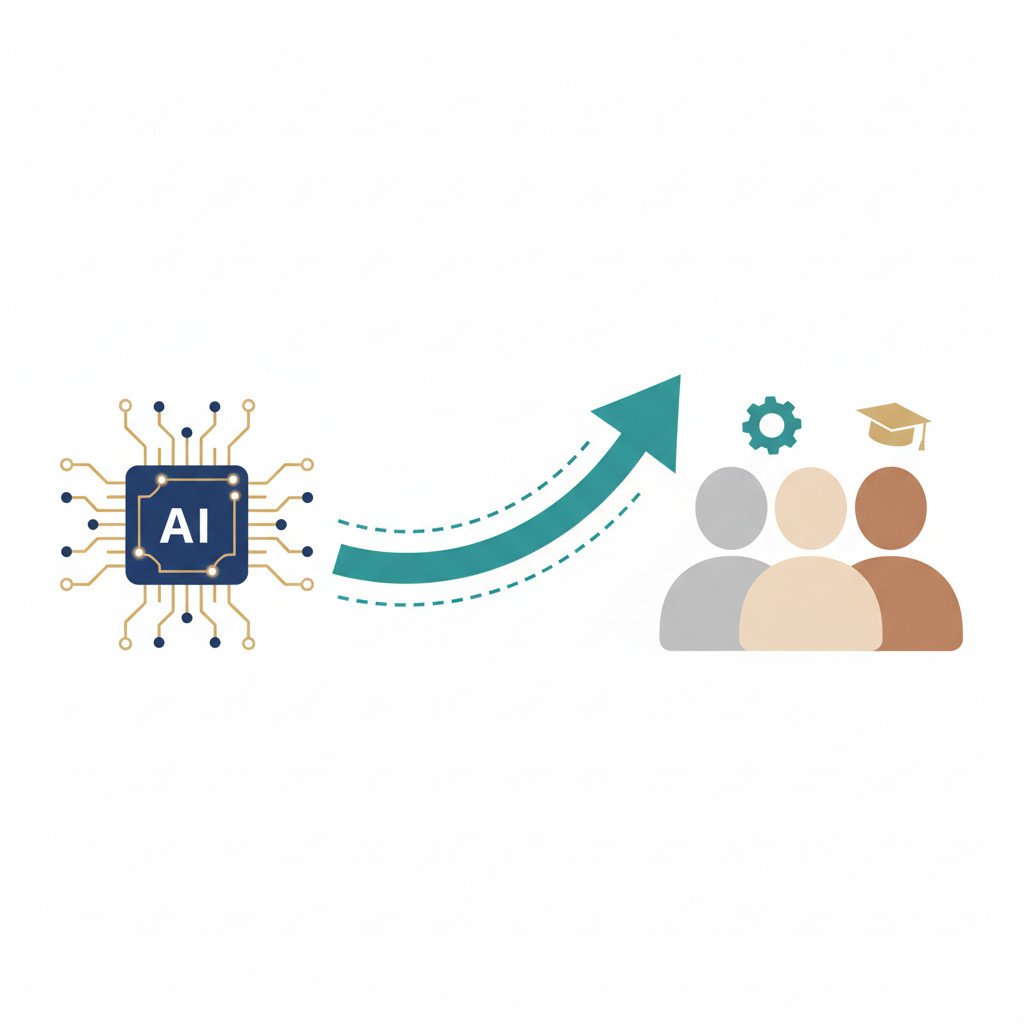
AI-driven workforce transformation and growth planning for 2026: macro trends
AI-driven workforce transformation and growth planning for 2026 centers on three macro forces. First, automation adoption accelerates across routine tasks. Therefore, companies invest in low-code tools and intelligent process automation. Second, hybrid human-AI roles emerge and expand. As a result, job descriptions split into AI-augmented tasks and human-led responsibilities. Third, economic pressure and restructuring push leaders to redesign work, not only cut costs.
- Automation adoption scales from pilots to enterprise programs. Consequently, firms prioritize process mapping, data pipelines, and safe model deployment. This shift reduces repetitive work and frees time for strategic tasks.
- Skills enhancement becomes a business KPI. Because roles change fast, employers fund reskilling and microcredential programs. Employees learn critical thinking, AI literacy, and data curation skills to stay relevant.
- Talent management shifts to skills-based hiring. Meanwhile, organizations adopt internal mobility platforms and competency passports to redeploy talent quickly.
AI-driven workforce transformation and growth planning for 2026: measurement and capability trends
Measurement evolves as well. For example, AI-enabled performance measurement blends output metrics with human-centered indicators. Therefore, firms pair productivity dashboards with wellbeing signals to avoid burnout. Moreover, governance and model monitoring grow in importance, because unreliable models risk bias and downtime.
- AI-enabled performance measurement connects task completion, quality, and speed. As a result, leaders make decisions with more timely data.
- Model monitoring and AI infrastructure investments rise. Thus, teams build logging, drift detection, and rollback plans to protect operations.
- Reskilling programs focus on adjacent skills and role portfolios. Consequently, learning pathways include project-based rotations and coaching.
External research supports these shifts. For instance, an Upwork study finds AI users report a forty percent productivity boost here. Also, the Penn Wharton Budget Model projects generative AI will lift GDP and productivity by midcentury here.
Taken together, these trends show a path forward. Leaders who combine clear governance, reskilling budgets, and measurement will convert disruption into sustainable growth.
| Tool Name | Key Features | Benefits for Workforce Growth | Use Cases |
|---|---|---|---|
| OpenAI (ChatGPT APIs) | Large language models, embeddings, fine-tuning, agent frameworks | Rapid knowledge work augmentation; faster content and code generation; improved decision support | AI assistants for HR, automated candidate screening, training content generation |
| Microsoft Azure AI Power Platform | Low-code automation, model deployment, connectors to enterprise data | Enables business teams to build automations quickly; lowers barrier to AI adoption | Automating HR workflows, approval flows, and skills mapping dashboards |
| Google Vertex AI | End-to-end model training, MLOps, model monitoring, multimodal support | Scales model deployment; improves model reliability and observability | Predictive workforce analytics, churn models, skills gap forecasts |
| UiPath | Robotic process automation, process mining, AI Fabric | Reduces repetitive tasks; frees staff for higher-value work; speeds onboarding | Invoice processing, candidate resume parsing, routine HR admin |
| DataRobot | Automated machine learning, explainability, decision intelligence | Faster insight generation; fairer predictions with explainability tools | Performance forecasting, internal mobility matching, attrition risk scoring |
| Eightfold.ai | Talent intelligence, skills graph, internal mobility recommendations | Matches employees to roles based on skills; boosts retention and redeployment | Skills-based hiring, internal role recommendations, succession planning |
| Degreed / Coursera for Business | Learning pathways, skill analytics, curated content libraries | Accelerates reskilling at scale; tracks skill completion and impact | Microcredentials, role-based learning plans, project-based training |
Tips for choosing a tool
- Prioritize integrations with your HR systems and data sources. As a result, you avoid data silos.
- Because governance matters, pick platforms with strong model monitoring and explainability.
- Finally, combine learning platforms with automation tools to create end-to-end workforce transformation.
Evidence and Case Studies
Real outcomes matter when leaders plan for AI-driven workforce transformation and growth planning for 2026. Below are documented examples and measurable wins. They show how reskilling, automation, and governance work together.
Enterprise partnerships and public programs
IBM’s SkillsBuild program has partnered with governments and nonprofits to scale reskilling. For example, IBM tied training to real job pathways. As a result, participants gained cybersecurity and data skills. Read the IBM release for details: IBM SkillsBuild Program. Meanwhile, Coursera documents multiple enterprise case studies. Therefore, companies using Coursera report faster skill adoption and clearer ROI on learning investments. See Coursera’s case studies here: Coursera Case Studies.
Productivity and economic impact
Independent research supports these programmatic wins. For instance, an Upwork study found AI users report a forty percent productivity boost. Consequently, teams finish tasks faster and focus on higher-value work. The Upwork release is here: Upwork Research. Also, the Penn Wharton Budget Model projects observable GDP gains from generative AI over time. Therefore, investments in AI and skills have wider economic effects. Read the Penn Wharton analysis: Penn Wharton Analysis.
Industry case highlights
- Financial services adopted AI for risk analysis and retrained staff for model oversight. As a result, firms cut review time while keeping compliance standards high.
- Manufacturing applied process automation and reskilling. Consequently, frontline workers moved into equipment optimization roles.
- Media and marketing used AI content tools to boost output. Therefore, creative teams spent more time on strategy and less on draft editing.
Lessons from success
First, align training to clear role pathways, because vague programs fail to convert skills into jobs. Second, measure both productivity and wellbeing, therefore avoiding burnout from speed gains. Third, invest in governance and monitoring, because model failures create real operational risk.
Taken together, these studies and examples show a clear path. Leaders who pair reskilling budgets with robust AI governance will convert disruption into measurable growth for 2026.
CONCLUSION
AI-driven workforce transformation and growth planning for 2026 demands clear strategy and decisive action. Leaders must align reskilling budgets with automation roadmaps, because hybrid human-AI teams need both new skills and reliable systems. As a result, organizations that pair governance with learning pathways will reduce disruption and unlock long-term value.
Strategically, AI brings three core benefits. First, it boosts productivity and frees staff for higher-value work. Second, it creates new roles that require oversight, data curation, and human judgment. Third, it enables faster, data-driven decisions when combined with model monitoring.
Pragmatically, companies should fund microcredentials, measure output and wellbeing, and build rollback plans for models. Therefore, success depends on transparent communication, skills-based hiring, and strong operational controls. Moreover, cross-functional teams will accelerate adoption and reduce friction.
EMP0 leads with practical AI-powered growth systems and automation solutions. For example, EMP0 helps build skills-first programs and deploys automation that augments people. To learn more, visit EMP0 online and the EMP0 blog. Also explore EMP0 integrations and workflows.
Finally, 2026 is an opportunity. Organizations that invest in people, governance, and infrastructure will turn AI disruption into measurable growth.
Frequently Asked Questions (FAQs)
Will AI-driven workforce transformation cause mass layoffs?
AI changes tasks, not just headcount. However, some roles will shrink while others grow. Companies that reskill and redeploy talent reduce layoffs and protect institutional knowledge.
How should organizations begin reskilling for 2026?
Start by mapping current skills to future needs. Then fund microcredentials, project rotations, and coaching programs. Because role requirements shift fast, make learning continuous and measurable.
How can leaders measure success and ROI?
Define clear KPIs for productivity, quality, and wellbeing. Use AI-enabled dashboards and model monitoring. Therefore, combine output metrics with employee engagement signals.
Which new roles should companies plan for?
Plan for data curators, model ops engineers, AI ethicists, and AI trainers. As a result, cross-functional roles that blend domain knowledge and AI skills will increase.
What is a pragmatic first step for most teams?
Pilot a low-risk automation and measure outcomes. Communicate changes openly and provide transition paths. Finally, scale what works and iterate quickly.