

Imagine logging into your computer on a Monday morning, dreading the mountain of administrative tasks waiting for you. You have CRM fields to update, market research to compile, and a dozen email campaigns to configure. Now, imagine if your computer completed these tasks before your first sip of coffee. Fortunately, the latest revolutionary ai automation tools in September 2026 are turning this dream into reality. We are witnessing a massive shift in focus from simple text generation to true autonomous action. Consequently, new systems leverage Agentic AI and the Model Context Protocol (MCP) to execute complex workflows directly via APIs. This shift fundamentally transforms enterprise operations and martech integrations.
Key takeaways
- Agentic AI has evolved past rigid rule-following, prioritizing independent, autonomous action to solve complex problems.
- Groundbreaking MCP integrations now allow artificial intelligence to securely control enterprise tools and databases via APIs.
- Next-generation meeting intelligence software goes beyond transcription to update CRM fields and trigger workflows autonomously.
- Major martech platforms are opening their ecosystems, exposing hundreds of APIs for external AI agents to manage campaigns.
Keeping up with the daily barrage of AI news and technology advancements can feel like drinking from a firehose. Indeed, business leaders are tired of the endless hype cycle. They need actionable insights and tools that actually move the needle. Therefore, we curated this comprehensive software launch guide to highlight the most impactful tech news of the month. These new ai automation tools are not just cool party tricks. Additionally, they help you scale your operations efficiently.
How do Agentic AI and MCP actually work?
To understand the magnitude of this shift, we have to look at where we started. Historically, AI relied on static prompts. You asked a chatbot a question, it gave you a text response, and you had to manually copy, paste, and apply that information. However, Agentic AI represents a major technological leap forward. Instead of merely generating text and waiting for human instructions, these autonomous agents act as digital employees. Consequently, they can reason through a problem, formulate a multi-step plan, and take direct action to optimize workflows without needing constant human oversight.
The real magic behind this new wave of autonomy is the Model Context Protocol (MCP). Think of MCP as a universal translator and a set of digital hands for your AI. Specifically, it allows AI models to interface directly with external APIs, local files, and secure databases. Because of this protocol, an AI agent can now read your company’s live data. Furthermore, it can write updates back to your systems and execute commands across your entire tech stack seamlessly.
Real-world applications of MCP
Let’s look at a real-world example from the financial sector. Futurum launched the Futurum API and MCP Server in September 2026. According to Agentic.ai, this groundbreaking release integrates proprietary research, market forecasts, and live data directly into enterprise AI tools. Therefore, analysts no longer have to switch between five different tabs to gather insights. Instead, they can simply ask their AI assistant to compile a risk report. The agent then uses the MCP server to pull live market data, synthesize it, and drop a formatted report right into their workspace.
Similarly, the blockchain and Web3 sectors are jumping on this protocol. IronWallet recently launched a dedicated MCP server. According to Agentic.ai, this connects its non-custodial crypto wallet directly to AI coding clients like Cursor and Codex. Consequently, developers can now execute smart contracts and manage wallet infrastructure simply by typing natural language commands. The AI translates the English request into code and executes it via the API, drastically lowering the barrier to entry for blockchain development.
What are the latest enterprise ai automation tools for meetings?
Enterprise AI is rapidly moving beyond basic customer service chatbots. Today’s companies demand robust systems capable of handling the heavy administrative burdens that drain employee productivity. Therefore, recent software updates have focused heavily on meeting intelligence and backend data center optimizations. These updates aim to eliminate the busywork that plagues modern office life.
Consider the daily life of a B2B sales representative. They spend hours on calls, taking frantic notes, and then waste even more time manually entering that data into Salesforce or HubSpot. Fortunately, Pipedrive aims to end this misery with the launch of Nova in 2026. According to MarTech, Nova is a fully automated meeting intelligence tool that acts like a silent, hyper-efficient chief of staff. It joins sales calls, records the audio, and provides highly accurate transcriptions. But the real game-changer is what happens after the call. Nova autonomously analyzes the conversation, identifies key action items, and updates the relevant CRM fields—like deal stage, budget, and next steps—without the sales rep lifting a finger. Consequently, sales teams are suddenly finding themselves with hours of reclaimed time each week to focus on actually selling.
Transforming legal workflows
Similarly, the legal industry, notorious for its reliance on mountains of paperwork, is experiencing a massive transformation. Casepoint recently launched Casepoint IQ. According to Agentic.ai, this innovative platform integrates autonomous agents with predictive coding tailored specifically for complex legal workflows. Therefore, lawyers and paralegals can now deploy AI agents to review massive, multi-gigabyte document sets with unprecedented speed and accuracy. The AI can flag anomalies, categorize evidence, and even draft preliminary case summaries. If you want to explore similar platforms transforming the corporate world, check out our guide on the Top 5 Agentic AI Tools for Workflow Automation.
Data center efficiency with ai automation tools
Adopting these new ai automation tools isn’t just about making life easier; it yields highly measurable efficiency gains that look great on a balance sheet. AI adoption in enterprise data center management and daily operations has skyrocketed this year. Consequently, companies are drastically reducing operational bottlenecks and seeing a rapid return on their software investments.
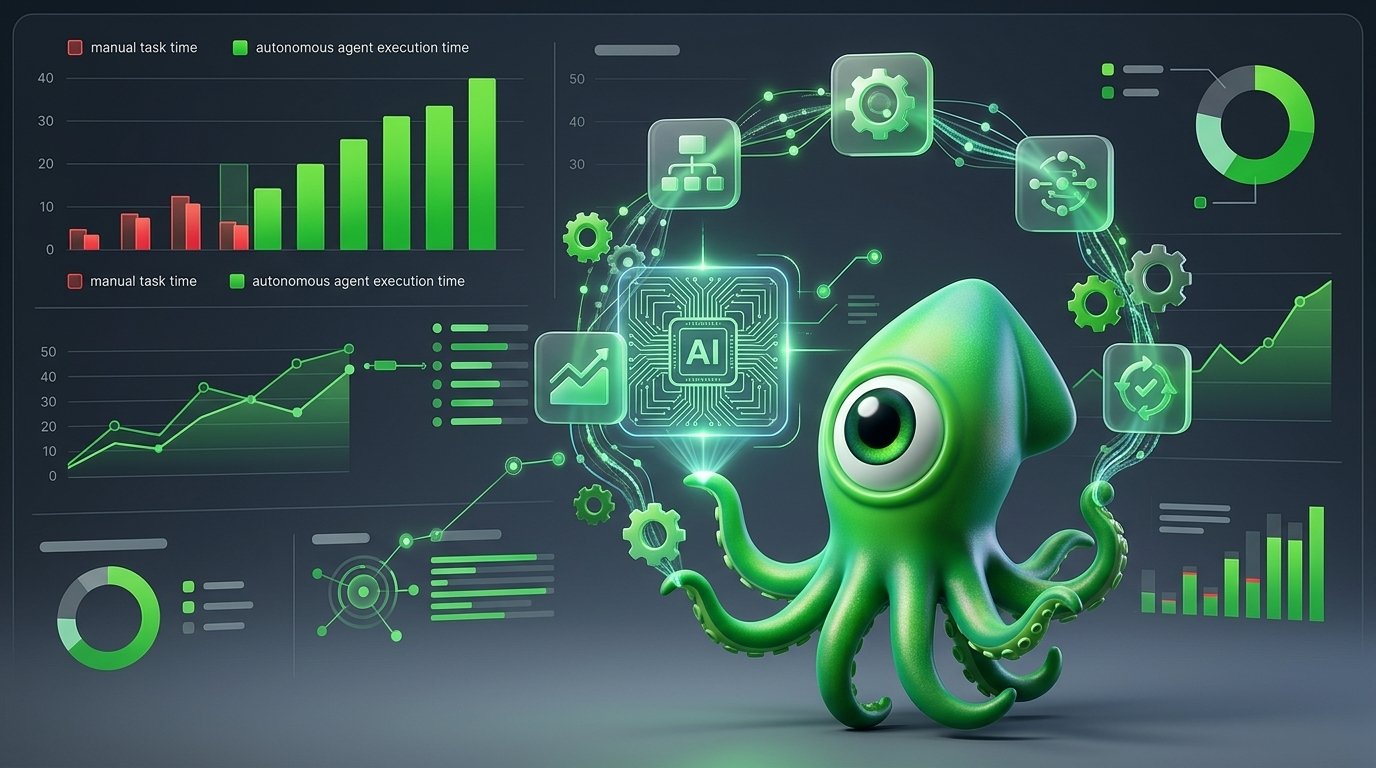
To truly illustrate the impact of these technologies, we need to look at the estimated time saved across different daily workflows. When you multiply these hours by hundreds of employees, the financial savings are staggering. Below is a breakdown of how these new 2026 tools perform in the wild.
| Automation Tool | Primary Workflow | Estimated Time Saved |
|---|---|---|
| Pipedrive Nova | Meeting Intelligence & CRM | 5 hours/week per rep |
| Casepoint IQ | Predictive Coding | 40% faster doc review |
| Futurum MCP | Market Research | 10 hours/week per analyst |
Integrating these tools provides a massive competitive advantage. While your competitors are bogged down in manual data entry and slow document review, your team is operating at lightning speed. You can even take things a step further and Scale Your Business with n8n AI Agents to connect these disparate systems into one unified, automated machine. Autonomous agents are proving to be the ultimate workflow killer, eliminating the mundane so humans can focus on the creative and strategic.
Industry-specific ai automation tools
While general enterprise tools are making waves, specialized sectors are aggressively adopting MCP and API integrations to solve niche problems. Specifically, marketing technology (Martech), video production, and event management are seeing incredibly rapid advancements. Programmatic advertising and content creation are becoming highly automated, allowing small teams to output the volume of a massive agency.
In the fast-paced marketing space, Klaviyo made a bold move by opening its platform to external AI agents in September 2026. According to MarTech, they achieved this by making an astounding 260 MCP tools and 490 APIs completely accessible to developers. Therefore, marketers can now build custom autonomous agents to manage complex, multi-channel email campaigns. Imagine an AI that monitors your inventory, notices a surplus of a specific product, automatically drafts a promotional email, segments your audience to find the most likely buyers, and schedules the campaign—all while you sleep.
Video and event management solutions
Similarly, video production is evolving just as quickly. Comcast Technology Solutions unveiled a suite of new video workflow tools built on its robust VideoAI platform. According to MarTech, these 2026 updates provide automated vertical conversion. This feature takes traditional widescreen broadcasts and intelligently crops them for platforms like TikTok and Instagram Reels. Additionally, they introduced voice-matched translation. This allows creators to dub their videos into multiple languages while retaining the original speaker’s vocal tone and emotion. You can explore 5 New MCP Tools to Automate Video Workflows for additional production hacks that will save your editing team days of work.
Furthermore, event management, an industry famous for its logistical nightmares, is finally getting a much-needed AI upgrade. RSVPify launched RSVPify Cue alongside a dedicated MCP connector in 2026. According to MarTech, this powerful combination automates event registration, seating chart optimization, and attendee data analysis through simple natural language commands. Consequently, event planners can now manage VIP guest lists, dietary restrictions, and last-minute cancellations effortlessly, letting the AI handle the complex logic of moving people around.
Conclusion
The latest ai automation tools we’ve seen in September 2026 are highly actionable and represent a fundamental shift in how businesses operate. Tools leveraging the Model Context Protocol and Agentic AI are actively replacing static, manual workflows with dynamic, autonomous action. From meeting intelligence platforms that update your CRM to massive Martech API ecosystems, these solutions drive real, measurable enterprise value. Therefore, business leaders must begin integrating these technologies into their daily operations immediately to remain competitive in a fast-evolving market. We highly encourage you to test these platforms in your own tech stack and see the efficiency gains for yourself. For more hands-on tutorials, deep dives, and breaking tech news, be sure to visit our YouTube Channel today.
Sources
- Agentic.ai
- MarTech
FAQ
What is the Model Context Protocol (MCP)?
MCP is a standardized open-source protocol introduced recently that acts as a bridge between AI models and your data. It allows AI assistants to securely connect to external tools, local files, databases, and APIs. By using MCP, AI can execute real-world actions and retrieve live data rather than just generating text based on outdated training information.
How does meeting intelligence software actually work?
Modern tools like Pipedrive Nova join your digital meetings to record and transcribe the audio in real-time. They use advanced natural language processing to extract key data points like budget numbers, action items, and client objections. Finally, they use API connections to autonomously update your CRM fields, saving your team from hours of manual data entry.
Are autonomous agents secure for enterprise use?
Security depends heavily on how you configure your API permissions and access controls. Because Agentic AI can take action, CTOs and IT administrators must strictly govern what data and systems the AI is allowed to access. Proper configuration, including read-only access where appropriate and human-in-the-loop approvals for critical actions, is essential to prevent unauthorized backend changes.
Learn about AI
Join the community of other successful solopreneurs using AI and Automation daily to scale their business and revenue streams