
How Tealium Studio Solves Enterprise Data Chaos
Enterprise data is growing at an unprecedented rate. Consequently, modern businesses face a complex set of challenges. In 2026, fragmented data pipelines frequently lead to severe operational inefficiencies. Therefore, reliance on manual data management is unsustainable. To maintain a competitive edge, industry leaders require intelligent, automated systems. These systems must organize vast amounts of information. Fortunately, Tealium Studio offers a solution. This advanced platform serves as a comprehensive tool for enterprise data orchestration. Additionally, it systematically organizes scattered customer information into clear, actionable insights. By streamlining these workflows, the platform prevents organizational bottlenecks. Indeed, adopting sophisticated platforms like Tealium Studio provides a critical advantage. It brings necessary structure to complex digital ecosystems. Let us explore how this innovative tool is revolutionizing enterprise data management today.

Unpacking Chaos with Tealium Studio
The current landscape of enterprise data management is incredibly complex. Every single day, global companies generate petabytes of unorganized information. However, this data frequently becomes siloed across disconnected departments. Consequently, valuable customer insights are lost in the noise. Without strategic intervention, this lack of organization guarantees a significant loss in productivity. Therefore, modern automation tools have stepped in to address these systemic issues. They offer scalable solutions that transform raw data into structured assets.
Modern Automation and API Integration
Even traditionally slow-moving sectors are evolving rapidly to meet these new technological demands. For instance, government automation initiatives in 2026 have demonstrated massive efficiency spikes. They achieved this by modernizing their data infrastructure. Therefore, private enterprises have every incentive to follow suit. Legacy systems simply cannot handle today’s immense data velocity. Furthermore, they fail to meet the intricate compliance requirements of the modern web. Consequently, integrating modern API and system integration frameworks is now a fundamental requirement. This integration is essential for any business looking to scale efficiently. Additionally, automation tools have transitioned from optional luxuries to critical infrastructure components. Businesses routinely deploy artificial intelligence to clean, route, and analyze incoming data streams in real-time. As a result, technical and marketing teams save thousands of hours annually. Meanwhile, they successfully avoid the costly errors associated with manual data entry.
“The velocity of enterprise data in 2026 demands systems that do not just store information, but actively understand and route it with zero human latency. Automation is the bridge between data collection and actual business value.”
Here are three primary reasons why legacy data systems fail in the modern enterprise environment:
- Lack of real-time processing capabilities: Older systems rely on batch processing, meaning insights are often outdated by the time they reach decision-makers.
- Requirement for massive manual oversight: Legacy databases need constant maintenance, schema updates, and manual deduplication efforts to remain functional.
- Inability to scale with traffic spikes: When marketing campaigns go viral, outdated infrastructure often crashes under the sudden influx of customer data.
Relying on outdated methods places companies at a distinct competitive disadvantage. Therefore, forward-thinking leaders must embrace intelligent data orchestration. This ensures their organizations remain agile and responsive.
Tealium Studio and the Natural-Language Interface
In September 2026, Tealium announced a significant platform upgrade. This update shifted the paradigm of data management. Specifically, they launched the highly anticipated Configuration MCP. This update introduced a groundbreaking natural-language interface directly into Tealium Studio. Additionally, the update included powerful new Developer APIs. Consequently, managing complex enterprise data is now more accessible and secure than ever before.
Securing Data with Configuration MCP
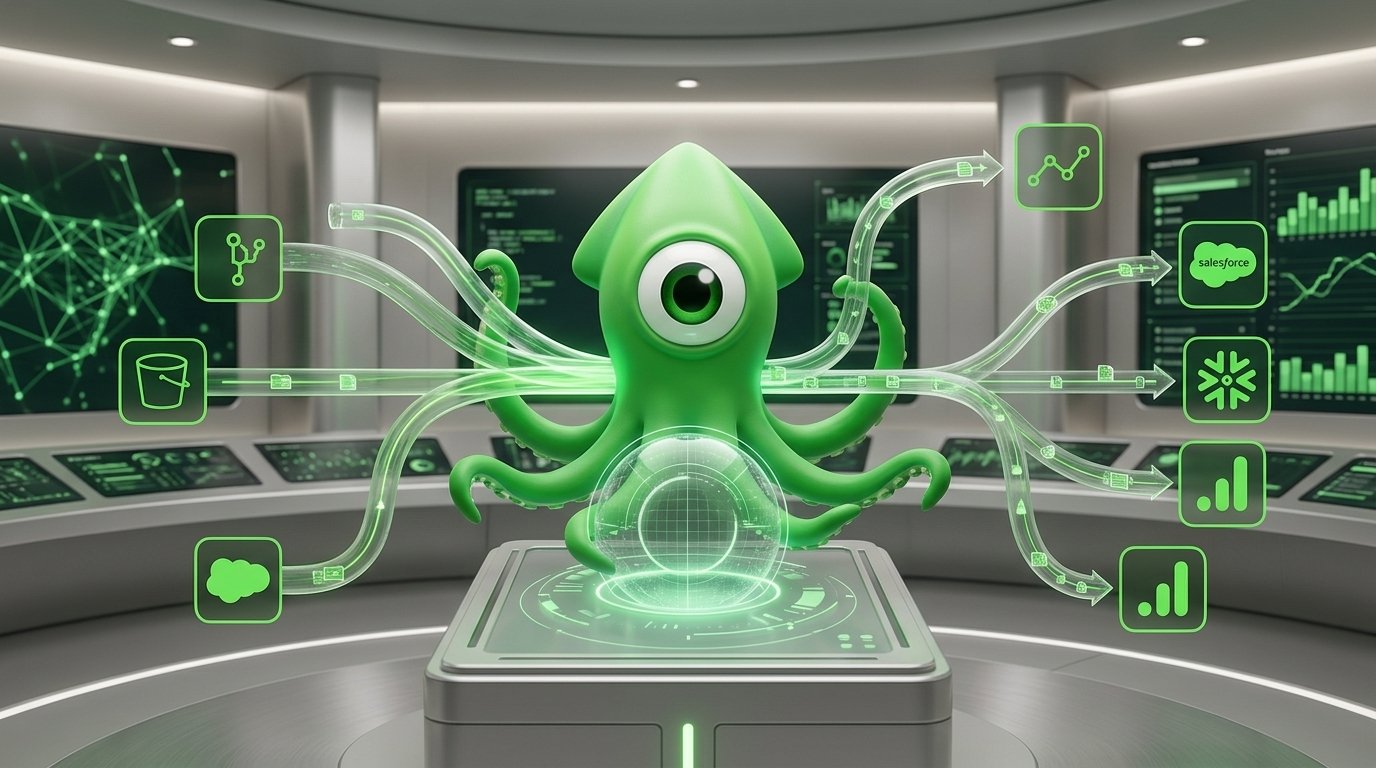
The Configuration MCP fundamentally changes how data teams operate. It allows authorized AI tools to interact securely with customer data. Meanwhile, it manages platform configurations while maintaining strict governance and compliance protocols. Therefore, businesses can leverage AI without risking catastrophic privacy breaches. Furthermore, the natural-language interface empowers non-technical founders and marketing executives. Users can simply type their requirements in plain English. Subsequently, the system translates those requests into flawless data routing logic. Moreover, the integration of Agentic AI workflow automation is a major driver behind this technological leap. Tealium Studio leverages these autonomous agents to handle complex routing scenarios in the background. The platform operates autonomously, learning from data flows and adapting to new schemas. Additionally, it optimizes delivery paths without requiring constant human input. This intelligent automation removes the traditional bottlenecks that slow down campaign deployments.
The new Developer APIs offer unprecedented flexibility for engineering teams. Consequently, developers can now build custom integrations in a fraction of the time. Below is an example of how a developer might use the new API to programmatically establish a secure data route:
// Example: Creating a secure data route using Tealium's 2026 API
const tealiumAPI = require('tealium-mcp-sdk');

async function configureSecureRoute() {
  try {
    const routeConfig = await tealiumAPI.routes.create({
      source: 'web_events_primary',
      destination: 'trade_desk_kokai',
      transformation: 'standardize_user_ids',
      complianceLevel: 'strict_gdpr_ccpa',
      aiGovernance: true
    });
    console.log('Secure route established:', routeConfig.id);
  } catch (error) {
    console.error('Routing configuration failed:', error);
  }
}

configureSecureRoute();
Here is how the Configuration MCP actively protects your business operations:
- It enforces strict data privacy rules automatically, ensuring compliance with global regulations like GDPR and CCPA.
- It prevents unauthorized AI access to sensitive fields, masking personally identifiable information (PII) before it reaches third-party models.
- It logs every autonomous action and configuration change to provide a clear, transparent trail for compliance audits.
Therefore, Tealium Studio successfully merges intuitive ease of use with rigorous security standards.
The Data Behind Ad-Tech Automation Efficiency
Advanced data processing and AI routing require immense computing power. Therefore, understanding the operational costs associated with these technologies is vital for enterprise budgeting. Recently, technology researcher Zeke Hausfather conducted a comprehensive study on this exact topic. He tracked 1,138 Claude Code prompts over an eight-week period in 2026. His goal was to investigate the actual energy costs of running advanced AI models. The research confirmed that running complex, natural-language queries is highly resource-intensive. However, the study also revealed that the ROI provided by ad-tech automation far outweighs these initial costs. Consequently, ad-tech vendors are increasingly integrating autonomous features directly into their core product upgrades. This strategy streamlines business operations and drastically reduces the human labor required to manage large-scale campaigns. Let us examine the specific efficiency gains recorded across the industry in 2026. The table below demonstrates how the implementation of automated systems has drastically reduced processing times.
| Process Type | Manual Time (2024) | Automated Time (2026) | Efficiency Gain |
|---|---|---|---|
| Data Routing & Mapping | 45 hours/week | 2 hours/week | 95% |
| Compliance & Privacy Audits | 120 hours/month | 5 hours/month | 96% |
| Ad Campaign Setup & Bidding | 15 hours/campaign | 1 hour/campaign | 93% |
| Audience Segmentation | 25 hours/week | 3 hours/week | 88% |
The empirical data clearly illustrates the value of modernization. Therefore, embracing these automated systems allows teams to pivot away from tedious administrative tasks. Instead, they can focus on high-level strategic initiatives.

Powerful Integrations with Tealium Studio
Seamless integration is the absolute lifeblood of modern digital marketing. Isolated tools that cannot communicate with one another represent a significant liability. Indeed, they lead to fragmented customer experiences and wasted advertising spend. In September 2026, The Trade Desk launched Kokai Zuma. This massive platform update perfectly complements Tealium’s capabilities. Furthermore, this update featured advanced Agentic AI capabilities. It also introduced a redesigned interface aimed at automating routine advertising workflows. Tealium Studio’s ability to integrate flawlessly with platforms like Kokai Zuma is a transformative development. By connecting these sophisticated systems, businesses can achieve end-to-end ad-tech automation. For example, Tealium can capture, clean, and route customer data directly into The Trade Desk in real-time. Subsequently, Kokai Zuma utilizes its Agentic AI to analyze that clean data. It then optimizes ad spend instantly across millions of digital placements. Consequently, this synergy eliminates wasted budget and maximizes the overall return on ad spend.
Key Benefits of Ad-Tech Integration
Achieving this level of operational synergy requires a robust underlying infrastructure. Therefore, organizations looking to optimize their tech stacks can explore various enterprise workflow automation hacks. This ensures their systems communicate effectively. However, failing to integrate these platforms means marketing efforts will inevitably stall. This is because manual data transfers cannot keep pace with real-time bidding environments.
Key benefits of integrating Tealium with advanced ad-tech platforms include:
- Instant audience synchronization: Customer segments are updated across all advertising channels the moment a user’s behavior changes on your website.
- Automated bidding adjustments: AI models can adjust financial bids based on the real-time conversion probability data provided by Tealium.
- Seamless compliance management: Consent preferences captured by Tealium are immediately respected by downstream ad platforms, ensuring global privacy compliance.
- Enhanced personalization: Clean, unified data allows for highly targeted creative messaging that resonates with specific user segments.
Ultimately, these powerful integrations transform complex, chaotic data streams into a distinct and sustainable competitive advantage.
Conclusion: The Future of Organized Data
Enterprise data chaos is a significant challenge that can quietly drain resources and hinder growth. Therefore, to thrive in the modern digital economy, organizations must modernize their data infrastructure. Fortunately, Tealium Studio offers a sophisticated and reliable solution to this industry-wide problem. By leveraging the new Configuration MCP, businesses can finally bring order to their data ecosystems. Additionally, the introduction of the natural-language interface democratizes data management. This makes complex routing accessible to stakeholders across the organization. Furthermore, integrating Tealium with modern ad-tech platforms like Kokai Zuma creates a highly efficient, automated marketing engine. The 2026 business landscape demands speed, precision, and intelligent automation. Consequently, relying on outdated manual processes is no longer a viable strategy for companies looking to scale. The path forward requires proactive technological adoption. Therefore, organizations should audit their current data pipelines to identify inefficiencies and security gaps. By implementing platforms like Tealium Studio, businesses can secure their operational future. Thus, they can harness the power of organized data and Agentic AI to lead their respective markets.
Frequently Asked Questions
What is the Tealium Configuration MCP?
Announced in September 2026, the Configuration MCP is a major upgrade for Tealium Studio. It introduces a natural-language interface and new Developer APIs. Consequently, it allows both technical and non-technical users to manage data routing. Crucially, it enables AI tools to interact with customer data while maintaining strict governance and compliance protocols.
How does Kokai Zuma improve ad-tech automation?
Launched by The Trade Desk in September 2026, Kokai Zuma is a platform update featuring advanced Agentic AI capabilities. It utilizes a redesigned interface to automate routine advertising workflows. Therefore, it drastically improves ad spend efficiency, enhances targeting precision, and accelerates campaign deployment speed.
Why is a natural-language interface important for data management?
A natural-language interface allows non-technical users to command complex data systems using plain English. Consequently, this removes traditional engineering bottlenecks. This enables users to configure data routing, set up integrations, and query information instantly without needing to write or understand code.
What were the findings of Zeke Hausfather’s 2026 AI study?
Researcher Zeke Hausfather tracked 1,138 Claude Code prompts over an eight-week period to investigate the actual energy costs of running AI models. His research highlighted the resource-intensive nature of complex queries in enterprise environments. However, he also concluded that the operational ROI and efficiency gains of AI automation generally outweigh these computational costs.