

The New Era: AI Driven Evolution and On Device Integration
Technology is changing at a rapid pace today. We are entering a period defined by AI Driven Evolution and On Device Integration. This shift marks the end of heavy reliance on distant servers for every task. Instead, local hardware now handles complex logic right in your hand. Consequently, users experience faster results and better data security.
Experts believe the old model of sending data to the cloud is fading. Because of this change, developers must rethink how they build applications. One quote perfectly captures this movement in the industry. The future of mobile apps is: Intelligent Private Instant. Therefore, creators now focus on making tools that work without an internet connection.
Local intelligence allows for immediate feedback and much lower latency. Since data never leaves the device, privacy becomes a core feature rather than an afterthought. Furthermore, modern chips provide the power needed to run advanced models locally. This new era prioritizes efficiency and user trust above all else. As a result, the boundary between hardware and software is disappearing quickly.
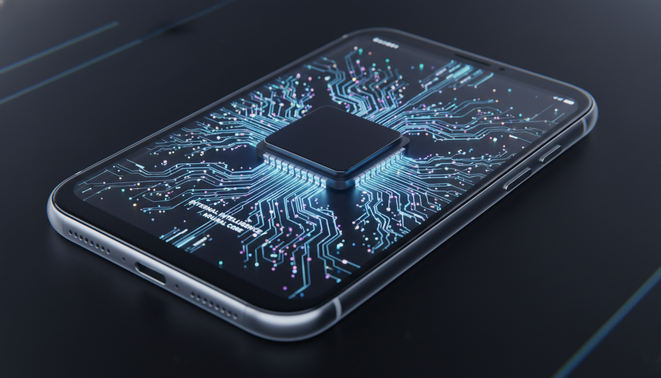
Hardware Breakthroughs AI Driven Evolution and On Device Integration
Modern hardware enables AI Driven Evolution and On Device Integration like never before. Apple set a high bar with their A17 Pro chip. This processor performs 35 trillion operations per second. Because of this power mobile devices handle tasks once reserved for servers. Therefore local execution is now a reality for developers.
Creating efficient software is just as important as the hardware itself. Model optimization techniques ensure that large networks fit on small devices. For instance quantization using INT8 compression is very effective. It can reduce the size of a machine learning model by four times or more.
This process happens with minimal loss in accuracy. Moreover complex apps remain light and fast. Developers often use TensorFlow for these specific tasks. You can find more details on this tech at the Apple website.
Latency reduction is the most visible benefit for the end user. Based on industry data cloud machine learning round trip latency usually stays between 200 and 900 ms. In contrast on device inference ranges from 1 to 50 ms.
This speed makes interactions feel instant and smooth. As a result real time features like augmented reality work much better. Creating tools with PyTorch helps achieve these low latency goals.
Developers must adapt to these technical shifts immediately. Mike Allen states that if you’re a mobile developer who hasn’t started thinking about on device ML, you’re about to be left behind. This warning reflects the competitive nature of the current market. Because users demand privacy and speed local models are the standard now.
The industry is moving toward autonomous systems that live entirely on the phone. Consequently this progress relies on both silicon innovation and smarter software tools. Companies like Google DeepMind continue to push the limits of local computing. Therefore the future of mobile technology looks increasingly decentralized. Smarter chips will continue to drive this evolution forward for years to come.
AI Deployment Comparison
Choosing between cloud and local systems is vital for modern apps. This table highlights the main differences for developers.
| Metric | Cloud Based AI | On Device AI |
|---|---|---|
| Latency | 200 to 900 ms | 1 to 50 ms |
| Data Privacy | Sent to Servers | Stays on Device |
| Connectivity | Internet Required | Works Offline |
| Scaling Cost | High Server Costs | Zero Server Costs |
On device systems offer better privacy for sensitive data. Because the chip handles the work results appear much faster. However cloud systems still help with very large datasets. Therefore most teams use a mix of both worlds today. In addition local models work without any signal. You can learn more about these tools on Google Cloud. For example these platforms support complex data needs across the globe. Consequently developers must choose the right tool for their specific needs. You can also find hardware details at Apple.
Empowering Research AI Driven Evolution and On Device Integration
Scientific research is entering a new era of discovery. We are seeing a powerful shift toward AI Driven Evolution and On Device Integration. This change allows researchers to process data with incredible speed. For instance Google DeepMind created a system called AlphaFold which changed biology. Leaders such as Demis Hassabis and John Jumper drove this innovation forward. Because of their efforts more than three million scientists use these protein structure predictions today. This tool helps researchers understand diseases and even create better crops for agriculture.
The financial world is also noticing this massive potential. For example Isomorphic Labs recently secured two billion dollars in a new funding round. This company focus on using intelligence to find new medicines at a faster rate. You can learn more about their work on the Isomorphic Labs website. Consequently this investment will accelerate the creation of life saving treatments for rare conditions. Furthermore these funds support the use of agentic systems in chemical labs.
Even abstract mathematics is feeling the impact of these models. Recently an OpenAI model disproved an important mathematics conjecture in discrete geometry. This event proved that neural networks can handle logic at a high level. Therefore we are moving toward AI that does not just facilitate science but begins to do science. As a result machines are becoming active partners in the research process. This progress means that computers can now suggest proofs that humans might never find alone.
The benefits of this shift are visible across many fields.
- Researchers get instant access to complex biological maps.
- New algorithms help find sustainable materials for energy.
- Automation reduces the time spent on manual data entry.
- Intelligent agents can simulate experiments before they start.
Because these tools are becoming more common the pace of discovery is faster. Many of these results are published in the journal Nature for everyone to see. Furthermore organizations like Google DeepMind share their findings with the public. Thus this open approach ensures that the global community benefits from every breakthrough. Therefore we are approaching a future where intelligence is part of every scientific experiment. This integration will lead to a deeper understanding of the universe.
CONCLUSION
The transition toward local intelligence represents a fundamental shift in computing. We now see that privacy first AI is becoming a global standard for users. Because data stays on the device security reaches new heights. Furthermore agentic systems are beginning to perform tasks autonomously without human input. This evolution ensures that mobile apps are intelligent and private and instant. Consequently developers must adopt these technologies to remain relevant in a fast moving market.
The era of cloud dependency is ending as local chips become more powerful. Therefore businesses must find ways to integrate these tools into their workflows. As a result companies are looking for reliable partners to lead this digital transformation. This is where EMP0 (Employee Number Zero, LLC) provides essential value for modern enterprises. They specialize in advanced AI and automation solutions for growth.
EMP0 offers powerful products like their Content Engine and Sales Automation. They position themselves as a full stack and brand trained AI worker. Because of this focus they help clients deploy secure and revenue multiplying growth systems. These systems run under your own infrastructure to ensure maximum control. You can explore their innovative services and read more detailed insights on their blog.
To stay updated on the latest trends you can follow their progress online. You can find them on Twitter X using the handle @Emp0_com. For those interested in automation workflows check out their expertise on the n8n creator platform. Joining this network gives you access to top tier automation expertise.
In summary the future is defined by decentralized and powerful local intelligence. This progress allows for a new level of efficiency in both science and business. Because we are standing in the foothills of the singularity the potential for growth is limitless. Companies that embrace these changes today will lead the industries of tomorrow. Consequently the integration of local AI will redefine how we interact with technology forever.
Frequently Asked Questions (FAQs)
What is the main difference between cloud and on device AI?
Cloud systems rely on remote servers to process information. However on device AI performs all calculations locally on the hardware. This difference leads to significant changes in speed and connectivity requirements. Because local models do not need an internet connection they work anywhere. Furthermore on device tasks avoid the long delays caused by data travel.
How does on device AI improve user privacy?
Data stays on the physical device rather than moving to a third party server. Consequently sensitive information like personal messages remains fully secure. This approach eliminates the risk of data breaches during transit. Therefore users feel more confident when using apps that handle private details. As a result privacy becomes a built in feature of the software.
What are the benefits of using quantization in model optimization?
Quantization reduces the size of large machine learning models significantly. For example it can shrink a file by four times its original size. This compression allows complex neural networks to run on mobile processors. Because the model is smaller it uses less memory and battery power. Therefore developers can ship powerful features without slowing down the device.
How is AI transforming the field of scientific research today?
Intelligent systems now predict complex protein structures with high accuracy. Tools like AlphaFold help researchers understand biological processes at a faster rate. As a result scientists can focus on high level strategy rather than manual tasks. Furthermore AI helps solve mathematical problems that remained unsolved for decades. Consequently technology is now an active partner in human discovery.
Why are mobile developers switching to local execution models?
Developers want to provide an instant experience for every user. Because on device inference is much faster it improves the overall feel of the app. Furthermore local processing removes the high costs of maintaining cloud servers. Therefore teams can scale their products without increasing their infrastructure budget. This shift allows for a more sustainable and responsive software ecosystem.