

The Unseen Costs of AI Data Centers: Power, Water, and a Thirsty Future
The world is captivated by the seemingly limitless potential of artificial intelligence. Every day, new generative AI tools promise to revolutionize how we work, create, and live. However, behind this digital revolution lies a massive and rapidly growing physical infrastructure. The build out of new AI data centers is happening at an unprecedented scale, driven by tech giants pouring hundreds of billions of dollars into these power hungry facilities.
These enormous investments are not just about technology. The construction and operation of these AI data centers are profoundly reshaping our physical world. They place immense strain on our energy grids, consume vast quantities of water for cooling, and create complex economic shifts in the local communities that host them. As a result, we must look beyond the initial excitement and ask critical questions about the true cost of this technological gold rush.
This article will explore the hidden consequences of the AI data center boom. We will examine the environmental toll, from skyrocketing energy demands to the depletion of water resources. Furthermore, we will analyze the real economic impact on local towns, weighing promises of job creation against the strain on public services and infrastructure. The conversation around AI must include a careful look at its foundation, because the future of this technology depends on its sustainability.
The Insatiable Energy Appetite of AI Data Centers
The digital world of artificial intelligence is built on a very physical and power hungry foundation. The scale of investment in AI data centers is staggering, with tech giants committing sums that rival the GDP of small countries. For example, the Stargate project, a collaboration between OpenAI, Microsoft, Nvidia, Oracle, and SoftBank, launched with a pledge of $100 billion. This figure is expected to swell to half a trillion dollars in the coming years.
These are not just abstract financial numbers. They translate directly into unprecedented demand for electricity. To put the energy requirements into perspective, consider the following commitments:
- Microsoft’s Global Plan: At the start of 2025, the company announced it was investing approximately $80 billion to construct AI focused data centers around the globe.
- Nvidia’s OpenAI Deal: The chipmaker stated it would invest up to $100 billion in OpenAI, but only if the AI firm uses up to 10 gigawatts of Nvidia’s systems.
- Stargate’s Power Target: The partnership with Oracle alone is designed for a capacity of 4.5 gigawatts, enough to power millions of homes.
According to the International Energy Agency, the electricity consumption of data centers is projected to more than double by 2030, with AI being the primary driver of this surge. In fact, global AI energy demand is on track to exceed the total demand from bitcoin mining by the end of this year. This rapid growth raises serious questions about the sustainability of the current AI boom. Can our existing power grids, or even our most ambitious renewable energy projects, handle this load? When confronted with this reality, the answer from many energy experts is a simple and direct, “Emphatically … no.” This energy crisis is prompting some to consider more extreme solutions, including the controversial idea of using nuclear power for data centers.
Comparing the Titans: A Look at Major AI Data Center Investments
To understand the sheer scale of the AI data center boom, it is helpful to compare the major projects and investments from the leading technology companies. The table below outlines the financial commitments, energy requirements, and local economic implications of these massive build outs.
| Project / Company | Investment Amount | Energy Capacity (Gigawatts) | Job Creation (Estimates) | Noted Regional Effects |
|---|---|---|---|---|
| Stargate (OpenAI & Partners) | $100B – $500B | 4.5 GW+ | ~100,000 | Described as the largest AI infrastructure project in history. |
| Microsoft (Global Build out) | ~$80 Billion | Not Specified | Not Specified | Focused on training AI models and deploying cloud applications worldwide. |
| Meta (Hyperion Data Center) | $27 Billion | Not Specified | Not Specified | A 600% spike in vehicle crashes reported near its Richland Parish, LA site. |
| Nvidia / OpenAI Partnership | Up to $100 Billion | 10 GW (Contingent) | Not Specified | Investment is dependent on OpenAI’s use of Nvidia systems. |
As the data shows, these are not small scale operations. The investments are colossal, and the promised job creation figures are substantial. However, the energy demands are equally immense, and the early signs from projects like Meta’s Hyperion suggest that the impact on local communities is not always positive. This contrast highlights the growing tension between technological ambition and real world consequences.
Beyond the Grid: Water Consumption and Local Economic Realities
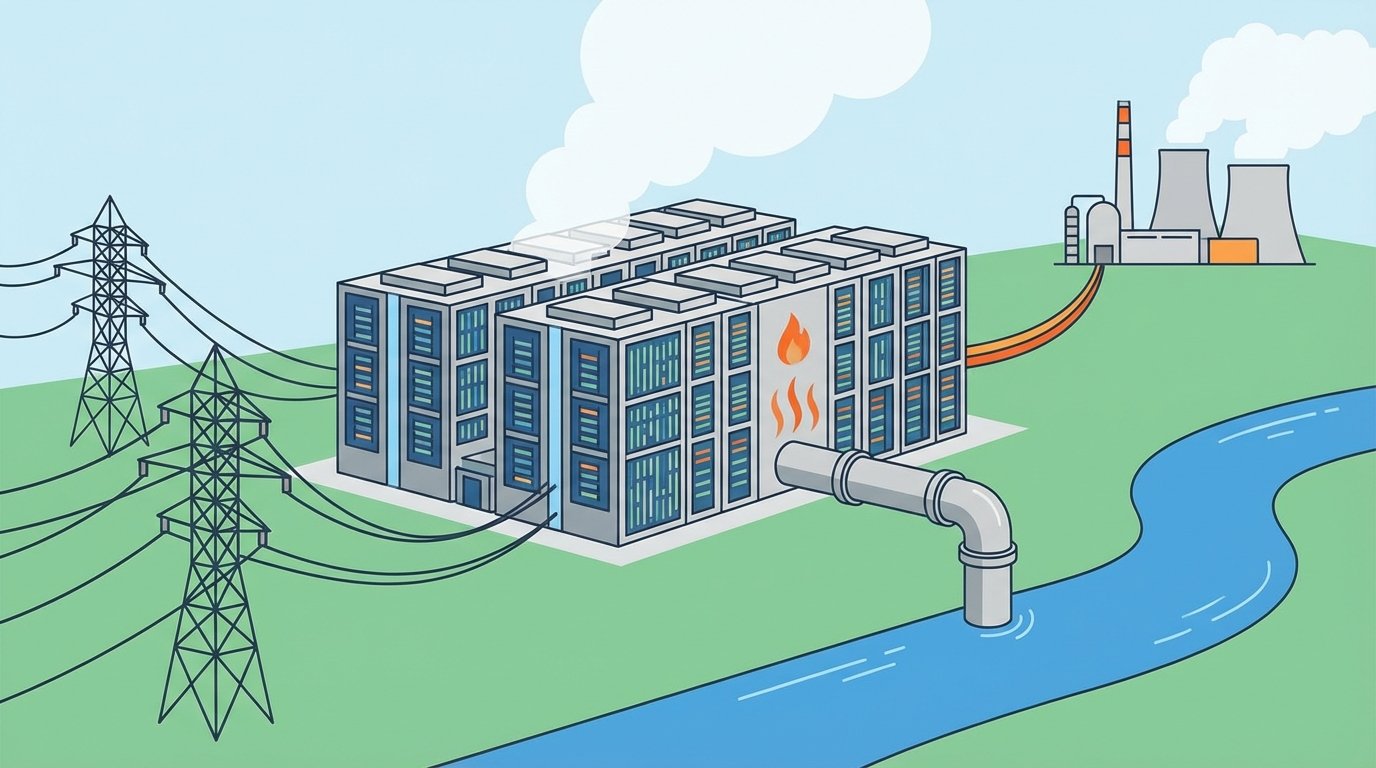
The immense energy draw of AI data centers is only one part of their environmental footprint. These facilities also consume enormous volumes of water, a critical resource that is often overlooked in the conversation about AI infrastructure. The powerful processors at the heart of these centers generate intense heat, and water cooling systems are essential to prevent them from overheating. This creates a direct competition for water with local communities, agriculture, and other industries, placing a severe strain on regional water supplies, particularly in already arid locations.
For the towns and cities that host these massive projects, the arrival of an AI data center presents a situation with two sides. On one hand, the economic promises are incredibly appealing. However, the reality on the ground can be far more complex, a clear case for an AI hype correction.
- The Promised Benefits: Companies arrive with pledges of huge investments and significant job creation. For example, the Stargate project estimates it will create around 100,000 jobs. This influx of capital is often presented as a transformative opportunity for local economies, promising new tax revenue and prosperity.
- The Hidden Costs: The rapid construction and subsequent operation of a massive facility can overwhelm local infrastructure. A stark example of this is the area surrounding Meta’s $27 billion Hyperion data center in Richland Parish, Louisiana. Since the project began, the parish has seen a shocking 600% spike in vehicle crashes. This statistic points to roads and services unable to cope with the sudden increase in traffic and activity, a clear negative consequence that was likely not part of the initial pitch to the community.
Navigating the AI Boom with a Grounded Strategy
The rapid expansion of AI data centers represents a critical turning point. While the potential for innovation is undeniable, the hidden costs are becoming too significant to ignore. The enormous demands on our energy grids, the unsustainable consumption of water, and the disruptive effects on local economies all demand a more thoughtful approach to AI development. The current path, paved with massive, centralized data centers, raises serious questions about long term sustainability. We must move beyond the hype to begin a serious conversation about the true price of this technological revolution.
As we navigate this complex landscape, a different model for AI implementation is needed. EMP0 is a US based AI and automation solutions provider that offers a more grounded approach. Specializing in sales and marketing automation, EMP0 helps clients multiply their revenue by deploying powerful AI growth systems securely under their own infrastructure. This strategy emphasizes control, security, and efficiency. It allows businesses to leverage AI without contributing to the centralized resource drain.
If you are looking for a smarter, more sustainable way to integrate AI into your business, we invite you to explore our insights and solutions. Discover more on our blog for deeper analysis.
Find us online:
- Blog: articles.emp0.com
- Twitter/X: @Emp0_com
- n8n: n8n.io/creators/jay-emp0
Frequently Asked Questions (FAQs)
Why do AI data centers consume so much energy?
AI models, especially large language models, require immense computational power to train and run. This process involves thousands of specialized processors working constantly. As a result, these facilities consume far more electricity than traditional data centers, leading to projections that AI’s energy demand will soon surpass that of entire countries.
How large are the financial investments in AI infrastructure?
The investments are staggering, often in the tens or even hundreds of billions of dollars. For instance, the Stargate project, backed by companies like OpenAI and Microsoft, involves a commitment of $100 billion, with potential to grow to $500 billion. These figures highlight the global race to build the foundational infrastructure for AI.
Do AI data centers create a significant number of local jobs?
While the construction phase brings a temporary surge in employment, the number of permanent jobs is typically low. Modern data centers are highly automated and require a small number of highly skilled technicians to operate. The large job creation numbers often cited include indirect economic benefits, not just direct, long term employment.
What are the primary environmental concerns associated with AI data centers?
The two main environmental issues are energy and water consumption. The massive electricity demand strains power grids and can increase reliance on fossil fuels. Additionally, these centers use vast amounts of water for cooling their processors, which can deplete local water supplies and impact ecosystems, especially in arid regions.
What does the future look like for AI data center design?
Future trends are focused on sustainability and efficiency. This includes designing more energy efficient AI chips, developing innovative cooling systems that use less water, and exploring alternative power sources like geothermal or even dedicated nuclear power. There is a growing focus on making AI infrastructure more environmentally responsible as it expands.