
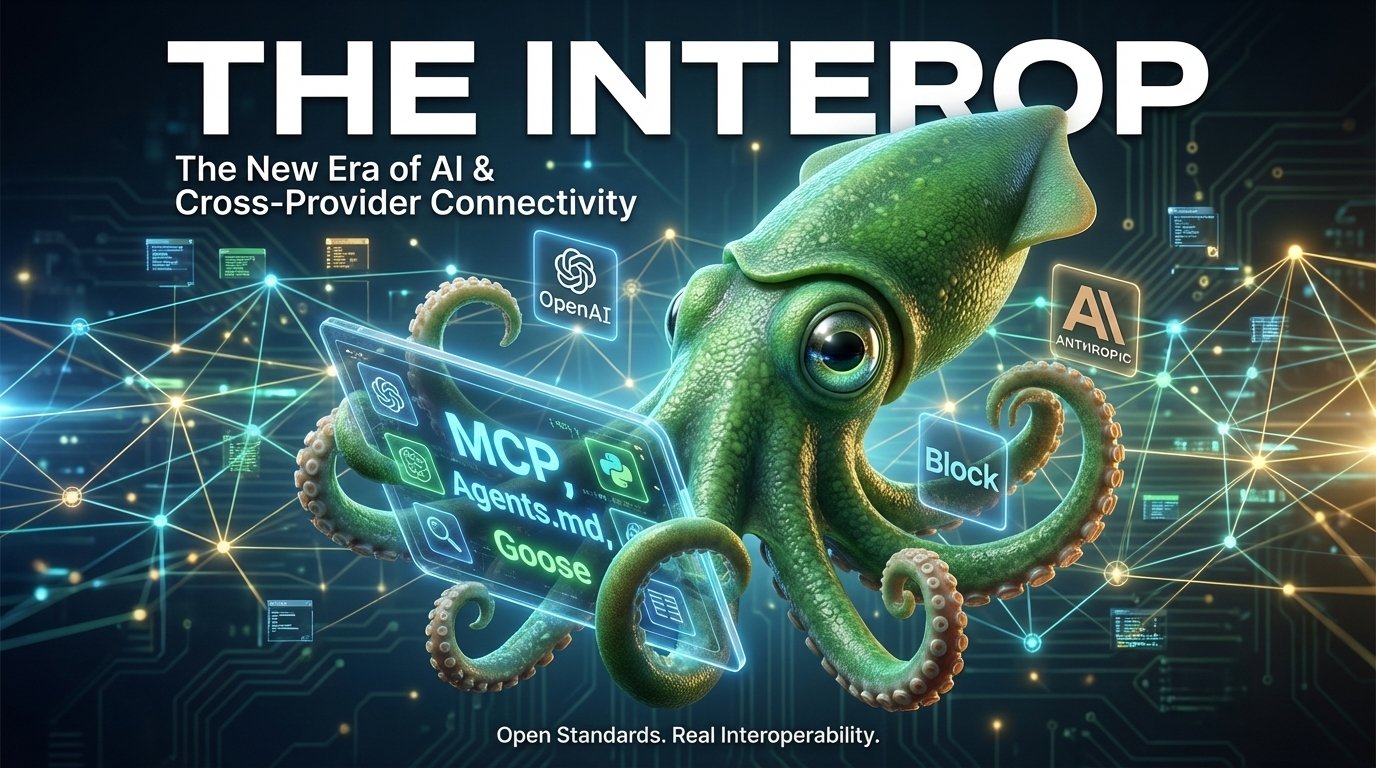
open standards for agentic AI: Building safe, interoperable agent ecosystems
open standards for agentic AI promise a future where AI programs act reliably across platforms. Because agents will perform tasks for users, interoperability matters more than ever. OpenAI, Anthropic, and Block recently co-founded the Agentic AI Foundation. Therefore, the collaboration aims to create shared protocols and governance. This move signals a shift from isolated models to coordinated agentic systems.
Industry-wide standards reduce fragmentation and lower integration costs. For example, Model Context Protocol, Agents.md, and Goose will be steered toward open governance. As a result, developers can build agents that talk to each other and to services. However, standards also raise hard questions about safety, control, and global leadership.
Still, open source stewardship under the Linux Foundation offers a neutral path. Moreover, broad participation from Google, Microsoft, AWS, and others could accelerate adoption. We should stay cautiously optimistic because standards can increase trust and innovation. Next, we will examine how these standards work and what they mean for consumers and businesses.
open standards for agentic AI: key tools and technologies
Open standards for agentic AI rely on a small set of shared projects. These projects create the plumbing that lets agents talk and act across services. Because agents need predictable interfaces, MCP, Agents.md, and Goose serve distinct but complementary roles. Major companies such as OpenAI, Anthropic, and Microsoft have already adopted or supported these projects.
Model Context Protocol (MCP)
MCP lets agents connect to external systems and data sources. For example, it standardizes how an agent requests context and how services respond. Anthropic and other providers donated MCP to the Agentic AI Foundation to encourage broad use. You can read the Anthropic announcement at this link for more detail. MCP reduces vendor lock-in because it defines a common communication layer across providers.
Agents.md
Agents.md provides a simple, repository-level format for project-specific agent instructions. OpenAI contributed AGENTS.md so coding agents can discover how to act within a project. As a result, agents gain consistent guardrails and clearer intent signals. Therefore, Agents.md helps agents behave predictably across toolchains and repos.
Goose
Goose is an agent framework that ties models, tools, and MCP integration together. Block donated Goose to the foundation to make contribution easier. Goose offers a local-first architecture that developers can extend safely. Moreover, Goose demonstrates how frameworks and protocols combine to execute multi-step agentic workflows. The Linux Foundation press release describes the AAIF and these contributions at this link.
Why these tools matter for interoperability
Together, MCP, Agents.md, and Goose address connectivity, intent, and execution. They let agents share context, follow consistent rules, and run workflows across providers. Therefore, enterprises can integrate agentic automation into existing systems with lower risk. For guidance on operationalizing agentic automation, see this link. For prompt governance and risk controls, refer to this link. Finally, open standards align with trusted AI workflows, as explained at this link.
The Agentic AI Foundation at this link provides neutral stewardship. This governance model should encourage wider participation, because no single company controls the roadmap. Still, standards must evolve with safety and global interoperability in mind.
| Tool Name | Functionality | Company Involvement | Benefits to AI ecosystem |
|---|---|---|---|
| MCP (Model Context Protocol) | Standardizes context exchange between agents and services; enables cross-provider data access and session handling | Donated and promoted by OpenAI and Anthropic; stewarded by the Agentic AI Foundation under the Linux Foundation | Reduces vendor lock-in; improves interoperability and cross-provider communication for AI agents; supports open governance |
| Agents.md | Repository-level spec for agent instructions and policies; clarifies agent intent and guardrails | Originated at OpenAI and adopted by multiple contributors; maintained under AAIF to ensure open governance | Creates consistent agent behavior across projects; simplifies integration; enhances developer clarity for AI agents |
| Goose | Framework for building and running agent workflows; integrates models, tools, and MCP interactions | Donated by Block and maintained by AAIF; receives cross-industry contributions including Microsoft and other companies | Accelerates agent development; enables extensible, local-first workflows; demonstrates practical multi-step agentic automation and interoperability |
Open Standards for Agentic AI: Industry Impact and Future of AI Agents
Establishing open standards for agentic AI will reshape how companies build and deploy agents. Because agents act on behalf of users, interoperability becomes critical. As a result, developers can combine services across providers. That reduces vendor lock‑in and speeds innovation.
Credibility from Key Leaders
Nick Cooper frames the argument around practical interoperability. He notes, “MCP is used by many companies, but there are others [who don’t use it].” Cooper adds that making MCP an open standard “should encourage developers and companies to embrace it and build systems that integrate agentic AI.” Therefore, cross-provider communication becomes realistic rather than hypothetical.
Srinivas Narayanan highlights open source as essential. He says, “Open source is going to play a very big role in how AI is shaped and adopted in the real world.” Because the community can inspect and extend code, adoption and safety improve together.
Jim Zemlin underscores governance and stability. He said, “MCP, Agents.md, and Goose have become essential tools for developers building this new class of agentic technologies.” Moreover, he explains that placing these projects under neutral stewardship ensures transparency and long‑term growth.
Consumer and Business Use Cases
Consumers will see agents complete tasks like bookings and purchases. For example, an assistant could book travel and pay vendors automatically. Businesses will use agents for customer support and transaction workflows. As a result, firms can automate routine work and free staff for complex issues.
From Chat to Action
The shift moves AI from conversation to action. Therefore, standards must define how agents request permission, access data, and execute steps. Agents.md, MCP, and Goose together provide that stack. This combination makes multi-step automation safer and auditable.
Open Governance and the Future
Open governance under a neutral foundation helps balance interest. It lowers the chance one vendor controls the rules. Still, standards must evolve with safety, privacy, and international norms. In short, open standards for agentic AI offer a cautiously optimistic path. They can expand innovation while keeping control and trust in view.
Conclusion
Open standards for agentic AI mark a turning point for the industry. By creating shared protocols and governance, the Agentic AI Foundation lowers friction for integration. As a result, companies can build agents that act reliably across platforms and vendors.
The strategic collaboration between OpenAI, Anthropic, and Block shows industry leadership. They transferred MCP, Agents.md, and Goose into neutral stewardship to boost interoperability. Therefore, this move sets a clear example for other firms and standards bodies to follow.
These standards accelerate the shift from chat to action. Consumers will gain assistants that complete bookings and purchases. Businesses will automate transactions and support workflows more safely. Open governance under the Linux Foundation helps balance innovation, safety, and transparency.
EMP0 supports this vision as a US based AI and automation company. We specialize in sales and marketing automation and deploy brand trained AI workers under client infrastructure. Visit our website at EMP0 and read our blog at our blog to learn more. Follow us on X at @Emp0_com and on Medium at medium.com/@jharilela. For creator tools, see n8n creators tools.
In short, open standards for agentic AI offer a cautiously optimistic path. They create interoperable, open AI ecosystems that unlock value while preserving trust.
Frequently Asked Questions (FAQs)
What is the Agentic AI Foundation?
The Agentic AI Foundation is a neutral open source steward for projects that enable agentic AI. OpenAI, Anthropic, and Block cofounded it and contributed MCP, Agents.md, and Goose. The foundation sits under the Linux Foundation to ensure transparent governance. As a result, the projects can grow with broad community participation and stable stewardship.
Why do open standards for agentic AI matter?
Open standards for agentic AI enable agents to interoperate across providers. Therefore, they reduce vendor lock in and lower integration costs. Moreover, standards improve safety because auditors and developers can inspect how agents behave. In short, open standards make agentic automation more reliable and trustworthy.
What do MCP, Agents.md, and Goose actually do?
MCP standardizes context exchange between agents and services. Agents.md defines repository level rules and guardrails for agent behaviour. Goose provides a framework to build and run multi step agent workflows. Together, these tools cover connectivity, intent, and execution. Thus, they let agents share context and act across systems.
Which major companies are involved and why does that matter?
Besides OpenAI, Anthropic, and Block, companies such as Google, Microsoft, AWS, Bloomberg, and Cloudflare support the effort. Their involvement matters because large vendors help drive adoption. Consequently, the stack gains credibility, real world testing, and enterprise integrations.
What can consumers and businesses expect from these standards?
Consumers can expect assistants that book travel, complete purchases, and manage schedules. Businesses can automate customer support, transaction workflows, and routine operations. However, standards must evolve with privacy and safety rules. Still, open governance and interoperable protocols point to safer, more capable agentic AI in production.