
Robotic Innovation at Toyota Manufacturing Canada
The industrial world is changing fast. Humanoid robots are now stepping onto the factory floor to perform physical labor. Recent reports confirm that Toyota contracts Toyota Motor Manufacturing Canada for its Canadian production lines. This partnership marks a significant step for Toyota Motor Manufacturing Canada.
Specifically, the company plans to use Digit robots at a facility building RAV4 vehicles. These machines will assist with unloading totes of car parts from automated tuggers. Consequently, the goal is to improve safety and boost overall productivity.
Agility Robotics originally started as a research project at Oregon State University. Today, the company leads the way in creating bipedal machines for industrial environments. Therefore, this deployment is more than just a simple trial. It represents a serious effort to integrate humanoid technology into existing workflows.
Because these robots can navigate human spaces, they offer flexibility that traditional automation lacks. Furthermore, the use of cloud based software helps managers oversee large fleets of robots at once. This innovation promises to redefine how humans and machines work side by side in the future.
Toyota Contracts Agility Humanoid Robots for RAV4 Production
The automotive industry is entering a new era of automation. Toyota Motor Manufacturing Canada has decided to integrate advanced bipedal technology into its daily operations. This decision means that Toyota contracts Agility humanoid robots to work alongside its human team members. Consequently, the company will deploy seven Digit robots at its factory in Cambridge Ontario. This facility is famous for producing the popular RAV4 sport utility vehicle.
Automating Heavy Tasks with Digit Robots
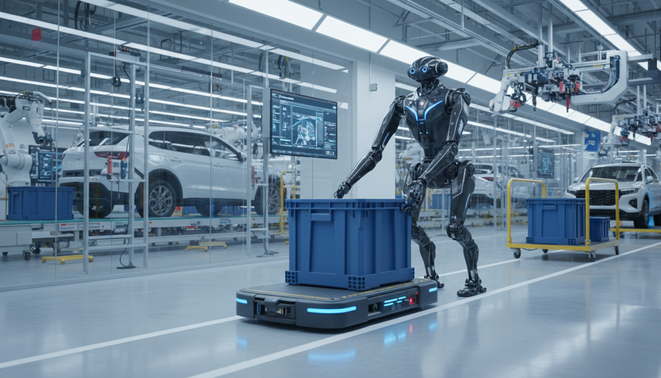
The deployment focuses on specific tasks that are often repetitive or tiring. Additionally, Digit robots will work within automated production lines to handle logistics. Their main role is to unload totes filled with auto parts from automated warehouse tuggers. These tuggers move through the factory to deliver supplies. Because Digit has a humanoid form, it can navigate spaces designed for people. This flexibility makes it a perfect fit for industrial environments. Therefore, Robotics Business Review highlights this as a major shift in factory automation.
- Unloading heavy containers from mobile transport units.
- Organizing parts for the assembly line workers.
- Moving autonomously through complex factory layouts.
Fleet Management with Arc Software
Managing multiple machines requires a powerful digital backbone. Agility Robotics provides a cloud based software package known as Arc. This system allows managers to oversee the entire robot fleet from a single interface. Furthermore, the team can track performance and schedule maintenance without stopping production. In fact, The Verge reports that such software is vital for scaling robotic operations. The Arc platform ensures that every Digit robot stays updated with the latest instructions. Using these tools helps Toyota maintain high levels of operational efficiency while keeping workers safe. As a result, the brand remains a leader in automotive technology. According to Forbes, this represents the future of smart manufacturing.
Comparative Features of Industrial Robots
Choosing the right machine for a factory depends on specific needs. This data helps explain why Toyota contracts Agility humanoid robots for its production lines. The following list compares Digit with other common systems used in automated production lines today.
Key Performance Metrics
- Robot Type: Digit Humanoid
- Mobility Style: Bipedal walking for human spaces
- Payload Capacity: 35 pounds of weight
- Software System: Arc Cloud Based platform
- Deployment Speed: Moderate using new AI tools
- Robot Type: Autonomous Mobile Robot
- Mobility Style: Wheeled base for warehouse floors
- Payload Capacity: 400 pounds or more
- Software System: Fleet management APIs
- Deployment Speed: Fast for open environments
- Robot Type: Collaborative Arm
- Mobility Style: Stationary base at workstations
- Payload Capacity: 20 to 30 pounds
- Software System: Local graphical interfaces
- Deployment Speed: Very fast installation
Analyzing Deployment Advantages
Factories use different tools to achieve high operational efficiency. Because Digit has a humanoid form, it can navigate spaces built for people. This flexibility allows it to handle tasks that stop wheeled machines. Furthermore, the use of cloud based software helps managers oversee large fleets at once. However, traditional mobile robots are better for moving very heavy car parts over long distances. Toyota chooses the best tool for each specific job in the RAV4 plant. Therefore, integrating various technologies ensures a smooth workflow. Using these systems helps the brand maintain its lead in automotive technology. For more information, visit Agility Robotics to see their latest updates. Additionally, Toyota continues to invest in smart factory solutions.
Visualizing Humanoid Robotics in Factories
Overcoming Barriers When Toyota Contracts Agility Humanoid Robots
Deploying robots in industrial environments is not a simple task. Companies often face high expenses beyond the initial purchase price. Executives at Toyota note that deployment costs often exceed the actual price of the robot. Therefore, integration requires careful financial planning. This includes the time needed to configure hardware for specific factory tasks.
Despite the hurdles, the long term benefits are clear for large manufacturers. Tim Hollander expresses excitement about using the Digit robot to improve the team member experience. He believes it will further increase operational efficiency in their manufacturing facilities. Consequently, the focus remains on making physical labor safer and faster. Toyota views these machines as partners in their automated production lines. According to TechCrunch, this shift helps brands stay competitive.
New technology is helping to solve these complex problems. Pras Velagapudi explains that AI tools let us decrease that cost of deployment. These systems decrease the amount of time getting the robot configured. As a result, companies can reach the desired level of performance much sooner. Moreover, cloud based software like Arc provides real time data to optimize every movement. IEEE Spectrum highlights that such software is essential for modern robotics.
The industry is also moving toward robots as a service models to lower financial risk. This approach allows factories to pay for the work done rather than the hardware itself. Because of these advances, AI deployment costs are becoming more manageable for modern businesses. Toyota continues to lead by testing these innovative solutions in real world scenarios. This strategy ensures they stay ahead of competitors in the automotive sector. Furthermore, ZDNet notes that AI is reshaping the entire manufacturing landscape.
Conclusion: The Future of Factory Automation
Toyota contracts Agility humanoid robots to solve complex labor issues. This partnership highlights a massive shift in how factories operate. Furthermore, the move signals the maturity of bipedal technology in industrial environments. Specifically, the use of Digit robots improves overall operational excellence. Automation is no longer just about stationary arms on a floor. Instead, it involves mobile and intelligent machines that adapt to change. Consequently, manufacturing efficiency reaches new heights with these tools.
AI and robotics now drive global production standards for top brands. As a result, companies must adopt these innovations to stay relevant. Therefore, having the right partner is vital for success in this field. Agility Robotics proves that humanoid machines are ready for real work. Using smart systems helps maintain a lead in the market. Many leaders believe that AI and robotics will soon handle most heavy physical tasks.
EMP0 stands as a leader in AI and automation solutions today. The company provides brand trained AI workers to help businesses scale. Additionally, their ready made tools multiply revenue through smart growth systems. EMP0 ensures that these systems are securely deployed under client infrastructure. This level of security protects sensitive data while driving progress. Because of this expertise, EMP0 helps firms navigate the complex AI landscape.
Learn more at our blog: articles.emp0.com
Website: articles.emp0.com
Twitter: @Emp0_com
Medium: medium.com/@jharilela
Frequently Asked Questions (FAQs)
What are the benefits of using Digit humanoid robots in factories?
Digit robots provide a unique advantage in industrial environments because they have a human like form. This design allows them to walk and move in spaces built for people. They can reach high shelves and step over obstacles that wheeled robots cannot pass. Furthermore, these machines take over repetitive or physically taxing roles. This shift helps protect human workers from injury and fatigue. Consequently, companies see a rise in overall operational efficiency and safety. Using these robots also allows for better space utilization in older factory buildings.
Why is the fact that Toyota contracts Agility humanoid robots significant?
The partnership between these two industry leaders represents a major milestone for automation. When Toyota contracts Agility humanoid robots, it validates the use of bipedal technology at scale. This move shows that humanoid machines are now reliable enough for real world car production. Previously, many experts viewed bipedal robots as experimental projects only. However, this deployment proves they can handle heavy labor in a RAV4 plant. The decision encourages other automotive brands to explore similar solutions. Therefore, it marks the start of a new era for smart manufacturing.
What challenges do companies face when deploying humanoid robots?
Integration into existing factory workflows often brings several complex hurdles. High financial investment is a primary concern for many business leaders. Indeed, the cost of deployment can be much higher than the price of the robot hardware. Engineers must also spend significant time configuring the machines for specific tasks. Furthermore, training the workforce to interact with humanoid units requires clear planning. Maintaining a large fleet of complex robots adds another layer of operational difficulty. Therefore, companies must address these issues to ensure a smooth transition to automated production lines.
How do AI tools help reduce the costs of robotic deployment?
Advanced software and artificial intelligence play a crucial role in lowering expenses. Specifically, AI tools let us decrease that cost of deployment by automating the setup process. These systems can learn new tasks through simulation before the robot ever touches the factory floor. This capability reduces the amount of time spent on manual configuration. Furthermore, cloud based platforms like Arc allow for remote monitoring and updates. Because the software handles complex calculations, engineers can deploy machines much faster. As a result, the time to reach peak performance is significantly shortened.
What are the future prospects for humanoid robots in manufacturing?
The role of humanoid machines will likely expand as the technology continues to mature. Experts predict that these robots will eventually handle more complex assembly tasks. Moreover, improvements in battery life and sensor technology will allow for longer work shifts. We may see humanoid robots working in every part of the supply chain. This includes everything from unloading trucks to performing quality control checks. Because they are flexible, they can easily switch between different jobs on the line. Therefore, the future looks bright for companies that embrace these AI powered growth systems.