
Tesla Robotaxi Austin Driverless Deployment Marks a New Era for Mobility
Tesla recently reached a huge milestone in Texas. The company officially started its Tesla robotaxi Austin driverless deployment by removing human safety monitors from the front seat. This bold step represents a significant change in the world of transportation. Consequently, experts believe this move will accelerate the adoption of autonomous vehicles globally. Because the car now handles all driving tasks, the technology must be incredibly reliable.
A Major Breakthrough in Mobility Technology
The move to deploy robotaxis without front seat safety drivers marks a major breakthrough in mobility tech. Therefore, Austin is now a central hub for observing how robots navigate busy city streets. Many people are eager to see how these vehicles perform without human intervention. As a result, the project is drawing massive attention from the global tech news audience.
Key details of this breakthrough include:
- Passengers can now ride in cars that have no safety driver present.
- The service began with a small group of fully unsupervised vehicles.
- Tesla plans to increase the number of these cars over the coming months.
- A separate chase car often follows the vehicle to ensure everything goes smoothly.
Looking Toward an Autonomous Future
Elon Musk announced the news to celebrate the success of his AI team. He noted that the project is just the beginning of a larger rollout. While rivals are also testing similar tech, Tesla aims for a wider reach. Because of this progress, the future of travel looks very different today.
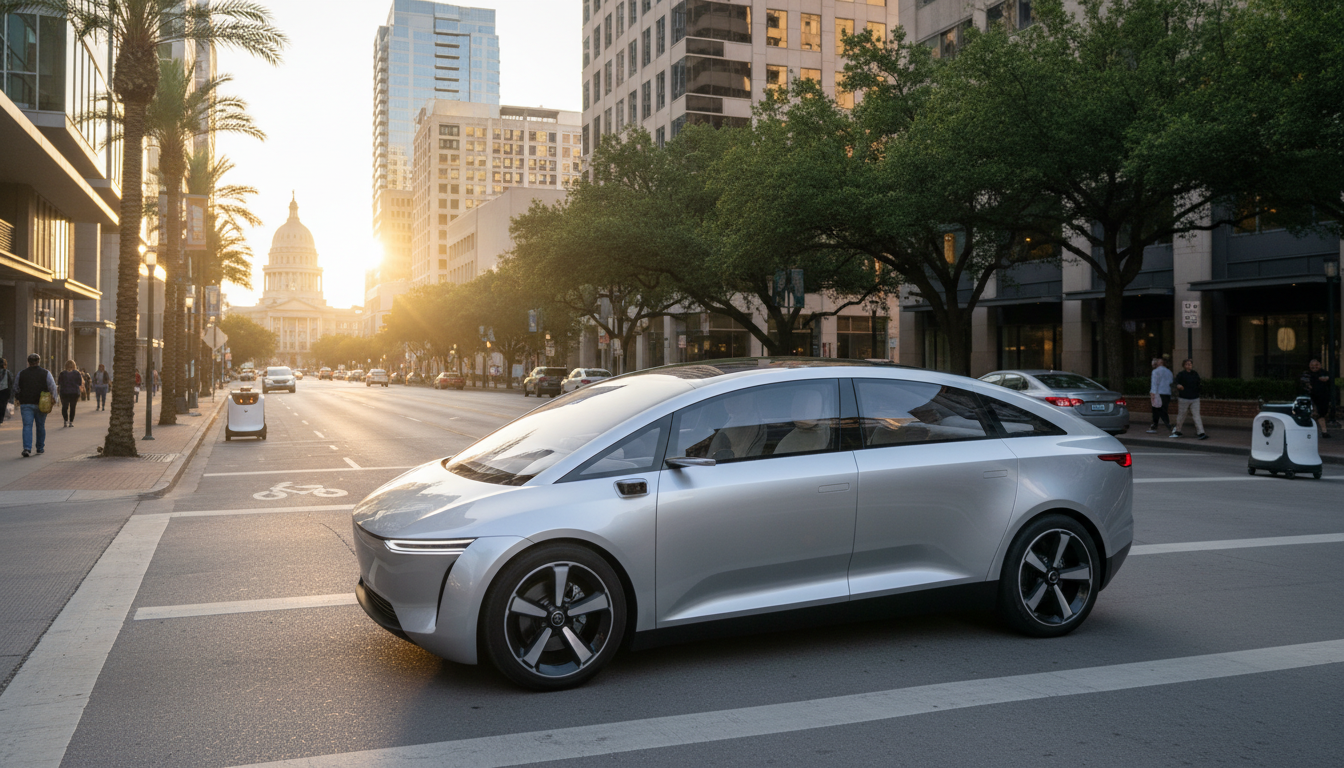
Progress of the Tesla Robotaxi Austin Driverless Deployment
The Tesla robotaxi Austin driverless deployment represents a massive shift in how people move through cities. Last June, the company launched its first fleet in the capital of Texas. During that initial phase, every vehicle carried a human safety operator in the front passenger seat. This precaution allowed the team to gather data while keeping a person ready to take control. However, the plan always focused on removing the human element entirely. By December, the company began testing cars without any monitors in the front seat. Consequently, this progress has turned Austin into a living laboratory for future transit systems.
Elon Musk recently shared a major update regarding this milestone on his social media profile. He expressed great pride in the work of his engineers. The billionaire wrote that the company just started robotaxi drives in Austin with no safety monitor in the car. He also sent his congratulations to the entire AI team for reaching this goal. This announcement signalizes that the Tesla robotaxi Austin driverless deployment is moving into a new phase of public availability. Many enthusiasts are following these updates closely as the technology improves. Furthermore, you can find more information about the project at The Hidden Truth About Tesla’s Robotaxi Safety Concerns.
Managing the Tesla Robotaxi Austin Driverless Deployment
Ashok Elluswamy shed light on how the company will scale this new service. He explained that the project will start with a few unsupervised vehicles. These cars will operate alongside the broader fleet that still uses safety monitors. Over time, the ratio of fully autonomous cars will increase. This careful strategy ensures that every vehicle performs correctly before the fleet grows too large. Therefore, the company can maintain high standards while expanding its reach. Because the system relies on advanced AI, the team continues to refine the driving software.
The approach to pricing also sets this service apart from others in the market. Tesla currently charges for these driverless rides. This decision is noteworthy because rivals like Zoox and Waymo did not charge for rides during their early deployments. While those companies offered free trips to build trust, Tesla chose a commercial path from the start. Additionally, observers have noticed a chase car following many of the driverless vehicles. This extra layer of security helps manage any unexpected situations on the road. For insights into market shifts, see How Uber is Pioneering the Future of Robotaxis: A Market Disruption Feast.
Key facts about the current deployment:
- The service now operates without any human safety monitors.
- Tesla charges passengers for every driverless ride taken.
- A chase car follows the autonomous fleet for extra safety.
- Unsupervised vehicles will slowly become more common.
Future growth depends on the ability of the cars to handle complex city traffic. Reports from The Verge suggest that the industry is watching Austin very closely. Since the deployment is still expanding, the final impact remains to be seen. Thus, the current success indicates that autonomous travel is becoming a reality.
| Feature | Tesla Robotaxi Austin | Zoox | Waymo |
|---|---|---|---|
| Driver Presence | No safety monitor in front seat | Fully driverless operations | Fully driverless operations |
| Pricing Strategy | Charges for rides immediately | Initially offered free rides | Initially offered free rides |
| Deployment Status | Active driverless deployment | Controlled testing and rollout | Commercial service in select cities |
| Safety Measures | Chase car monitoring system | Sensor redundancy and teleops | Multi layer sensor suite |
| Testing Approach | Mixing unsupervised and supervised cars | Purpose built vehicle testing | Large scale public road testing |
Safety and Logistics of the Tesla Robotaxi Austin Driverless Deployment
The Tesla robotaxi Austin driverless deployment relies on several layers of safety protocols to protect passengers. One key strategy involves the use of chase cars. These vehicles follow the autonomous fleet throughout the city streets. Because a human driver is in the chase car, they can react quickly to any unexpected road events. This presence provides peace of mind for both the company and the public. Consequently, the transition to fully autonomous travel feels much more controlled and secure.
Operational logistics are also changing as the fleet expands. Initially, the company used a safety monitor in every vehicle to ensure smooth operations. However, the current goal is to transition away from this requirement. Ashok Elluswamy explained that the company is mixing unsupervised vehicles with the broader fleet. As a result, the ratio of cars without a human in the front seat will increase over the coming months. Therefore, the data gathered from these early trips will inform future expansion plans in other cities.
Monitoring the Tesla Robotaxi Austin Driverless Deployment
Public safety is at the heart of the Tesla robotaxi Austin driverless deployment. While competitors often offer free rides during their testing phases, Tesla decided to charge passengers immediately. This pricing strategy highlights a significant level of confidence in their hardware and software systems. Furthermore, the company continues to monitor every ride in real time from a central hub. Because the system is still new, every trip provides valuable learning opportunities for the AI team.
Notable media organizations like TechCrunch have requested more information about these operations. They specifically asked about how the company handles complex traffic scenarios without a person in the car. While the response from the company has been limited, the project continues to move forward at a fast pace. The public remains curious about how these cars will handle the busy Austin environment during peak hours.
- Chase cars provide a human safety net for every autonomous ride.
- The company is gradually increasing the number of unsupervised vehicles on the road.
- Passengers pay for their rides just like a standard ride hailing service.
- Media inquiries focus on how the AI manages difficult city traffic patterns.
This careful rollout ensures that the Tesla robotaxi Austin driverless deployment remains as safe as possible. Every successful trip builds more trust with the local community.
Conclusion: Tesla Robotaxi Austin Driverless Deployment
The Tesla robotaxi Austin driverless deployment represents a massive shift in urban travel. By removing safety monitors, the Tesla AI team has proven that autonomous tech is ready for public use. This milestone places the city at the center of a global mobility revolution.
As a result, future transportation will likely focus on efficiency and AI integration. Furthermore, the data collected in Austin will help refine software for other global cities. Therefore, this project serves as a blueprint for the next decade of automation.
Innovation extends far beyond the roads and into the digital business landscape. EMP0 stands at the forefront of this change as a leading AI and automation company. We specialize in helping businesses grow through powerful sales and marketing automation systems. Because we provide AI powered tools, our systems streamline complex workflows with ease.
Consequently, our systems allow your team to focus on high value strategy instead of repetitive tasks. This approach ensures that your company stays competitive in an increasingly automated market. You can explore our latest case studies and automation guides on our blog. Our team invites you to discover how EMP0 can transform your business growth today at EMP0 Blog.
Frequently Asked Questions (FAQs)
How does Tesla ensure safety during the Austin driverless deployment?
Tesla uses advanced AI and human oversight to maintain safety. For example, a chase car follows the autonomous vehicles. This backup vehicle ensures that a person can respond to any rare issues. Consequently, the team gathers data safely.
What technology powers the robotaxi fleet?
The fleet relies on cameras and neural networks. These systems process visual data in real time to navigate streets. Because the software learns from millions of miles, it handles traffic well. Therefore, the car makes decisions safely.
Does the company charge for rides in Austin?
Tesla currently charges passengers for their trips. This approach differs from competitors who offered free rides during tests. As a result, the deployment functions like a business from the start. Customers book rides via an app.
How does this deployment compare to rivals like Waymo or Zoox?
Tesla is taking a unique path by charging for rides. In contrast, Waymo and Zoox provided free service to build trust. However, all these companies aim for full autonomy. Tesla hopes its data provides an edge.
What are the future plans for the robotaxi program?
The company plans to increase unsupervised vehicles in Austin over time. Eventually, they want to expand the service to more cities. Because the AI improves, the fleet will become more capable. Thus, we may see expansion soon.