

Technology trends 2026: Emerging Tech Stories Reshaping Industries
The world is on the cusp of a significant technological revolution. As we look toward the future, the Technology trends 2026 emerge not as abstract concepts but as powerful forces actively reshaping our world. These innovations are consequently creating major shifts in foundational sectors of our economy. From the way we purchase and sell homes to how we cultivate our food, emerging technologies are driving unprecedented change. Therefore, this article explores the most impactful developments, offering an analytical view of the transformations happening right now.
Two industries, in particular, are experiencing profound disruption: real estate and agriculture. In the property market, for instance, a movement known as proptech is gaining serious momentum. This approach uses data and software to make transactions more transparent and efficient. As a result, consumers are gaining more control over one of the biggest financial decisions of their lives. We will therefore examine how open data platforms are challenging traditional models and reducing hidden costs for homebuyers.
Simultaneously, agriculture is undergoing its own technologically advanced makeover. Farms are becoming increasingly tech dense, using sophisticated tools to optimize crop yields and manage resources with greater sustainability. We will delve into the stories of farmers who leverage artificial intelligence, satellite imagery, and complex data analytics to make smarter decisions. Ultimately, these advancements are not just about boosting productivity; they represent a fundamental change in our relationship with the land and our food supply. Join us as we uncover the emerging tech stories that define the next era of industry.
The Green Revolution 2.0: Tech Dense Farming
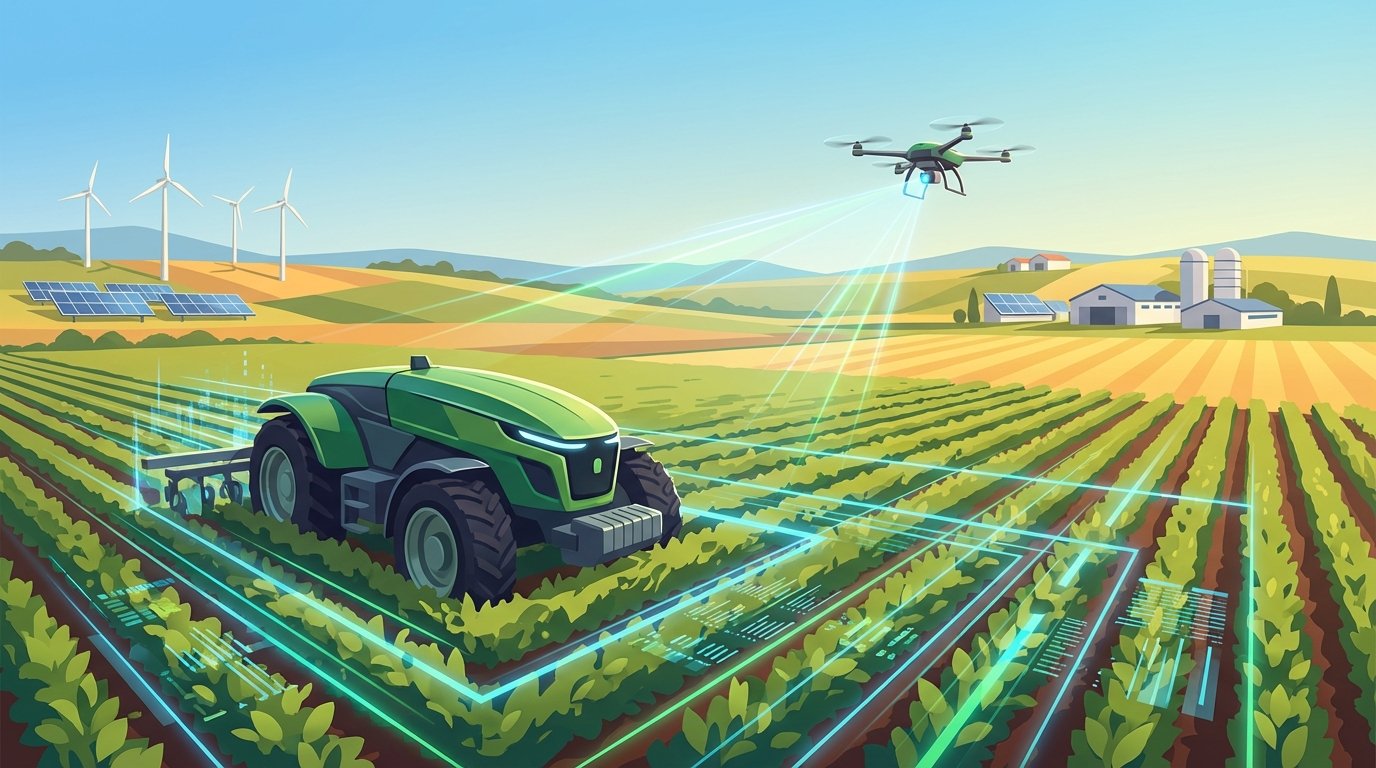
Agriculture is undergoing a remarkable transformation, driven by the latest technology trends 2026. While a 2022 USDA report indicated that the number of farms in the US is shrinking, the remaining operations are becoming significantly more tech dense. This shift is powered by a growing willingness among farmers to embrace innovation. For example, a recent McKinsey study revealed that 57% of North American farmers are likely to adopt new yield increasing technologies within the next two years. This signals a clear move toward smarter, more efficient farming practices.
Precision Tools for Modern Agriculture
Today’s farmers have access to an arsenal of sophisticated digital tools that change how they manage their land. These platforms leverage data to provide actionable insights, turning guesswork into precision science. Jake Leguee, who manages a vast 17,000 acre farm in Saskatchewan, captures the complexity of modern farming perfectly: “There’s a lot of looking forward and then backwards and then forwards and then backwards in crop farming.” Consequently, technology is becoming essential for navigating these decisions.
Here are some of the game changing tools:
- Syngenta Cropwise: This AI powered platform uses satellite imagery and two decades of weather data to help farmers predict risks and guide planting decisions. It can even alert a farmer to specific problem areas in a field, enabling targeted interventions. The insights provided by such advanced systems align with the broader developments in What does Agentic AI and AI trends 2026 mean?.
- John Deere’s Precision Tractors: Modern tractors are more than just machines; they are mobile data centers. Equipped with features like weed sensing sprayers, they can apply pesticides only where needed, significantly reducing chemical usage. This technology from John Deere allows for operations at speeds of around 15 miles per hour, combining efficiency with sustainability.
- Tend: For smaller or specialized farms, data management platforms like Tend are invaluable. Farmer Norah Lake explains its utility, stating, “We can use Tend to calculate the quantity of seed that we need to order based on the row feet of a particular crop.” This simple yet powerful tool helps optimize inventory and planning.
- NoMaze: This technology focuses on the future by using field tests and simulations. As a result, it can assess how different crops might perform under various climate conditions, helping farmers prepare for environmental changes.
These technologies are not just improving efficiency; they are building a more resilient and sustainable agricultural sector. By harnessing the power of data and AI, farmers can make more informed choices that boost yields while minimizing their environmental impact. This evolution represents a critical step forward in feeding a growing global population.
Proptech: Bringing Clarity to a Fragmented Market
The real estate industry has long operated with a significant degree of opacity. For decades, critical information has been scattered across fragmented systems, making it difficult for consumers to understand property values and transaction histories. This lack of transparency has contributed to a stressful and often expensive home buying process, creating friction for buyers and sellers alike.
Open Data and Technology Trends 2026
The new wave of property technology, or proptech, is dismantling these old barriers. Central to these technology trends 2026 is the principle of open data. By consolidating information, proptech platforms are empowering consumers and disrupting the traditional real estate model. This shift challenges the standard 5% or 6% commission fees that have long been the norm, as buyers now have access to the data they need to make informed decisions independently.
Open data platforms make the entire process more transparent. According to one industry expert, “Open data makes the transaction space clearer and can reduce the chaos and cost of buying a home.” This approach, which involves aggregating and presenting complex information in a simple format, is a practical application of concepts seen in other tech areas, including those discussed in this article on Why Agentic AI Redefines Autonomous Workflows?.
This newfound clarity directly addresses housing affordability by tackling hidden costs. As another expert puts it, “Real housing affordability comes from reducing the hidden costs, duplicated work and unclear pricing that drain people long before closing day — and proptech is finally giving consumers the clarity they need to navigate the process with confidence instead of stress.” This movement is detailed further on platforms like Enertiv, which explains the broad impact of proptech. Ultimately, these innovations are creating a fairer and more efficient market for everyone involved.
Comparing Tech Innovations in Agriculture and Real Estate
| Technology Name | Industry | Primary Function | Key Benefits | Example Use Cases |
|---|---|---|---|---|
| Syngenta Cropwise | Agriculture | AI Powered Crop Management | Predicts risks, optimizes decisions, improves yields | A farmer receives an alert to check a specific corner of a field for potential issues. |
| John Deere Tractors | Agriculture | Precision Farming Machinery | Reduces pesticide use, increases operational efficiency | A tractor with weed sensing technology sprays herbicides only on weeds, not the entire field. |
| Tend | Agriculture | Farm Data Management | Simplifies seed ordering, streamlines crop planning | A small farm calculates the exact amount of seeds needed for the season based on row feet. |
| NoMaze | Agriculture | Crop Performance Simulation | Assesses crop resilience to climate change | Researchers simulate how a new crop variety will perform under future drought conditions. |
| LandOnEarth | Real Estate | Open Data Platform | Consolidates fragmented property data for clarity | A homebuyer researches property value comparisons and local conditions before making an offer. |
| Ownli | Real Estate | Home Management Platform | Centralizes home data for owners | A homeowner tracks maintenance records, warranties, and property value in one place. |
| Open Data Platforms | Real Estate | Data Aggregation & Access | Reduces commission costs, empowers consumers | A buyer uses transparent data to negotiate a better price, reducing reliance on traditional agents. |
The Future is Now: Embracing Industry Transformation
The technology trends 2026 are clearly more than just predictions; they are actively reshaping foundational industries before our eyes. In agriculture, we see how AI, automation, and data analytics are creating a new generation of tech dense farms that are more efficient and sustainable. Similarly, the real estate market is being transformed by proptech and open data, which are bringing unprecedented transparency and affordability to the home buying process. These examples show a clear pattern: businesses that embrace technological innovation will lead their fields.
Navigating this evolving landscape requires the right tools and expertise. As a US based AI and automation company, EMP0 provides the secure and efficient solutions necessary for businesses to thrive. We specialize in building AI powered growth systems that help you harness the power of these emerging trends. If you are ready to prepare your business for the future, we encourage you to explore the resources and tools we offer.
Discover how EMP0 can help you build your own AI powered systems and stay ahead of the curve. Connect with us to learn more:
- Website: emp0.com
- Blog: articles.emp0.com
- Twitter/X: @Emp0_com
- Medium: medium.com/@jharilela
- n8n: n8n.io/creators/jay-emp0
Frequently Asked Questions (FAQs)
What are the key technology trends 2026 in agriculture?
The most significant trends focus on making farms more tech dense. This involves the use of AI powered platforms such as Syngenta Cropwise, which analyzes vast amounts of satellite and weather data to predict crop risks and optimize decision making. Another key area is precision machinery, like the latest John Deere tractors equipped with sensors that can specifically target weeds, thereby reducing overall pesticide use. Additionally, data management tools like Tend are becoming essential for smaller farms to plan and calculate resource needs accurately, leading to more sustainable and efficient agricultural practices.
How does proptech actually benefit homebuyers?
Proptech, which stands for property technology, benefits homebuyers primarily by creating a more transparent marketplace. Open data platforms consolidate property information that was once fragmented and difficult to access. As a result, buyers get a clearer picture of property values, historical data, and market conditions. This increased clarity empowers them to make better informed decisions and can reduce their reliance on traditional real estate agents, potentially lowering commission costs from the standard 5% or 6%. The entire process becomes less stressful because it removes many of the hidden costs and uncertainties.
Are farmers really adopting these new technologies?
Yes, the adoption rate is growing rapidly. While reports from the USDA show that the number of farms in the United States is shrinking, the farms that continue to operate are becoming much more technologically advanced. This trend is supported by a recent McKinsey study, which found that 57% of farmers in North America are planning to adopt new technologies designed to increase their crop yields within the next two years. This data clearly shows a strong movement toward tech integration in the agricultural sector.
What is the main goal of using AI in farming?
The central goal of implementing AI in farming is to transform it from a reactive to a proactive industry. AI systems provide predictive insights that allow farmers to optimize nearly every aspect of their operations, from planting schedules to water and fertilizer usage. For instance, AI can analyze field imagery to detect early signs of disease or pests, enabling targeted treatment before the problem spreads. This data driven approach not only improves crop yields but also promotes sustainability by conserving resources and maximizing the farm’s overall profitability and resilience.
What challenges might slow down the adoption of these technologies?
Several challenges exist. In agriculture, the high initial cost of new equipment and software can be a significant barrier for many farmers. There is also a steep learning curve associated with integrating these advanced data systems into established farming routines. For proptech, the main obstacles include overcoming the resistance from a traditionally fragmented real estate industry and ensuring that the aggregated data is both accurate and secure. As technology trends evolve across sectors, including developments in What Will Technology trends 2026 Do for Healthcare?, addressing these adoption hurdles will be essential for widespread success.