
The Future of Orbital Compute and Cooling Innovation
The future of orbital infrastructure is changing rapidly today. We see incredible progress in space compute and battery systems. Sophia Space passive cooling technology stands at the center of this revolution. Traditional methods often fail in the vacuum of space because no air exists there. Therefore, new solutions are necessary for modern modular platforms.
This breakthrough allows servers to operate efficiently without traditional airflow. Consequently, the industry can now process massive amounts of data in orbit. The company is leading this charge with visionary product designs. Their TILES system represents a major shift in how we build satellite bus architectures. As a result, we are entering a new era of high performance computing beyond Earth.
These advancements also improve how batteries store energy in harsh environments. Furthermore, platform product changes are making satellites more modular than ever before. Investors already recognize the massive potential of these emerging tech breakthroughs. Because of this innovation, the digital frontier is expanding into deep space. We are witnessing a fundamental change in how humanity uses orbital resources.
The Breakthrough of Sophia Space Passive Cooling Technology
Computing in the harsh environment of space creates extreme thermal challenges for engineers today. On Earth, fans move air to cool down hot processors and components. However, the vacuum of space contains no atmosphere to support traditional airflow systems. Therefore, heat builds up quickly and can destroy sensitive electronic circuits. Sophia Space passive cooling technology solves this problem by using advanced materials and smart design.
Nvidia CEO Jensen Huang recently highlighted this specific difficulty during a public talk. He noted that it is cold in space but there is no airflow. Consequently, the only way to dissipate heat is through conduction. This means heat must travel through solid surfaces instead of moving through the air. Additionally, Sophia Space uses a proprietary heat spreader to move warmth away from their chips. This method relies on radiation to release energy into the cold dark void.
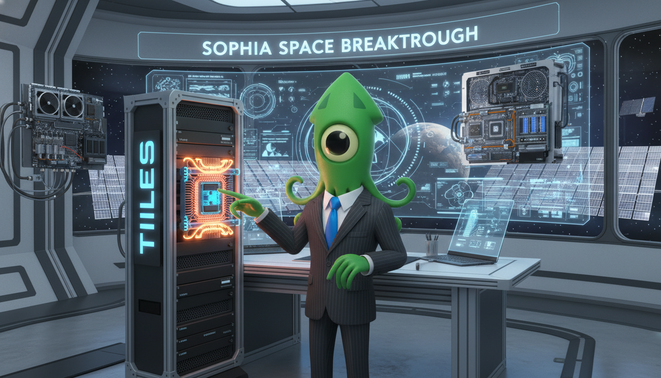
The company packages this innovation into modular server racks called TILES. Each unit measures exactly one meter by one meter in area. Furthermore, these racks are only a few centimeters deep to save weight. Because the design is so efficient, nearly ninety two percent of the power goes to processing. Readers can find more details on the official Sophia Space website.
This technology represents a major breakthrough for the entire satellite industry. Rob DeMillo describes the lack of computing as the dirty little secret of the satellite world. He says that sensors produce petabytes of data every few minutes. However, crews throw most of it out because they cannot do the computing on board. Therefore, cooling allows for powerful computers to stay in orbit longer to process data where it is collected. Tech observers can read more about this on TechCrunch.
TILES and the Revolution of Space Data Centers
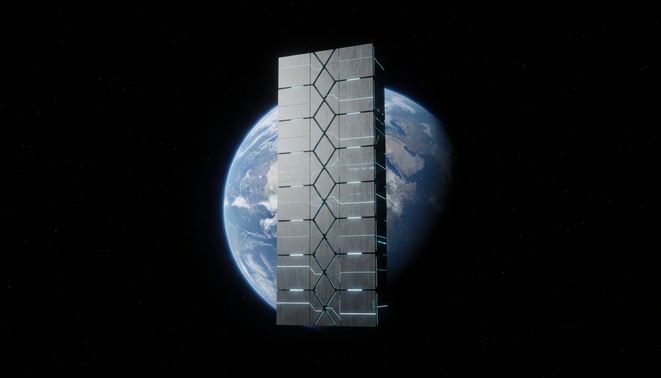
The innovative TILES system provides a new foundation for orbital computing. Each of these modular server racks measures exactly one meter by one meter in area. Furthermore, the design remains incredibly slim at only a few centimeters in depth. This compact form factor allows for easy integration into various satellite bus structures. Because space on a launch vehicle is limited, this thin profile is a major advantage for operators.
Sophia Space focuses heavily on operational efficiency for its hardware. The company expects that 92 percent of the power generated will go directly to processing tasks. Consequently, very little energy is wasted on peripheral functions or cooling overhead. This high level of efficiency is possible because of Sophia Space passive cooling technology. Therefore, more compute power becomes available for complex artificial intelligence workloads in orbit.
Rob DeMillo has spoken about the current limitations in the satellite industry. He mentioned that amazing sensors produce terabytes or even petabytes of data every few minutes. However, companies throw most of it out because they cannot do the computing on board. As a result, the industry needs a way to process information where it is captured. TILES offer a solution by acting as scalable space data centers.
These units enable real time analysis of earth observation data or communication signals. By processing data in space, satellites can send only the most important results back to Earth. This reduces the strain on ground stations and expensive downlink bandwidth. Furthermore, the modular nature of the system allows for easy upgrades as technology improves. You can learn more about satellite innovations on the NASA website or through SpaceX mission updates.
Comparison of Emerging Space Compute Technologies
| Company | Cooling Method | Power Efficiency | Key Features | Deployment |
|---|---|---|---|---|
| Sophia Space | Passive conduction | Ninety two percent | One meter modular tiles | Late 2027 |
| SpaceX | Radiative panels | High solar gain | Integrated network compute | Early 2026 |
| Starcloud | External radiators | Low energy cost | NVIDIA H100 GPU nodes | Late 2025 |
| Apex Space | Active fluid loops | High thermal load | Five kilowatt payload bus | Now flying |
This data highlights the shift toward more modular and efficient designs. Sophia Space stands out because of its focus on passive thermal management. Furthermore, the high processing efficiency allows for more complex AI operations. SpaceX continues to lead with massive satellite networks and integrated compute. Meanwhile, Starcloud focuses on bringing GPU power to the edge of space.
Apex Space provides the heavy-duty platforms needed for power-intensive payloads. As a result, the market for orbital data centers is growing very fast. Users can find more technical details on the Sophia Space website. Additional information is also available through SpaceX and Starcloud. These developments will redefine how we use space-based sensors in the coming years.
Conclusion: A New Horizon for Orbital Intelligence
The arrival of Sophia Space passive cooling technology marks a turning point for modern computing. This invention effectively solves the thermal problems that have limited satellites for decades. The company recently raised ten million dollars to bring this visionary design to life. Significant support comes from Alpha Funds and KDDI Green Partners Fund. Additionally, Unlock Venture Partners provided crucial funding for this groundbreaking research. These investors clearly recognize the massive potential of orbital data centers in the near future.
Moreover, the team is moving fast to validate their designs. They plan to demonstrate the TILES system in orbit by late 2027. Some missions may extend into early 2028 as well. This timeline proves that the future of space computers is much closer than we think. Because of these breakthroughs, we will soon see robust data centers circling the planet. Consequently, the way we process orbital information will never be the same again. This change will unlock new possibilities for global communication and science.
At EMP0, we lead the way in AI and automation solutions. We empower our clients to use these future technologies within their own systems securely. Our experts ensure that your infrastructure remains efficient and ready for change. Therefore, you can focus on growth while we handle the technical complexity of automation. You can learn more about our vision and insights on our blog at our blog. Furthermore, we invite you to explore how high performance computing can transform your business operations today. We look forward to building the next generation of digital tools together with you.
Frequently Asked Questions (FAQs)
What is Sophia Space passive cooling technology?
This technology represents a new way to manage heat in the vacuum of space. Traditional computers on Earth use fans to move air for cooling. However, space has no air to move. Sophia Space uses solid materials to conduct heat away from processors. This method relies on radiation to release energy into the void. Therefore, electronics can stay cool without heavy active systems. You can read more about thermal management on the NASA website.
How do TILES improve the performance of space computing?
TILES are modular server racks that measure one meter by one meter. Because they are only a few centimeters deep, they fit easily inside satellites. Furthermore, these units allow for high processing power in a small space. The design ensures that ninety two percent of power goes to computing tasks. Consequently, satellites can process data locally instead of sending raw files to Earth. This efficiency makes real time analysis possible for orbital sensors.
What is the timeline for the first orbital demonstration?
Sophia Space plans to test its technology on the ground first. After successful terrestrial trials, the team will prepare for a space launch. They aim to demonstrate the cooling system in orbit by late 2027. Some phases of the testing might extend into early 2028. This schedule allows the company to prove reliability in harsh environments. As a result, the industry can expect commercial availability shortly after these tests.
Who are the primary investors backing this technology?
The company successfully raised ten million dollars in its seed funding round. Major support came from Alpha Funds and KDDI. Furthermore, Unlock Venture Partners joined the investment group. These firms see the potential for massive growth in orbital infrastructure. Their funding helps accelerate the development of the TILES hardware. Because of this support, the project is moving forward at a very fast pace. Technical news sites like TechCrunch often cover these major funding milestones.
Why is passive cooling the future for space data centers?
Active cooling systems require pumps and liquids that can fail over time. In contrast, passive systems have no moving parts to break. This makes them much more reliable for long duration missions. Additionally, passive methods are lighter and more energy efficient. Therefore, operators can pack more computing power into every launch. This change is essential for building large scale data centers in orbit. Experts at Nvidia agree that conduction is the key to cooling in the void.