
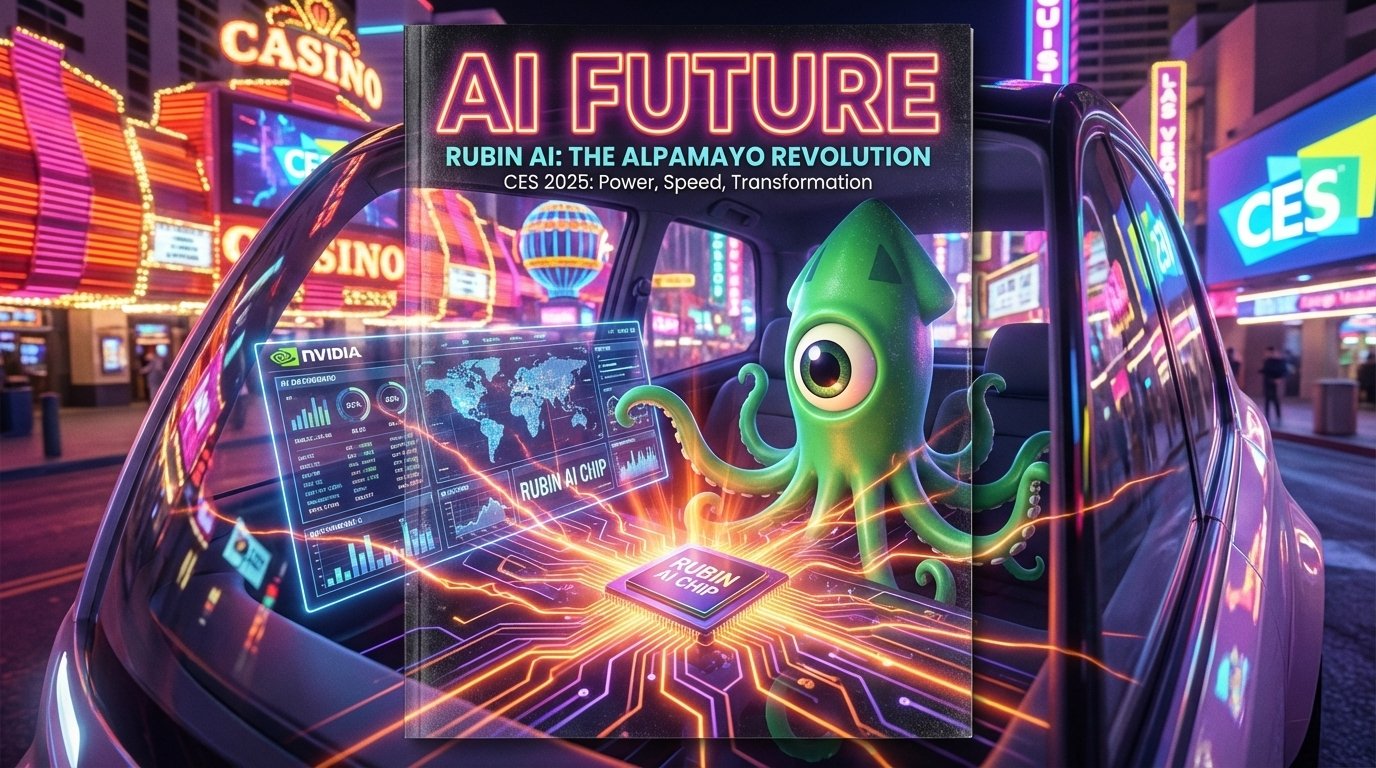
The Dawn of a New Automotive Era
The dream of fully autonomous vehicles is rapidly becoming a reality. At the heart of this transformation is groundbreaking innovation. The Nvidia self-driving car AI technology represents a monumental leap forward, combining powerful processors with sophisticated software to create the brains of next generation vehicles. This system allows cars to perceive their surroundings, make complex decisions, and navigate intricate environments with remarkable safety. This advanced AI is not just about convenience; it is about revolutionizing mobility as we know it.
Consequently, it promises to enhance road safety by significantly reducing human error. Moreover, it will increase efficiency in transportation networks and create new possibilities for urban living. As this technology matures, it will redefine our relationship with automobiles and the infrastructure that supports them. The entire automotive industry is watching closely because the implications are immense. Nvidia’s platforms are setting new standards for what autonomous systems can achieve, pushing the boundaries of artificial intelligence in the physical world.
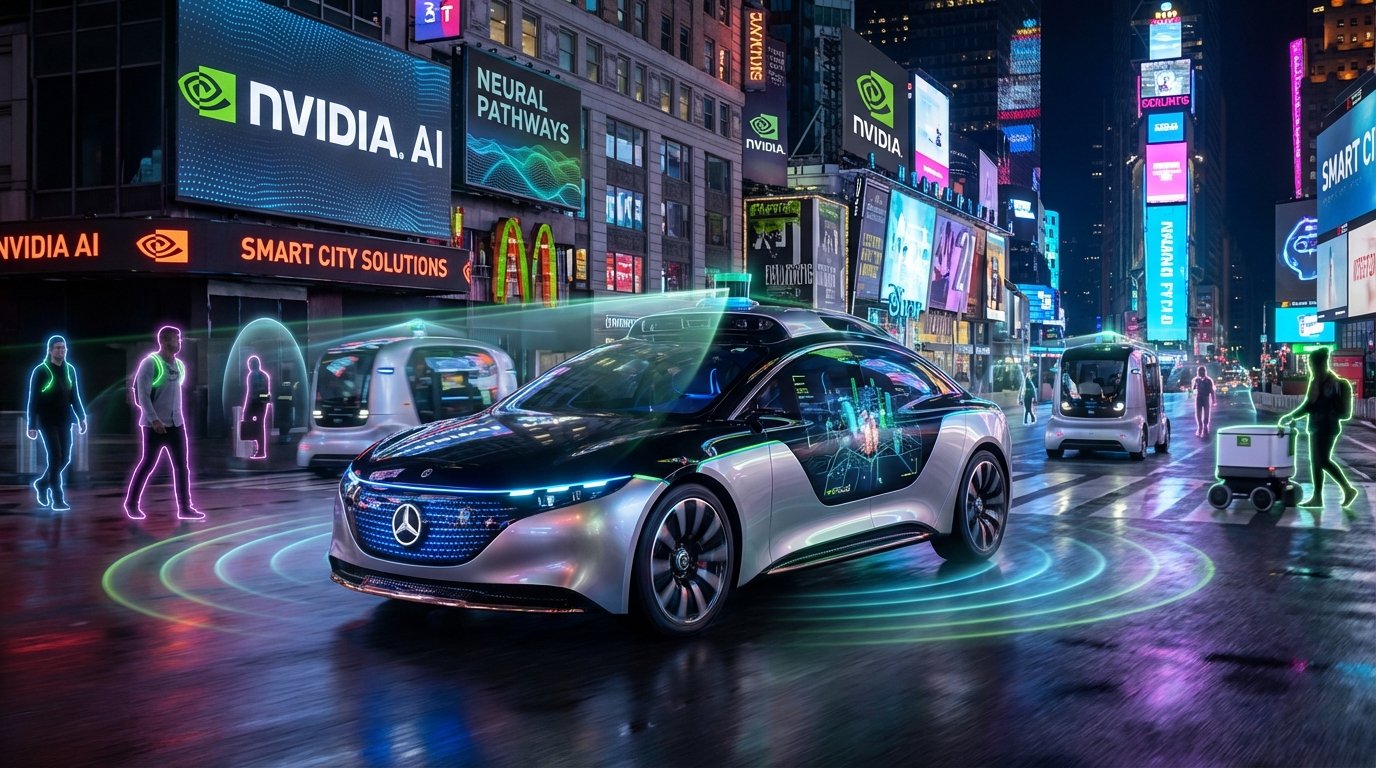
The Technical Powerhouse: Alpamayo and Rubin AI Chips
Alpamayo: Democratizing Nvidia Self-Driving Car AI Technology
Nvidia’s Alpamayo platform represents a strategic shift towards openness in the autonomous vehicle sector. This advanced technology platform provides the fundamental building blocks for creating sophisticated self driving systems. A key feature is its open source availability, a major advantage for developers. By hosting Alpamayo on Hugging Face, Nvidia invites a global community of engineers and researchers to contribute and innovate. This collaborative approach can accelerate progress across the industry. Consequently, it allows automakers to customize and enhance the software to fit their specific vehicle designs. This flexibility helps them to bring safer, more reliable autonomous features to market faster.
Rubin AI Chips: The Engine of Autonomous Systems
The forthcoming Rubin AI chips are the powerful engines designed to run the complex software built on Alpamayo. As the core of the Nvidia self-driving car AI technology, these chips are engineered for maximum performance and efficiency. They must process vast amounts of data from cameras, lidar, and radar sensors in milliseconds. The Rubin architecture delivers the raw processing power needed for these critical tasks. This enables the vehicle’s AI to understand its environment and predict the actions of other road users with incredible accuracy. Therefore, the combination of Alpamayo’s open platform and the dedicated processing power of Rubin AI chips creates a comprehensive solution for building the next generation of driverless cars, from luxury sedans to commercial robotaxis.
How Nvidia’s Tech Stacks Up: A Competitive Look
To understand the significance of Nvidia’s hardware, it is helpful to compare it with other leading AI chips. The landscape of AI chips is highly competitive, with each major player focusing on specific strengths. The following table provides a snapshot of how Nvidia’s Rubin AI chips compare to offerings from competitors like AMD and Google, particularly in the context of powering autonomous vehicles.
| Feature | Nvidia Rubin AI Chips | AMD MI400 Series | Google AI Chips (TPU Family) |
|---|---|---|---|
| Primary Application | High Performance Computing, Data Centers, Autonomous Vehicles | AI and High Performance Computing Data Centers | Google’s Internal AI Workloads (including Waymo) |
| Performance Focus | Extreme AI model training and real time inference | Training large scale AI models with high memory needs | Specialized for large scale neural network acceleration |
| Key Components | Integrated GPU, CPU (Vera), and advanced networking | High memory bandwidth GPU | Custom ASIC (Tensor Processing Unit) |
| Expected Release | 2026 | 2026 | Continuously updated for internal use |
| Role in Autonomous Vehicles | Core platform for both cloud based training and in vehicle processing | Primarily for training large AI models that power autonomous systems | Powers the AI model training for Waymo’s driverless car fleet |
| Key Advantages | Complete hardware and software ecosystem (CUDA), market leadership | High memory capacity, competitive for large model training | Optimized for Google’s software, excellent performance per watt |
From Silicon to the Streets: Nvidia’s Real World Impact
Nvidia’s influence extends far beyond creating powerful chips. The company is actively forging strategic partnerships and launching ambitious services to bring its vision of an autonomous future to life. These real world applications are where the true potential of the Nvidia self-driving car AI technology becomes visible, signaling a shift from development to deployment.
Powering Luxury: The Mercedes Collaboration
A cornerstone of Nvidia’s automotive strategy is its deep collaboration with Mercedes Benz. This partnership aims to produce a new generation of sophisticated driverless cars powered by Nvidia’s end to end platform. Key aspects of this venture include:
- Integrated Development: Engineers from both companies are working together to seamlessly integrate Nvidia’s AI and hardware into Mercedes’ vehicle architecture.
- Software Defined Vehicles: The goal is to create cars that can be continuously upgraded with new features and capabilities via over the air software updates.
- A New Standard for Premium: This collaboration combines high performance computing with luxury automotive design, promising an unparalleled user experience.
The Upcoming Robotaxi Service
Beyond personal vehicles, Nvidia is set to enter the mobility as a service market. The company has announced plans to launch its own robotaxi service as early as next year. This move is significant because it positions Nvidia as a direct service provider, not just a technology supplier. A successful robotaxi fleet would serve as a powerful proof of concept, demonstrating the safety and reliability of their autonomous systems on a massive scale. This initiative aligns with the broader trend of revolutionizing urban transport.
Setting the Stage at CES 2026
The Consumer Electronics Show, or CES 2026, serves as a global stage for technological innovation. Nvidia’s announcements here are more than just product reveals; they are declarations of intent that shape industry trends. By showcasing tangible progress with partners and outlining a clear roadmap for services, Nvidia uses CES to demonstrate its leadership.
The Road Ahead: An Autonomous Future
Nvidia is clearly steering the automotive industry toward a fully autonomous future. Through its powerful Rubin AI chips and open platforms like Alpamayo, the Nvidia self-driving car AI technology is setting a new standard for mobility. From luxury driverless cars to city wide robotaxi services, Nvidia is building the foundation for a safer and more efficient world.
As this AI revolution accelerates, businesses must adapt to stay competitive. This is where EMP0 excels. As a leader in AI and automation solutions, EMP0 provides the tools to harness this transformative power. Our AI powered growth systems help you innovate securely and scale efficiently, turning complex challenges into growth opportunities. To discover how AI can drive your business forward, explore our work.
Visit our website at emp0.com, read our latest analysis on our blog, and follow our journey on X and Medium.
Frequently Asked Questions (FAQs)
What is Nvidia self driving car AI technology?
Nvidia’s self driving car AI technology is a comprehensive platform combining hardware and software to enable autonomous vehicles. It uses powerful processors, like the upcoming Rubin AI chips, to process data from sensors such as cameras and lidar. This allows the vehicle to perceive its environment, make critical driving decisions in real time, and navigate safely without human intervention.
What is the significance of the Alpamayo platform?
Alpamayo is Nvidia’s open source software platform for autonomous driving. Its main significance is its accessibility. By making it available on Hugging Face, Nvidia allows a global community of developers and automakers to use, customize, and contribute to the technology. Consequently, this fosters faster innovation and broader adoption across the industry.
What are Rubin AI chips?
Rubin AI chips are Nvidia’s next generation processors designed specifically for artificial intelligence and high performance computing. In autonomous vehicles, these chips serve as the central brain. They provide the immense processing power required to run complex AI models that interpret sensor data and control the car’s actions, ensuring rapid and accurate responses on the road.
Why is Nvidia collaborating with automakers like Mercedes?
Nvidia partners with companies like Mercedes to integrate its advanced AI platforms directly into production vehicles. This combination of Nvidia’s technological expertise with the manufacturing and design excellence of a luxury automaker helps accelerate the development of safe, reliable, and highly advanced driverless cars for the consumer market.
What are Nvidia’s plans for a robotaxi service?
Nvidia plans to launch its own robotaxi service next year, moving from a technology provider to a direct service operator. This initiative will showcase the real world capabilities and safety of its autonomous driving platform on a large scale. A successful launch would mark a major milestone for the commercial viability of fully driverless transportation.