
Nuclear power for data centers: Why always-on, low-carbon power matters for AI
Nuclear power for data centers offers a way to meet surging AI demand while cutting emissions. AI workloads grow rapidly and require always-on power and efficient, high-density cooling. Data centers strain local grids and raise carbon footprints. Therefore operators are exploring reliable, low-carbon energy sources.
However, nuclear plants have distinct siting and safety challenges. Extreme weather and station blackout risks demonstrate the stakes. As a result planners must weigh resilience, regulatory restart timelines, and community impacts. Moreover, cooling infrastructure and backup generators require careful design.
For example, some projects promise more than 600 MW of continuous clean power. Partnerships between operators and cloud providers aim to finance restarts and ensure long-term purchase agreements. Consequently, planners must pair technical safeguards with community engagement.
This article adopts an analytical and cautious tone. We will review resilience measures, regulatory frameworks, and climate-driven siting risks. Ultimately the aim is to balance AI growth with safe, sustainable infrastructure.
Duane Arnold derecho: lessons for Nuclear power for data centers
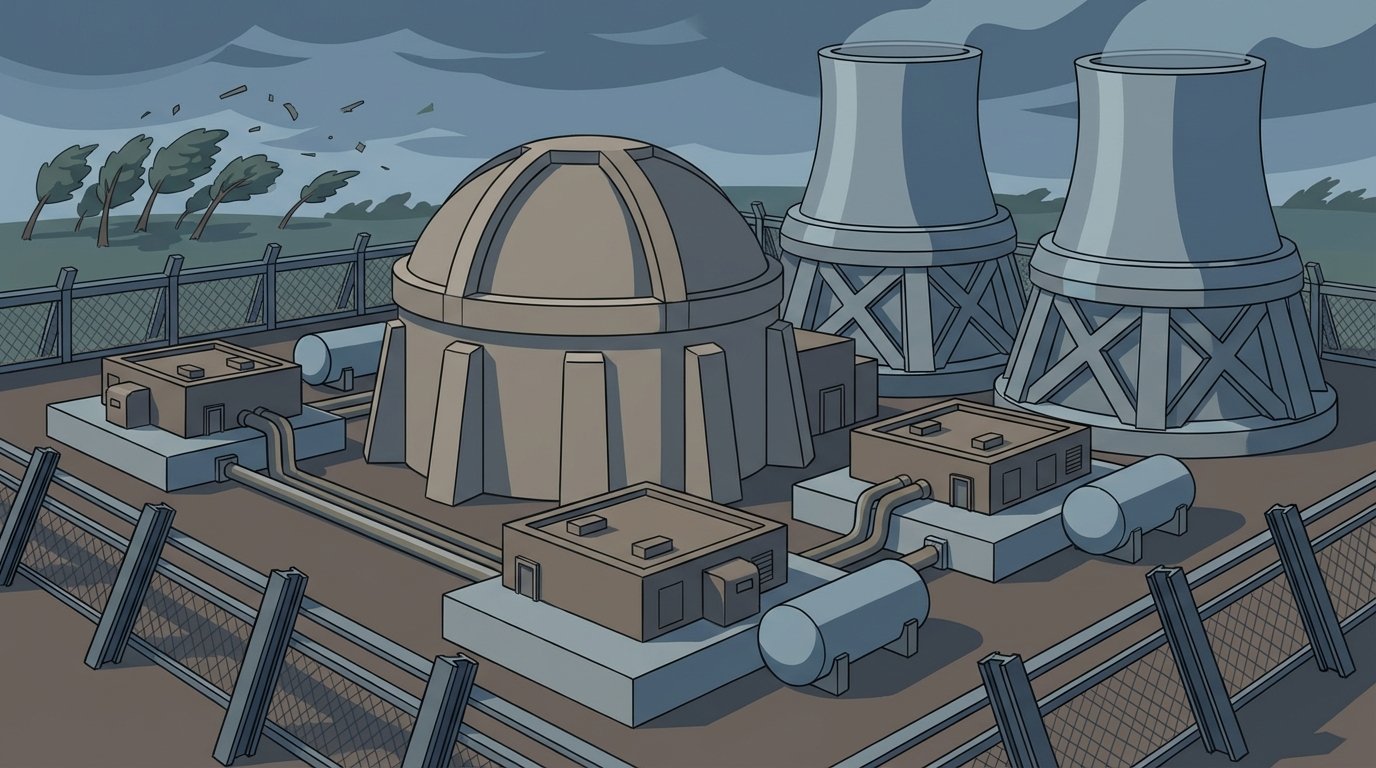
In August 2020 a derecho produced 130 mile per hour winds that severed all six external power lines to the Duane Arnold Energy Center in Palo Iowa. Automatic emergency shutdown procedures engaged. Control rods inserted to halt the reactor and backup diesel generators started immediately. However twelve water cooling towers toppled and onsite systems faced widespread damage. As one staff member recalled “It wasn’t until we went outside afterwards that we realized that the cooling towers were gone.”
The Nuclear Regulatory Commission analyzed the event. Its initial estimate placed core damage risk at about 1 in 1 000. Later analysis in March 2021 found a lower core damage probability but flagged a high station blackout risk. The NRC report is available here NRC Report. Moreover NOAA data show rising severe weather frequency in the region NOAA Data.
Key facts and implications
- Event summary: derecho caused complete loss of offsite power and major structural damage
- Safety response: automatic shutdown worked and diesel backups started as designed
- Cooling vulnerability: 12 towers failed which increased recovery complexity
- Risk insight: NRC noted high station blackout risk despite low core damage probability
- Climate context: NOAA links more severe storms to warmer Gulf moisture which raises regional risk
Consequently data center planners must assume extreme weather can cause prolonged grid outages. For example partnerships that restart reactors now include added diesel generators and wind resistant cooling towers. In addition operators should link energy contracts to resilience plans; see related discussion Resilience Plans Discussion. Finally a key lesson remains “That plant operated exactly as designed. It was just the perfect storm.”
Nuclear power for data centers: Google and NextEra partnership
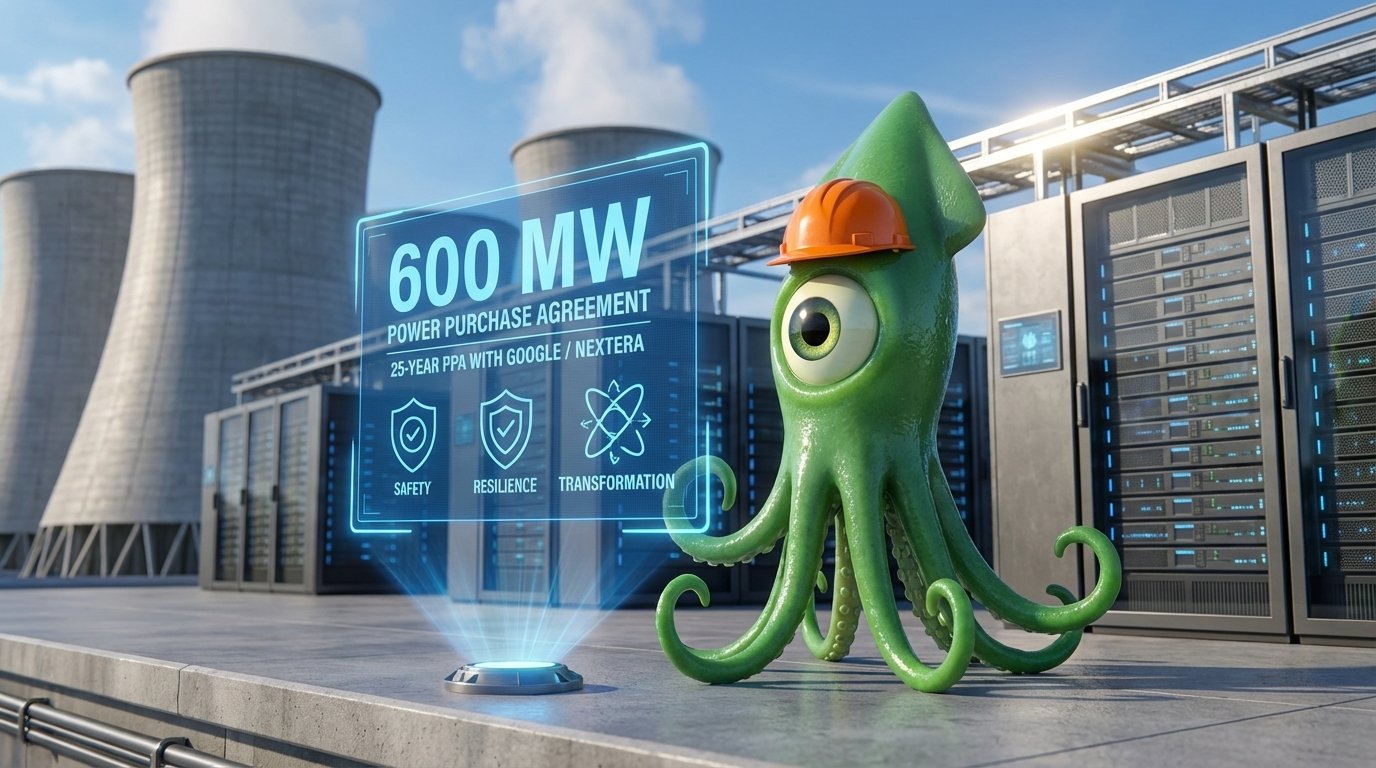
Google and NextEra Energy announced a definitive collaboration to restart the Duane Arnold Energy Center. Under the agreement Google will fund recommissioning costs. In return Google will purchase most of the plant’s output under a 25 year power purchase agreement.
The project aims to deliver more than 600 MW of always on low carbon electricity to the regional grid. As a result cloud and AI workloads gain predictable supply for high density data centers. Moreover NextEra has begun ordering major equipment and has notified regulators to start the regulatory restart process. For more details see the NextEra announcement NextEra announcement.
This partnership also ties energy procurement to resilience upgrades. For example planned upgrades include additional diesel generators and higher wind resistance cooling towers. In addition operators will link long term contracts to safety and community engagement commitments. For related context on technology and climate governance visit technology and climate governance.
Key takeaways
- Term: 25 year energy purchase agreement with Google
- Capacity: over 600 MW of clean continuous power
- Timeline: target reopening in 2029 pending approvals and regulatory restart
- Resilience: added backup generators and upgraded cooling infrastructure
- Strategic impact: secures predictable low carbon power for AI focused data centers
Nuclear power for data centers: safety features pre and post 2020 derecho
| Category | Pre-2020 Duane Arnold | Post-2020 / Planned upgrades |
|---|---|---|
| Backup power systems | Two diesel generators and automatic start on loss of offsite power; single points of failure in distribution | Addition of a third diesel generator under consideration; increased on-site fuel capacity; diversified power distribution and segregation of critical loads |
| Cooling towers | Twelve conventional towers vulnerable to high winds; exposed wet cooling cells | Replacement with higher-wind-resistance towers; reinforced foundations; protected critical cooling loops and redundant cooling paths |
| Structural reinforcements | Reactor building met NRC tornado missile standards; ancillary structures less hardened | Strengthened ancillary buildings; tornado-proof housings for generators; improved anchoring and cladding for support structures |
| Redundancy and diversity | Standard redundant trains for safety systems with limited diversity | Increased diversity of safety trains; redundant control power paths; hardened communications and monitoring links |
| Emergency and recovery procedures | Automatic SCRAM and diesel backup started as designed; recovery complexity after cooling tower failure | Enhanced station-blackout planning; faster recovery protocols; more on-site spares; strengthened operator training |
| Regulatory and monitoring | NRC oversight and post-event analysis | Ongoing regulatory restart process; explicit resilience upgrades required; continuous climate risk and severe-weather monitoring |
This table summarizes how deliberate upgrades can make Nuclear power for data centers safer and more resilient for always-on AI workloads.
Climate change, severe weather, and the necessity of resilient nuclear solutions
Climate change is increasing the frequency and intensity of extreme weather events. As a result, data centers face greater operational risk from grid disruptions and local outages. NOAA records rising counts of billion dollar disasters and links warmer Gulf moisture to more severe storms in the Midwest. See NOAA data here NOAA data.
Nuclear plants can supply always on low carbon power for AI workloads. However, planners must design for weather resilience and station blackouts. The NRC highlighted high station blackout risk after the 2020 Duane Arnold derecho while noting a low core damage probability. See the NRC analysis here NRC analysis.
Key insights
- Climate change raises outage probabilities and increases recovery costs
- Weather resilience requires hardened cooling, redundant diesel backups, and diversified feeds
- Billion-dollar disasters show the economic scale of risk to infrastructure
- Regulatory restart should include explicit resilience upgrades and monitoring
- For data centers, pairing contracts with resilience commitments reduces long term service risk
Therefore, resilient nuclear power for data centers must combine technical upgrades with regulatory oversight. This approach supports reliable, low carbon energy for expanding AI workloads.
Conclusion
Nuclear power for data centers offers a practical path to reconcile AI growth with sustainability and resilience. It delivers low carbon always on electricity and reduces reliance on stressed local grids. However planners must pair reactors with hardened cooling systems, redundant backup generators, and strict regulatory oversight.
EMP0 supports this transition as a full stack AI and automation solutions provider. We help clients scale revenue with AI powered systems that run on secure client infrastructure. Moreover our proprietary AI tools automate marketing and sales workflows while preserving data security and operational uptime. As a result companies can pair predictable power contracts with resilient operational practices to serve customers reliably.
Learn more at EMP0 and explore our blog at our blog. We also integrate orchestration and automation via n8n integration to accelerate deployment. Ultimately cautious optimism is warranted because technical upgrades and accountable partnerships can make nuclear power a dependable backbone for AI infrastructure.