
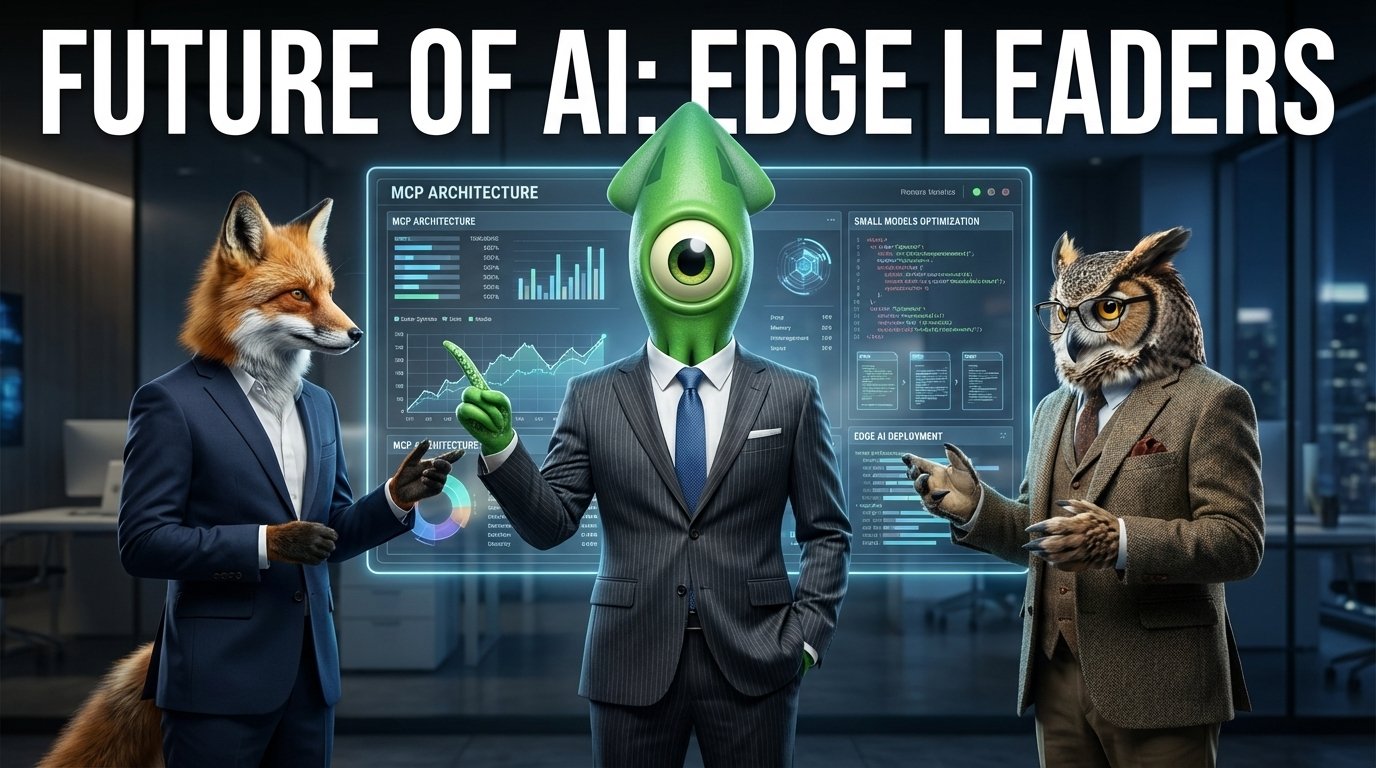
In 2026, AI will move from hype to pragmatism
The age of artificial intelligence has been filled with spectacle and grand promises. We have seen models that can write poetry and generate stunning images from simple text. However, the initial excitement is beginning to settle because a new era is dawning. In 2026, AI will move from hype to pragmatism. This transition marks a pivotal moment for the industry. As a result, businesses and developers are shifting their focus from what AI could do in a lab to what it can do in the real world, solving tangible problems with practical solutions.
This evolution is not about abandoning progress; instead, it is about refining it for everyday use. This article will explore several key trends driving this important shift. First, we will examine the rise of smaller language models. These efficient models are tailored for specific tasks, offering significant speed and cost benefits over their larger counterparts. Additionally, we will discuss the growth of edge AI. This development means AI will run directly on our devices, from phones to factory robots, enabling instant responses without needing to connect to the cloud.
Furthermore, the narrative of AI replacing humans is giving way to a more collaborative reality. We will explore how human augmented workflows are becoming the new standard. In this model, AI serves as a powerful assistant that enhances human capabilities rather than making them obsolete. Finally, we will look at the concrete applications taking shape. The focus now is on real world deployment in robotics, autonomous vehicles, and even smart wearables. Join us as we explore how 2026 will ground artificial intelligence in practical, everyday reality.

The Rise of Smaller, Smarter AI
The AI landscape has long been dominated by the idea that bigger is better. Massive, general purpose language models captured the public’s imagination. However, the trend is now shifting toward a more practical approach. As we move into 2026, smaller language models (SLMs) are emerging as the engines of real world AI applications. This change represents a significant step in the journey of AI pragmatism 2026, where efficiency and specialization are valued over sheer size.
Fine Tuned SLMs: The Pragmatic Choice for 2026
The primary drivers behind this shift are cost and speed. Large models are incredibly expensive to train and operate. Consequently, they are often too slow for many real time business needs. SLMs, on the other hand, require fewer computational resources, making them more affordable and faster. An industry expert noted, “Fine tuned SLMs will be the big trend and become a staple used by mature AI enterprises in 2026, as the cost and performance advantages will drive usage over out of the box LLMs.” When these smaller models are fine tuned on specific datasets, their performance for specialized tasks can match that of their larger counterparts. This process allows businesses to develop highly accurate, customized AI solutions without the massive overhead.
Efficiency and Adaptability Drive Adoption
Beyond the clear economic benefits, SLMs offer remarkable efficiency and adaptability. Because they are smaller, they can be deployed in a wider range of environments, including on local devices. This flexibility is crucial for applications that demand low latency and data privacy. The efficiency, cost effectiveness, and adaptability of SLMs make them ideal for tailored applications where precision is paramount. Instead of using a sledgehammer to crack a nut, enterprises are now choosing the right tool for the job. This tailored approach ensures that AI solutions are not only powerful but also practical and sustainable, marking a mature step forward in the industry.
AI Applications: A Tale of Two Eras
| Category | Hype Era (Pre 2026) | Pragmatic Era (2026) |
|---|---|---|
| Model Size | Dominated by massive, general purpose Large Language Models (LLMs). | Focus on efficient, fine tuned Smaller Language Models (SLMs). |
| Deployment | Primarily cloud based, requiring constant connectivity and large data centers. | Increased adoption of Edge AI, with processing on local devices like wearables and drones. |
| Use Cases | Centered on experimental demos and broad, impressive capabilities. | Focused on real world, day to day practices and specific enterprise applications. |
| Governance | Minimal or emerging frameworks with less focus on transparency and safety. | Established roles and formal structures for AI governance, safety, and data management. |
| Cost Efficiency | High costs for training and operation, limiting widespread adoption. | Optimized for cost and performance advantages, making AI accessible to more businesses. |
AI Gets Physical: Mainstream Robotics and Agentic Workflows
In 2026, artificial intelligence will step out of the digital realm and into our physical world. The abstract concepts of AI are taking concrete form in devices we can see and touch. This move to physical AI is a clear sign of the industry’s shift toward practical applications. One expert predicts, “Physical AI will hit the mainstream in 2026 as new categories of AI powered devices, including robotics, AVs, drones, and wearables start to enter the market.” This trend is not just about new gadgets; consequently, it is about embedding intelligence directly into our environment.
Edge Computing Brings AI Closer
A key driver of this physical AI revolution is the rise of edge computing. Instead of relying on distant cloud servers, AI models will increasingly run on the devices themselves. This allows for faster response times and better data privacy. We are already seeing early examples of this with smart glasses which can provide real time information about what the user sees. This on device processing is crucial for robotics, autonomous vehicles, and drones where split second decisions are critical. As more devices become AI enabled, the need for robust connectivity and on device intelligence will grow significantly. This proximity to our daily lives also heightens the need for strong governance to address emerging safety and privacy concerns. This shift also impacts how will enterprise AI adoption 2026 reshape budgets.
Agentic Workflows Finally Arrive
Alongside physical devices, 2026 will see the rise of agentic workflows. These are AI systems that can handle complex, multi step tasks with greater autonomy. A major catalyst for this is the Model Context Protocol (MCP), a standard adopted by industry leaders like OpenAI and Microsoft. The MCP makes it easier for AI agents to connect with and control different software and systems. As a result, “2026 is likely to be the year agentic workflows finally move from demos into day to day practice.” This will transform how businesses operate by automating complex processes and freeing up human workers for more strategic tasks.
However, this increasing autonomy brings new responsibilities. The move into the physical world and more complex digital tasks requires strong AI governance. Establishing clear rules for transparency, safety, and data management is no longer optional. It is a core part of deploying AI responsibly and building public trust. The industry is responding by creating new roles dedicated to overseeing these powerful new systems.
CONCLUSION
The year 2026 marks a turning point for artificial intelligence. We are moving beyond the era of speculative hype and into a phase of pragmatic application. This transition is defined by a strategic shift toward smaller, more efficient language models, the expansion of edge AI into our physical world, and the rise of human augmented workflows. As businesses look to harness these practical AI solutions, the focus is now on tangible results, cost effectiveness, and secure, real world deployment. The future of AI is not about replacing humans, but empowering them with tools that are more accessible, specialized, and integrated into our daily operations.
To navigate this new landscape, businesses need a partner that understands how to turn pragmatic AI into a competitive advantage. EMP0 is a leading US based company providing cutting edge AI and automation solutions, specializing in sales and marketing automation. With a suite of ready made and proprietary AI tools, EMP0 is dedicated to helping clients multiply their revenue. We build and deploy AI powered growth systems securely under your own infrastructure, ensuring you have full control. If you are ready to move from hype to real world results, explore EMP0’s offerings and discover how our tailored AI solutions can transform your business.
Website: emp0.com
Blog: articles.emp0.com
Twitter/X: @Emp0_com
Medium: medium.com/@jharilela
Frequently Asked Questions (FAQs)
What does the shift to AI pragmatism in 2026 mean?
The shift to AI pragmatism means moving beyond impressive demonstrations. Instead, the focus is now on creating practical, real world applications. As a result, companies are prioritizing AI solutions that are cost effective, efficient, and solve specific business problems rather than just showcasing general capabilities.
Why are smaller language models (SLMs) gaining traction?
Smaller language models are gaining popularity because they offer significant advantages in cost and speed. Unlike massive models, SLMs can be fine tuned for specific tasks. Therefore, they often achieve similar accuracy for enterprise needs while requiring fewer resources, making them a more practical choice.
What is edge AI’s role in the rise of physical AI?
Edge AI involves running artificial intelligence models directly on devices instead of in the cloud. This is crucial for physical AI like robotics, drones, and wearables because it allows for real time decision making without internet lag. Consequently, it enables devices to operate more autonomously and securely.
Are human augmented workflows replacing jobs?
No, human augmented workflows are designed to enhance human capabilities, not replace them. In this model, AI acts as a powerful assistant, automating repetitive tasks and providing valuable insights. This allows people to focus on more strategic and creative work, leading to greater productivity and innovation.
What are agentic workflows and why are they important for 2026?
Agentic workflows are advanced AI systems that can independently manage complex, multi step tasks. Their importance in 2026 is growing because of new standards like the Model Context Protocol (MCP). This protocol makes it easier for AI agents to interact with different software, moving them from simple demos to practical, day to day business operations.