

Building Production Grade Agentic Workflows
Creating reliable, production ready AI agents presents a significant hurdle for many organizations. The inherent non determinism of large language models can lead to unpredictable outcomes, making it difficult to build trust and ensure operational stability. However, a new paradigm is emerging to solve this exact problem. This article introduces GraphBit agentic workflows, a revolutionary approach that combines the power of AI with the predictability of traditional software engineering. By leveraging structured graphs and deterministic tools, you can build automation systems that are both intelligent and completely reliable.
This guide will demonstrate how to construct a robust, end to end agentic workflow using GraphBit. We will begin by exploring the foundational concept of deterministic tools, which form the bedrock of reproducible business logic. As a result, you gain precise control over your automated processes. Following that, you will learn to assemble these tools into validated execution graphs. This critical step ensures that your entire workflow is logically sound and operates exactly as designed. Furthermore, we will show you how to orchestrate LLMs within this framework. This allows for a seamless transition from controlled, offline execution to dynamic, agent driven automation without sacrificing control or observability. This unique capability allows for the gradual adoption of agentic intelligence.
The Power of Graph Structured Execution and Tool Calling
At the heart of GraphBit agentic workflows lies a powerful concept: graph structured execution. This approach moves away from unpredictable, monolithic AI models. Instead, it breaks down complex processes into a series of smaller, manageable steps. These steps are then organized into a logical, visual graph, providing unparalleled clarity and control over your automation. This structure is what allows GraphBit to bridge the gap between deterministic software and dynamic AI agents.
Building with Deterministic Tools
The foundation of any reliable workflow is its set of deterministic tools. Think of these as standard, predictable functions or microservices. Each tool performs a single, specific task, such as classifying a support ticket or drafting a standardized email. Because their behavior is consistent and repeatable, they introduce a crucial layer of predictability.
- Predictable Outcomes: Each tool guarantees the same output for a given input.
- Easy Debugging: When a workflow encounters an issue, it is simple to isolate the specific tool causing the problem.
- Enhanced Reproducibility: You can rerun workflows and be confident in achieving the same results every time.
Constructing the Execution Graph
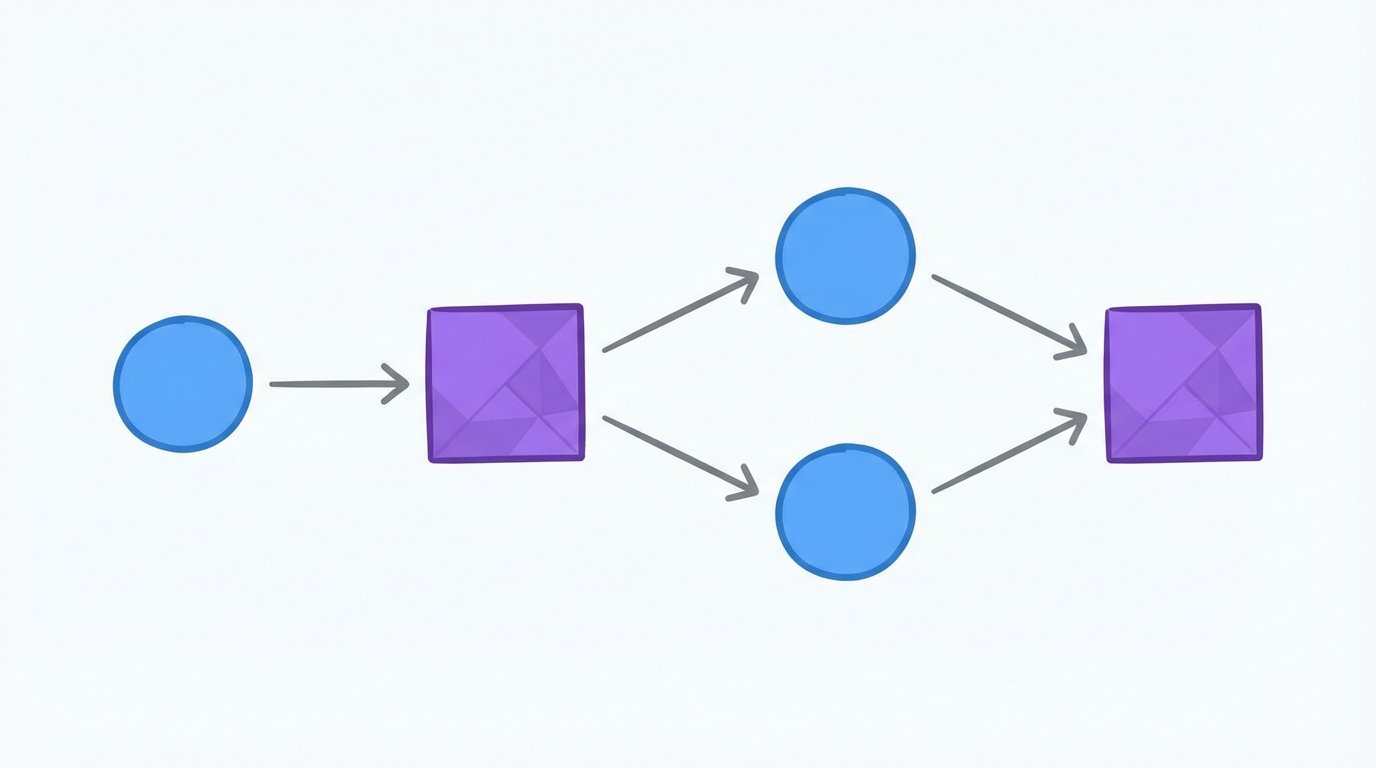
Once you have defined your deterministic tools, the next step is to assemble them into an execution graph. This is a directed graph where each node represents a tool or an agent. The connections, or edges, between nodes define the flow of data and the sequence of operations. This visual representation of your business logic makes the entire system easier to understand, manage, and scale. Consequently, you can build complex workflows with confidence.
Ensuring Integrity with Tool Calling and JSON Contracts
To make the entire system work seamlessly, GraphBit employs a strict tool calling mechanism governed by JSON contracts. Each tool in the graph has a clearly defined contract that specifies the exact format of its input and output data. When one node calls another, it must adhere to this contract.
This structured approach to tool calling offers immense benefits. It validates the data at every step of the execution graph, preventing errors and ensuring that each tool receives the information it needs in the correct format. Therefore, this system gives you complete operational control. You can trust that the workflow will execute exactly as planned, maintaining data integrity from start to finish.
Seamless LLM Orchestration: From Offline Control to Online Automation
The true innovation of GraphBit is unlocked through its sophisticated LLM orchestration. Rather than relying on a single, unpredictable AI model, GraphBit integrates LLMs as specialized agent nodes within the validated execution graph. These agents are designed to handle more dynamic and nuanced tasks, such as understanding user sentiment or generating creative text. However, they still operate within the same structured, contract driven framework as the deterministic tools. This ensures their actions are guided and constrained, providing a perfect balance between intelligence and control.
The Dual Power of GraphBit Agentic Workflows
One of the system’s most compelling features is its ability to operate in two distinct modes. This dual capability allows for a safe, controlled, and incremental adoption of AI automation. You can begin with a fully deterministic system and gradually introduce AI capabilities as you gain confidence.
- Offline Deterministic Pipeline: Initially, the workflow can run in a purely offline mode. In this state, only the deterministic tools are active. This pipeline executes the core business logic, such as ticket classification and routing, producing a baseline of predictable and reproducible results. Therefore, you can validate and benchmark your system’s performance with complete certainty.
- Online Agent Driven Pipeline: Transitioning to a fully agentic system is designed to be effortless. As the developers note, “We keep the system running in offline mode while enabling seamless promotion to online execution by simply providing an LLM configuration.” By adding an LLM provider key, the agent nodes within the exact same execution graph are activated. The workflow then begins to operate autonomously, with the LLM making decisions and executing tasks based on the established logic.
This seamless transition from a deterministic system to an autonomous one is a significant advantage. It allows you to build, test, and validate your core business logic with complete confidence. Afterward, when you are ready, you can introduce powerful AI driven intelligence without re engineering your entire system. This unique approach drastically reduces risk and provides a clear, manageable path toward building production grade agentic workflows.
Comparing LLM Providers for GraphBit Orchestration
Choosing the right Large Language Model is a critical step in building effective GraphBit agentic workflows. Each provider offers unique strengths, and the best choice will depend on your specific requirements for performance, safety, and reasoning capabilities. The table below compares the key LLM providers mentioned in this guide to help you make an informed decision.
| Provider | Model Name | Key Features | Typical Use Case | Performance Notes |
|---|---|---|---|---|
| OpenAI | GPT 4o mini | Fast, cost effective, and highly versatile for a wide range of tasks. | Ideal for structured data extraction, ticket classification, and drafting initial responses. | Optimized for high throughput and low latency, making it suitable for production environments. |
| Anthropic | Claude Sonnet 4 20250514 | Strong emphasis on AI safety and generating helpful, harmless content. | Best for customer facing communication, such as drafting empathetic support replies and handling sensitive information. | Provides a good balance of intelligence and speed for scalable applications. |
| DeepSeek | DeepSeek Chat | Excellent coding and logical reasoning abilities. | Useful for analyzing technical support tickets, routing issues based on complex logic, or interpreting code snippets. | Offers competitive performance, especially for specialized technical and reasoning tasks. |
| Mistral AI | Mistral Large Latest | Top tier reasoning capabilities and strong multilingual support. | A powerful option for complex analysis, summarizing detailed information, and generating high quality text in various languages. | Performance is on par with leading proprietary models, offering both API and self hosting flexibility. |
Paving the Future with Controlled AI Automation
In conclusion, GraphBit agentic workflows represent a monumental step forward in building reliable, production ready AI systems. By grounding AI agents in a framework of deterministic tools and validated execution graphs, this approach effectively solves the challenge of unpredictability. We have explored how graph structured execution provides clarity and control, while seamless LLM orchestration allows for a safe transition from offline testing to online, autonomous operation. This ensures that as your automation scales, it remains robust, reproducible, and fully aligned with your business logic.
Mastering these advanced automation strategies requires deep expertise. At EMP0, we specialize in developing sophisticated AI and automation solutions that drive tangible growth. We help businesses multiply their revenue by creating brand trained AI workers and deploying powerful growth systems directly within your own infrastructure. This ensures maximum security, control, and performance. If you are ready to unlock the next level of operational efficiency and build a truly intelligent workforce, we invite you to connect with us.
Follow our journey and insights on X at @Emp0_com and explore our projects on n8n at n8n Projects.
Frequently Asked Questions (FAQs)
What exactly is a GraphBit agentic workflow?
A GraphBit agentic workflow is a sophisticated automation system that combines the reliability of traditional software with the intelligence of large language models. It works by organizing tasks into a visual, graph structured flowchart. Each step in the workflow is a node, which can either be a predictable, deterministic tool or a dynamic AI agent. This structure allows you to build complex, multi step processes that are easy to understand, manage, and scale, while ensuring that the outputs are consistent and controllable.
How do deterministic tools make AI workflows more reliable?
Deterministic tools are the foundation of a reliable GraphBit workflow. Unlike AI models, which can produce variable outputs, a deterministic tool is a standard piece of code that performs a specific function and always produces the same result for the same input. By building the core of your business logic with these tools, you establish a baseline of predictable, repeatable behavior. This makes the system easier to test, debug, and validate. As a result, when you do introduce AI agents for more complex tasks, they operate within a framework that is fundamentally stable and trustworthy.
What is the main benefit of running a workflow in offline mode?
The offline execution mode allows you to run your entire workflow using only the deterministic tools, without activating the AI agent nodes. The primary benefit is that it provides a safe and controlled environment for validation. You can test the core logic of your automation, analyze its performance, and ensure data integrity without the variability of an LLM. This step is crucial for building production grade systems because it guarantees that your fundamental business processes are sound before you layer on advanced AI capabilities.
How does a workflow transition from offline to online agentic execution?
The transition is designed to be incredibly seamless. The execution graph, containing both deterministic tools and agent nodes, is the same for both modes. To switch from offline to online mode, you simply provide the system with a configuration key for your chosen LLM provider (like OpenAI or Anthropic). This action activates the agent nodes, allowing them to begin performing their designated tasks. Because the underlying graph structure and logic have already been validated offline, you can enable autonomous execution with a high degree of confidence.
Can I mix and match different LLM providers within a single workflow?
Yes, absolutely. GraphBit is designed as an execution substrate, not just a wrapper for a single LLM. This means you have the flexibility to choose the best AI model for each specific task within your workflow. For example, you might use a model like DeepSeek for a technical analysis task while using a model from Anthropic for a customer communication task. This allows you to optimize your workflow for performance, cost, and capability, leveraging the unique strengths of different LLM providers within one cohesive system.