

GLM-4.6V: Vision-Language Model Overview
GLM-4.6V: 128K-context vision-language model with native multimodal tool calling offers a new platform for long-form, mixed-media AI workflows. Its architecture combines large-scale reasoning with practical tool integration to enable higher-fidelity content creation at scale.
At its core, GLM-4.6V is a 106B parameter foundation model tuned for multimodal understanding. It extends the context window to 128K tokens, which covers roughly 150 pages of dense text or about one hour of video. Therefore, teams can process entire books, slide decks, or recordings in a single pass without losing cross-document context.
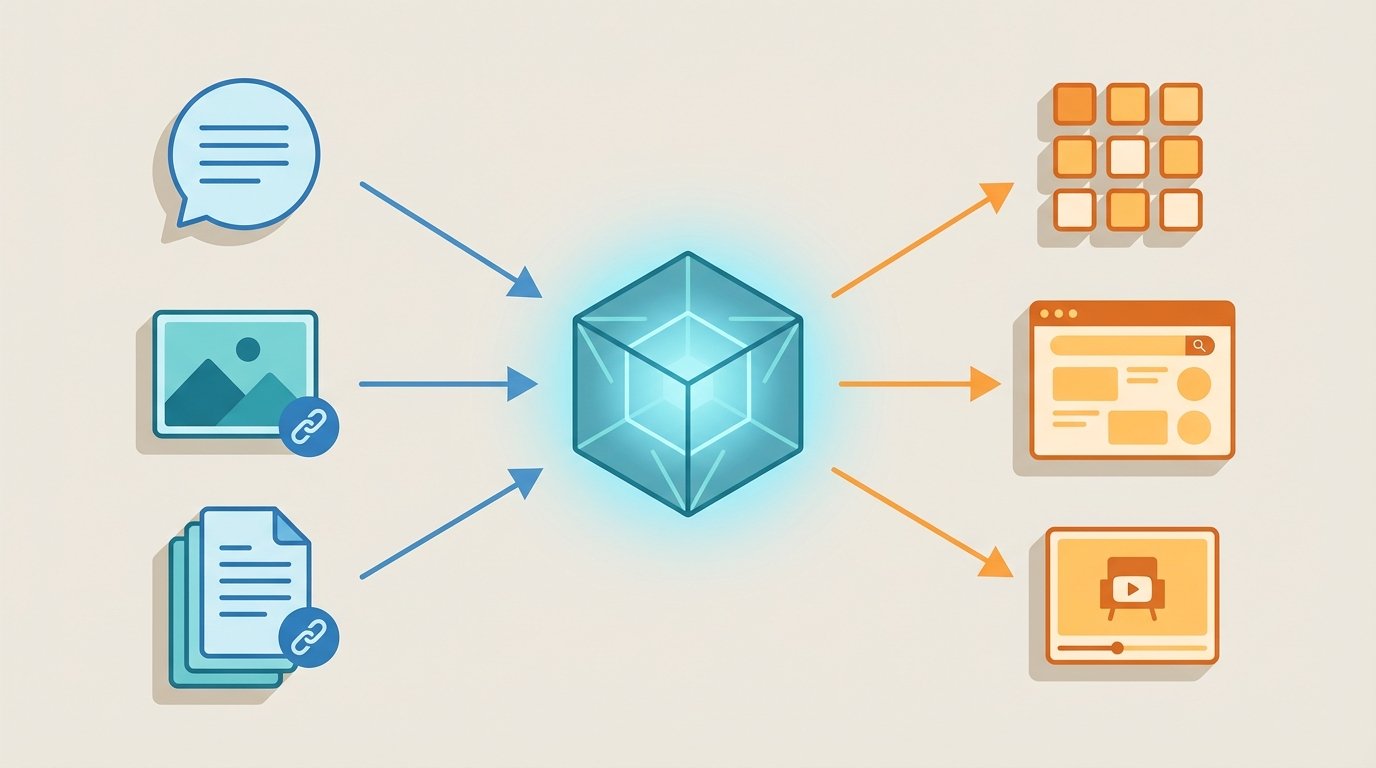
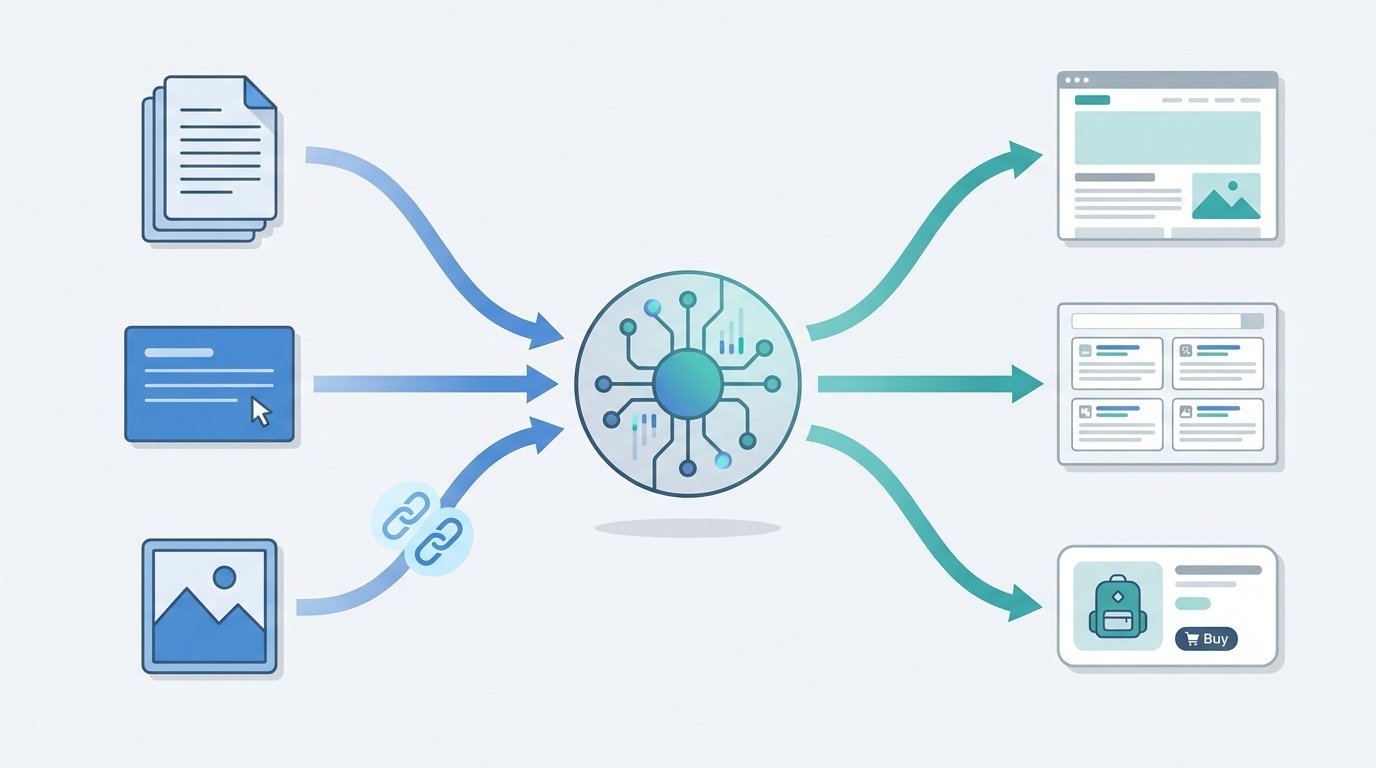
Moreover, the model introduces native multimodal Function Calling so images, screenshots, and document pages pass directly as structured tool parameters. As a result, tools can return search grids, rendered pages, charts, or product images and embed those artifacts into the model’s reasoning trace. The system uses URL-based image and frame identification to avoid file size limits and allow precise frame selection.
For content creators and businesses, this is transformative. Consequently, workflows like long-form summarization, visual web search, and frontend replication can be automated with higher fidelity. In short, GLM-4.6V makes perception to execution pipelines practical for production use.
Technical Breakdown: GLM-4.6V: 128K-context vision-language model with native multimodal tool calling
GLM-4.6V delivers a compact but powerful 106B parameter foundation model. It scales model capacity while prioritizing efficient multimodal reasoning. As a result, the model supports a 128K token context window. This expansion lets the model process roughly 150 pages of dense text or an hour of video in a single pass. In addition, GLM-4.6V introduces native multimodal Function Calling. Therefore, images, screenshots and document pages act as direct tool parameters rather than separate inputs.
Read the official announcement for technical details: GLM-4.6V Announcement
Core Innovations and Features
GLM-4.6V blends three main technical ingredients to achieve its capabilities. First, long sequence modeling extends the attention and memory mechanisms to handle 128K tokens. Second, world knowledge enhancement injects broader factual grounding and retrieval-friendly representations. Third, agentic data synthesis with MCP intensifies the model’s planning and instruction-following ability. Together, these advances close the loop from perception to executable action for multimodal agents.
Zhipu AI and early coverage highlight open source availability and licensing that encourage broad adoption: Zhipu AI News
Native multimodal Function Calling and URL-based handling
The main technical change is native multimodal Function Calling. Images and document pages pass directly as structured parameters. Tools then return rendered web pages, search result grids, charts or product images as part of the reasoning trace. Moreover, GLM-4.6V uses URLs to identify specific images or frames. This design avoids file size limits and lets tools pinpoint exact frames inside multi-image contexts.
Technical highlights and capabilities
- 106B parameter multimodal foundation model with efficient reasoning
- 128K token context window for long documents, slide decks and video
- Native multimodal Function Calling for images, pages and screenshots
- URL-based image and frame identification to bypass file size limits
- Tool outputs integrated into internal reasoning as renderable artifacts
- Reinforcement learning objective ties tool invocation to alignment and format adherence
These features combine for a practical, deployable system. Consequently, developers can build agents that read, analyze, search and act across long, mixed-media inputs with high fidelity and lower friction.
Use Cases: GLM-4.6V: 128K-context vision-language model with native multimodal tool calling
GLM-4.6V enables practical multimodal agents across creative, enterprise and research domains. Therefore, teams can ingest long documents, slide decks and hour-long video in one pass. Zhipu AI frames this as a perception-to-execution bridge: “This closes the loop from perception to understanding to execution and is explicitly positioned as the bridge between visual perception and executable action for multimodal agents.” Read more.
-
Rich text content understanding
- Use cases: book summarization, long-form editorial review and end-to-end content auditing. As a result, the model preserves cross-document context across 128K tokens. Moreover, native multimodal Function Calling accepts images, pages and screenshots directly for integrated reasoning.
-
Visual web search and product discovery
- Use cases: image-to-product matching, screenshot-driven search and visual research assistants. For example, GLM-4.6V can pass image URLs to tools and receive search result grids or product images. This URL-based approach avoids file size constraints and enables precise frame selection Read more.
-
Frontend replication and visual interaction
- Use cases: automated frontend reconstruction, CSS extraction and prototype generation from screenshots. Therefore, designers and engineers can convert visual frames into executable artifacts. Zhipu AI emphasizes native multimodal Function Calling as the key technical change for this workflow Read more.
-
Multimodal document understanding at extended context
- Use cases: contract analysis, multipage report synthesis and slide deck narrative extraction. Asif Razzaq highlights improvements in long-context processing and agentic capabilities. His commentary underscores real-world coding and long-context gains Read more.
Key applied capabilities
- Handle roughly 150 pages or one hour of video in a single pass
- Accept images and document pages as direct tool parameters
- Return rendered web pages, charts and product images as outputs
- Use URLs for precise image and frame identification
These scenarios demonstrate tangible wins for content creators, search engineers and product teams. Consequently, GLM-4.6V promises to accelerate multimodal workflows with higher fidelity and less friction.
Comparative Table: GLM-4.6V: 128K-context vision-language model with native multimodal tool calling versus alternatives
The table below contrasts GLM-4.6V and GLM-4.6V-Flash against previous GLM releases and other multimodal leaders. It highlights parameters, context windows, deployment scenarios and unique features.
| Model | Parameters | Context window | Primary use cases | Deployment scenarios | Unique features |
|---|---|---|---|---|---|
| GLM-4.6V | 106B | 128K tokens (roughly 150 pages / 1 hour video) | Long-form content understanding, visual web search, frontend replication, multimodal document understanding | Cloud and open-source distribution; research and product deployments | Native multimodal Function Calling; URL-based image/frame identification; returns rendered pages and search grids |
| GLM-4.6V-Flash | 9B | Extended but optimized for efficiency | Low-latency local apps, edge inference, developer testing and prototyping | Local deployment; low latency devices; on-prem workflows | Small footprint; tuned for speed and local inference; preserves multimodal tool calling capability |
| Earlier GLM releases | Various | Typically smaller than 128K | Baseline multimodal tasks and research | Cloud and research forks | Foundation multimodal abilities; fewer native tool-calling primitives |
| Other multimodal leaders (industry) | Variable | Often smaller context windows | Chat assistants, vision tasks, retrieval augmented tasks | Primarily cloud or proprietary platforms | Strong pretraining and ecosystem; may lack native multimodal Function Calling and URL-based frame handling |
This table makes clear where GLM-4.6V shines. It emphasizes long context, native tool calling and real-world deployment flexibility.
Conclusion
GLM-4.6V delivers a clear step change in capability for AI content creation. The model combines a 106B parameter foundation, an expanded 128K token context window and native multimodal Function Calling. As a result, it reads long documents, interprets images and calls tools in a unified loop. Therefore, workflows such as long-form summarization, visual web search and frontend replication become automated and more accurate.
Practically, GLM-4.6V bridges perception and execution. Tools accept image and page URLs and return rendered pages, charts or search grids. Consequently, editors, design teams and product engineers can convert mixed-media inputs into production artifacts faster. Moreover, reinforcement learning for tool invocation aligns planning, format adherence and execution for reliable outputs.
EMP0 stands ready to leverage these advances for enterprise customers. EMP0 can integrate GLM-4.6V capabilities into automation stacks to multiply revenue while keeping client systems under secure infrastructure. Visit EMP0 to learn more. Read EMP0’s technical articles here. Explore developer automation on n8n.
In short, GLM-4.6V is technical and practical. It promises transformative gains for creators and builders across industries.
Frequently Asked Questions (FAQs)
What is GLM-4.6V and why does it matter?
GLM-4.6V: 128K-context vision-language model with native multimodal tool calling is a 106B parameter foundation model. It combines large-scale transformer reasoning with long sequence modeling. Therefore it can process roughly 128K tokens in one pass. As a result, the model handles about 150 pages or one hour of video without chunking. For creators and businesses, this reduces manual stitching and preserves cross-document context.
What are the model’s unique technical features?
The model introduces native multimodal Function Calling. Images, screenshots and document pages pass directly as structured tool parameters. Tools then return rendered pages, search grids, charts or product images as part of the reasoning trace. Moreover, GLM-4.6V uses URL-based image and frame identification to avoid file size limits and select precise frames. Together with world knowledge enhancement and agentic data synthesis, these features close the loop from perception to execution.
What practical use cases can teams build with GLM-4.6V?
GLM-4.6V supports multiple canonical scenarios. For example, long-form content understanding enables book and report summarization across 128K tokens. Visual web search and product discovery use screenshot-driven queries and image-to-product matching. Frontend replication converts screenshots into executable frontend artifacts. Finally, multimodal document understanding powers contract analysis and slide deck synthesis. Consequently teams can automate editorial, search and frontend flows with higher fidelity.
How can organizations deploy GLM-4.6V in production?
Zhipu AI publishes the full 106B model and a 9B GLM-4.6V-Flash variant tuned for local low-latency use. Thus teams may deploy in the cloud or run Flash on-prem or at the edge. Additionally, reinforcement learning for tool invocation improves alignment and format adherence in production. For the announcement and integration notes, see here.
Is GLM-4.6V open source and where can I access it?
Yes. GLM-4.6V and variants are released under the MIT license. You can find model artifacts and examples on Hugging Face at Hugging Face and on ModelScope at ModelScope. These repositories include weights, demos and usage notes to help teams get started quickly.
Technical Innovations and Features of GLM-4.6V: 128K-context vision-language model with native multimodal tool calling
GLM-4.6V is a 106B parameter multimodal foundation model designed for long-context, high-fidelity reasoning. It raises the practical ceiling for mixed-media understanding by extending the training and inference context to 128K tokens. Therefore the model can process roughly 150 pages of dense text or about one hour of video in a single pass. This shift enables tasks that previously required chunking or multi-step pipelines.
Architecturally, GLM-4.6V combines large-scale transformer blocks with optimized long-attention mechanisms. In addition, the team enriched world knowledge and retrieval-friendly embeddings to improve factual grounding. As a result, the model balances broad knowledge with precise local context. Zhipu AI calls out the central innovation: “The main technical change is native multimodal Function Calling.” Source. Consequently images, screenshots and pages are first-class tool parameters.
Native multimodal Function Calling closes perception and execution loops. Images and document pages pass directly as structured parameters. Tools then return artifacts such as rendered pages, charts or search result grids. This design uses URLs to identify specific images or frames. Therefore file size limits no longer block precise multimodal references.
Key capabilities at a glance
- 106B parameters for strong multimodal reasoning and generation
- 128K token context window for unified long-document and video understanding
- Native multimodal Function Calling for images, screenshots and pages
- URL-based image and frame identification to ensure precise tool inputs
- Integrates tool outputs into the reasoning trace as renderable artifacts
- Reinforcement learning objective ties tool invocation to alignment and format adherence
Technical ingredients and workflow
The model relies on three ingredients: long sequence modeling, world knowledge enhancement, and agentic data synthesis with an extended Model Context Protocol. Together these components push planning, instruction following and execution into a single loop. For implementation details and artifacts, explore the release notes on Zhipu AI and open repositories on Hugging Face: Zhipu AI and Hugging Face.
In short, GLM-4.6V brings long-context reasoning and executable multimodality to production-ready agents. Consequently developers and content teams can build seamless perception-to-execution pipelines with higher fidelity and less engineering friction.
Use Cases of GLM-4.6V: 128K-context vision-language model with native multimodal tool calling
GLM-4.6V unlocks workflows that were previously impractical. It combines a 106B parameter foundation with a 128K token context window. Therefore the model can consume entire books, slide decks, or hour-long videos in one pass. As a result, content teams and product groups can automate deep, multimodal tasks with less engineering overhead.
Content creation and long-form editorial
- Book and report summarization across 128K tokens without chunking
- Cross-document continuity for series, white papers, and researcher notes
- Integrated image selection and captioning from document pages
Consequently, editors and publishers can compress review cycles. Moreover, native multimodal Function Calling accepts images and pages as direct parameters. This integration reduces manual orchestration and improves output fidelity.
Visual web search and product discovery
- Screenshot-driven shopping assistants and image-to-product matching
- Visual research agents that return search result grids and product images
- Automated price and feature comparison using frames from video
Zhipu AI frames GLM-4.6V as a perception-to-execution bridge. For technical context see the announcement: GLM-4.6V Announcement. Therefore search engines and commerce teams can build richer visual queries and stronger retrieval pipelines.
Frontend replication and visual interaction
- Convert screenshots into frontend prototypes and CSS suggestions
- Automated UI testing using rendered page artifacts returned by tools
- Visual interaction agents that manipulate web frames and mockups
These capabilities let designers ship faster and reduce manual handoffs.
Multimodal document understanding at extended context
- Contract analysis across many pages with image-aware citations
- Slide deck narrative extraction and speaker-note alignment
- Regulatory and compliance review that preserves cross-page context
Practical deployment and readiness
GLM-4.6V ships with a 9B Flash variant for local low-latency use. For open-source access visit Hugging Face at Hugging Face and ModelScope at ModelScope. Consequently, teams can pick cloud or on-prem deployment models that match privacy needs.
In short, GLM-4.6V powers content creation, search, and frontend automation. Therefore it makes perception-to-execution pipelines practical for production.
Comparative Table: GLM-4.6V and Model Alternatives
The table contrasts key attributes to highlight GLM-4.6V advantages.
| Model | Parameters | Context window | Primary use cases | Deployment scenarios | Unique features |
|---|---|---|---|---|---|
| GLM-4.6V | 106B | 128K tokens (≈150 pages / 1 hour video) | Long-form content understanding, visual web search, frontend replication, multimodal document understanding | Cloud, research and product deployments; open-source releases | Native multimodal Function Calling; URL-based image/frame IDs; integrated tool outputs; long-context reasoning |
| GLM-4.6V-Flash | 9B | Extended, optimized for efficiency | Low-latency local apps, edge inference, prototyping | Local and on-prem; low-latency devices | Small footprint; tuned for speed; preserves multimodal tool calling |
| Earlier GLM releases | Various (smaller) | Typically smaller than 128K | Research and baseline multimodal tasks | Cloud and research forks | Foundation multimodal abilities; fewer native tool-calling features |
| Other industry multimodal models | Variable | Often smaller context windows | Chat assistants, vision tasks, retrieval-augmented tasks | Primarily cloud or proprietary platforms | Strong ecosystems; may lack native multimodal Function Calling and URL frame handling |
GLM-4.6V stands out for long-context reasoning and native executable multimodality.
CONCLUSION
GLM-4.6V represents a break in capability for AI content creation and enterprise automation. The model pairs a 106B parameter foundation with a 128K token context window. It also introduces native multimodal Function Calling. Together these advances let agents read long documents, interpret images, call tools, and produce executable artifacts in one loop.
Pactically, this means faster long-form summarization, more accurate visual web search, and automated frontend replication. Because tools accept image and page parameters and return rendered pages or search grids, teams reduce manual handoffs and accelerate delivery. Reinforcement learning for tool invocation improves planning and format compliance.
EMP0 can operationalize these gains for businesses. The company integrates advanced models into secure client infrastructure. As a result, teams can deploy GLM-4.6V capabilities while preserving data security. EMP0 focuses on AI-powered growth systems that multiply revenue and automate repeatable processes under client control.
In short, GLM-4.6V is both technical and practical. It closes the gap between perception and execution for multimodal agents. Therefore creators, product teams, and enterprises can expect measurable productivity and new automation use cases. The era of long-context, executable multimodality has arrived.