ChatGPT impact and AI model consolidation have reshaped how companies automate work and build new products. Since ChatGPT’s launch, AI has driven huge investment and rapid product convergence. However, that progress brings market concentration, technical lock-in, and platform risks for startups and incumbents alike.
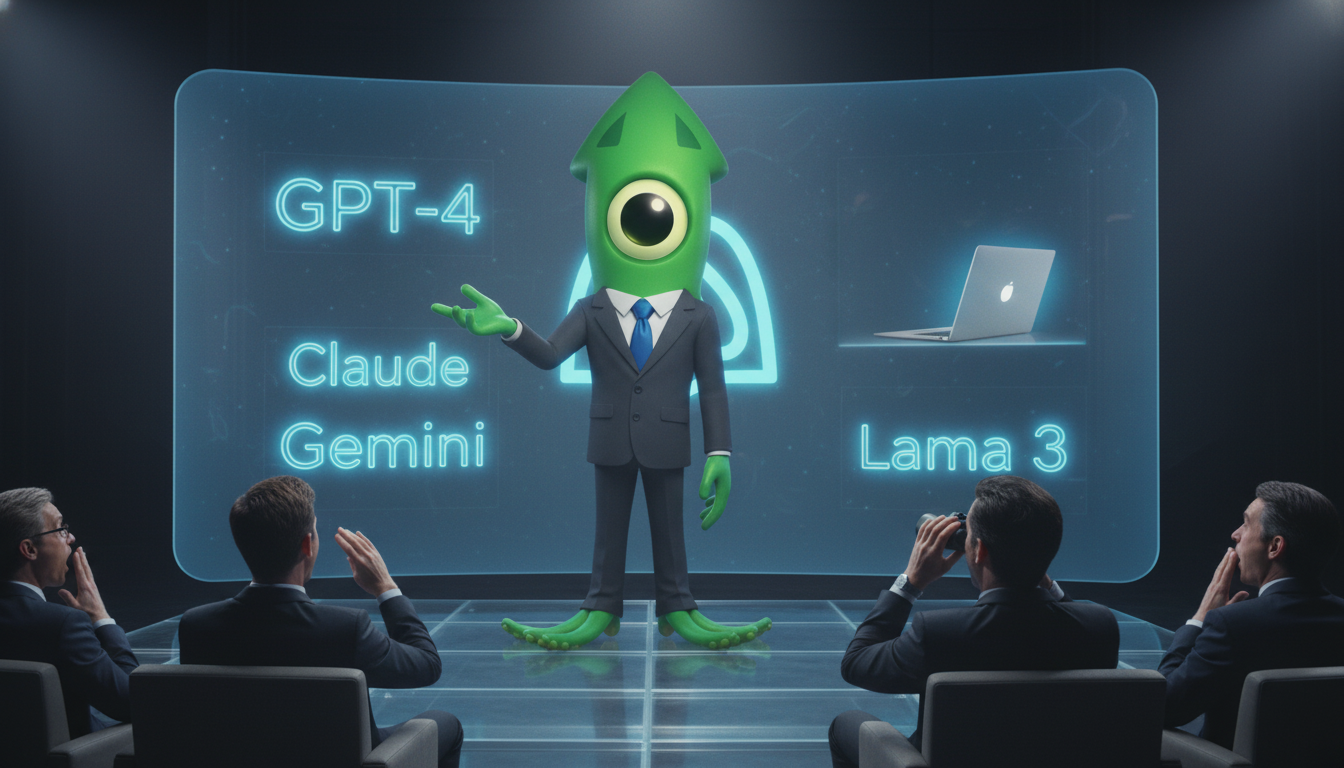
Therefore, leaders need to weigh the benefits of consolidation — such as unified APIs, lower costs, and easier team workflows — against downsides like vendor dependence, reduced model diversity, and governance challenges; exploring solutions from multi-model strategies to hybrid cloud deployments can help firms retain flexibility while leveraging models like GPT 4, Claude 3 Opus, and Gemini for automation, natural language understanding, image generation, transcription, and text to speech.
In this article, we assess the ChatGPT impact and AI model consolidation, spotlighting winners, warning signs, and practical steps founders can take to build resilient, differentiated products rather than landslide onto commoditized stacks and short term hype.
ChatGPT impact and AI model consolidation: what it means for business
The arrival of ChatGPT reshaped expectations for language models and automation. As a result, companies now prefer platforms that bundle many models and features. In practice, AI model consolidation means firms combine multiple large models, tooling, and data pipelines under unified APIs and platforms. This trend reduces integration work and speeds product development.
Key elements of model consolidation include:
- Unified APIs for switching between LLMs and vision models.
- Multi model marketplaces that offer GPT 4, Claude 3 Opus, and Gemini alternatives.
- Centralized data governance, security, and billing.
- Pre built pipelines for text to speech, transcription, and image generation.
- Reduced vendor diversity and increased technical lock in.
- Cost optimizations through bulk credits or lifetime plans.
Why this matters for startups and enterprises
First, consolidation lowers time to market and operational costs. However, it also raises vendor dependence and concentration risks. For example, Nvidia’s hardware surge helped power the AI boom and market shifts: Nvidia market cap article. Moreover, platforms that ease model switching can reduce lock in, as noted in industry coverage: Microsoft AI app development article. Therefore, teams should balance consolidation with multi model strategies and clear governance.

ChatGPT impact and AI model consolidation — model comparison
This table compares representative models and highlights consolidation benefits. It shows how ChatGPT shifted expectations and accelerated platform bundling. Use it to weigh trade offs when designing AI products.
| Model | Approx size | Launch era | Primary use cases | Consolidation benefits | How ChatGPT changed impact |
|---|---|---|---|---|---|
| BERT | ~110M | 2018 | NLP pretraining, classification, search | Standardized transfer learning, easier fine tuning | Introduced transformer pretraining baseline; later models built on this |
| GPT-2 | 1.5B | 2019 | Text generation, creative tasks | Demonstrated large scale generative capabilities | Showed scaling benefits; prompted focus on decoder only LLMs |
| GPT-3 | 175B | 2020 | Few shot generation, APIs | API first commercialization enabled marketplaces | Set expectations for general purpose LLMs; enabled many products |
| ChatGPT (3.5) | proprietary | 2022 | Conversational agents, chat UIs | Productized conversational UX, mass adoption | Made LLMs mainstream; accelerated consolidation demand |
| GPT-4 | proprietary, multimodal | 2023 | Complex reasoning, vision plus text | Higher quality outputs; encouraged platform upgrades | Raised bar for capability and integration |
| Claude 3 Opus | proprietary | 2024 | Assistant, safety focused, long context | Alternative vendor choice; supports multi model stacks | Gave buyers vendor diversity while enabling consolidation |
| Gemini Pro 1.5 | proprietary | 2024 | Multimodal, enterprise features | Tight integration with cloud tools | Pushed toward unified cloud native platforms |
| Llama 3 | open weights, varied | 2024 | Edge, research, customization | Lower barrier to local deployment; reduces lock in | Helped preserve model diversity amid consolidation |
Business implications of ChatGPT impact and AI model consolidation
The ChatGPT impact and AI model consolidation have rewritten playbooks for sales, marketing, and growth teams. Because these platforms bundle powerful models, companies automate content, personalize outreach, and scale operations faster than before. As a result, firms can shift resources from grunt work to strategy and creative testing.
How companies use consolidated AI for growth
Sales teams use unified models to generate personalized sequences at scale. For example, sales reps auto draft outreach using GPT 4 templates and then refine messaging with fine tuning. Marketing teams produce multichannel campaigns faster by combining text generation, image creation, and A/B testing pipelines. Customer success teams summarize calls and route issues using transcription and classification models. Moreover, consolidation lowers integration overhead. However, hardware and platform concentration also matter, as Nvidia’s surge shows the market effects of AI demand Nvidia’s market cap surge. In addition, tools that ease model switching reduce lock-in and speed developer workflows Microsoft AI App Development.
Key benefits
- Faster time to market through pre-built pipelines and unified APIs.
- Lower operational cost via bulk credits and integrated billing.
- Consistent brand voice across channels using shared models.
- Easier cross-functional collaboration with centralized governance.
Key challenges
- Vendor lock-in that limits strategic flexibility.
- Single point failures and concentration risk at infrastructure layers.
- Governance gaps around data privacy and model safety.
- Hidden costs from overuse and poor cost controls.
Practical steps for leaders
- Define critical workflows and map them to specific models.
- Hybridize: use hosted models plus local smaller models for resilience.
- Track usage and cost with transparent billing dashboards.
- Invest in guardrails for data handling and explainability.
Businesses that balance consolidation with diversification will capture growth while managing risk.
Conclusion
ChatGPT impact and AI model consolidation have changed the rules for product teams and business leaders. Over a short period, models moved from research curiosities to core automation engines. As a result, companies now pick between faster integration and the risk of vendor lock in.
We covered why consolidation matters, how it speeds time to market, and where it creates concentration risks. For example, unified APIs cut engineering work dramatically. However, they can also limit strategic flexibility if teams do not plan for model diversity.
EMP0 leverages these AI advances to deliver automation tools and growth systems. Therefore, we combine hosted models with smaller local models to protect customers from single point failures. We focus on modular workflows for sales automation, personalized marketing, and scalable customer success.
Learn more about EMP0 and explore our resources:
Take action: evaluate critical workflows, adopt hybrid strategies, and test consolidated stacks on low risk pilots. To learn how EMP0 can help you automate growth, visit our site and try our tools today.
Frequently Asked Questions (FAQs)
What does ChatGPT impact and AI model consolidation mean?
It describes how ChatGPT popularized conversational AI and triggered platforms to bundle multiple models and tools. As a result, vendors combine language models, vision models, and pipelines under unified APIs. This consolidation streamlines integration and accelerates product development.
Why does consolidation matter for businesses?
Consolidation lowers integration costs and speeds time to market. For example, marketing teams generate campaign copy, images, and variants from a single platform. However, firms should balance efficiency with risk management and governance.
How can startups avoid vendor lock in while using consolidated stacks?
Use hybrid architectures that pair hosted models with local or open models. Also, design an abstraction layer for model switching. Therefore, you retain flexibility and reduce single point failures.
Can consolidation drive measurable growth in sales and marketing?
Yes. Consolidated AI automates outreach, personalizes messaging, and scales content production. As a result, teams convert leads faster and reduce manual work.
Is model diversity still important after consolidation?
Absolutely. Diversity protects against vendor outages and improves safety. Also, it enables tailored models for niche use cases and better governance.