
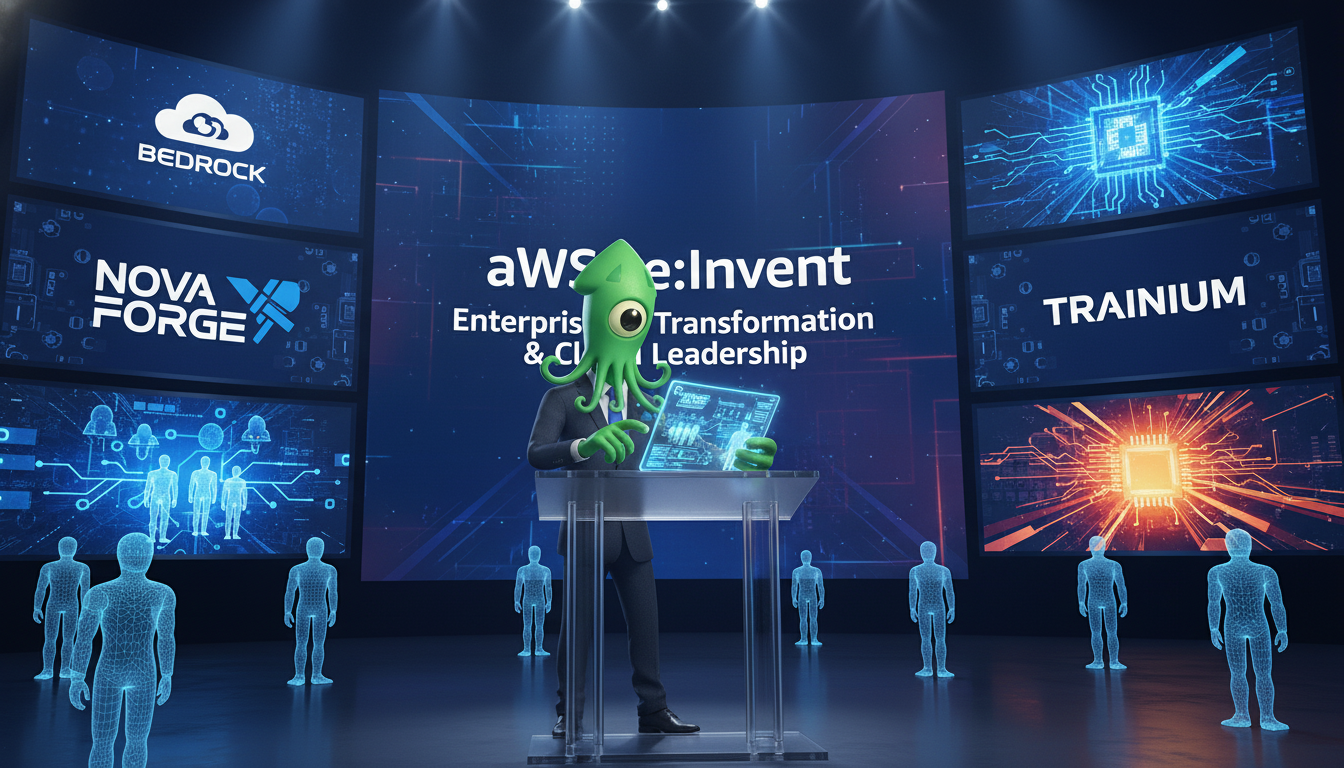
AWS AI agents and enterprise AI strategy: Why agents are pivotal for enterprise cloud plans
AWS AI agents and enterprise AI strategy are moving from pilots into core infrastructure. As enterprises push for automation, AWS solutions make agents practical and secure. For example, Lyft used Amazon Bedrock with Claude and reduced resolution time by 87 percent.
This shift matters because agents can perform tasks and automate workflows reliably. Therefore, teams can focus on creative and strategic work instead of repetitive tasks. AWS announced capabilities like Trainium3 and AgentCore to speed training and deployment.
Moreover, AWS supports data sovereignty and hybrid deployments so firms keep control. As a result, regulated industries can adopt agents without moving sensitive data. These features help reduce risk, lower costs and improve developer productivity.
In this article we unpack AWS re Invent takeaways and practical adoption patterns. We will cover model choices, infrastructure and governance to guide enterprise leaders. By the end you should know where agents deliver real business returns today. We also highlight cost and security trade offs.
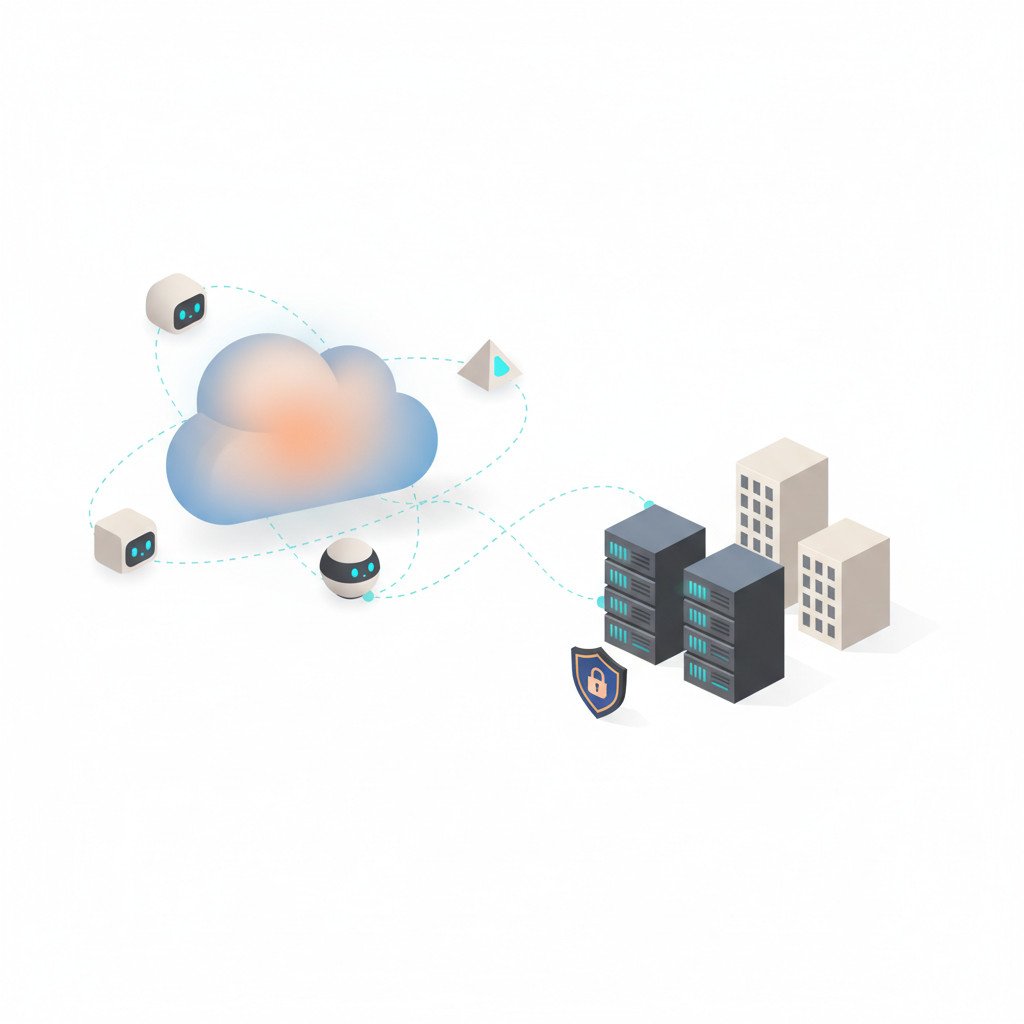
Role of AWS AI agents and enterprise AI strategy
AWS AI agents act as autonomous executors inside enterprise workflows. They handle routine tasks, orchestrate services, and surface decisions. As a result, teams scale operations without adding headcount. Because AWS integrates agents into its cloud platform, enterprises get secure, production-ready tooling.
How agents fit into enterprise architectures
Agents sit between users and backend systems. They invoke APIs, run analytics, and carry out approvals. For regulated firms, AWS supports hybrid deployments and data sovereignty. For example, AWS AI Factories let customers run systems on-premises. Read more on infrastructure shifts here.
AWS AI agents and enterprise AI strategy: benefits
- Scalability: Agents scale horizontally on demand. Therefore, peak workloads do not require manual intervention.
- Automation: Agents automate ticket routing, code reviews, and moderation. Lyft used Amazon Bedrock and Anthropic Claude to cut resolution time by 87%. See AWS Bedrock details: here.
- Integration: Agents connect to CRMs, ERPs, and data lakes through secure connectors.
- Cost efficiency: Autonomous workflows can lower cloud spend. For deeper analysis, see: here.
- Governance and security: Policy controls and audit logs keep actions accountable.
- Developer velocity: Teams move from prototypes to production faster. Internally, AWS reported rapid rewrites that shaved months from projects.
Real world cases
Lyft improved driver support with Bedrock agents that handle queries at scale. Reddit trained moderation models via Nova Forge to capture social intuition. These examples show agents deliver measurable ROI. Moreover, agents work best when designed around clear tasks and guardrails. For context on customer service shifts, see: here.
AWS AI agents and enterprise AI strategy: comparative table
Below is a concise table comparing AWS AI agents with other leading solutions. It highlights integration, scaling, cost, security and enterprise readiness. Use it to quickly assess trade offs.
| Solution | Ease of integration | Scalability | Cost efficiency | Security features | Enterprise readiness |
|---|---|---|---|---|---|
| AWS (AgentCore, Bedrock) | High — native SDKs and managed connectors make integration fast | Very high — global regions and AI Factories for hybrid scale | High — Trainium and flexible pricing help lower TCO | Very strong — hybrid deployments, data sovereignty and fine grained policy controls | Very high — enterprise compliance, governance and partner ecosystem |
| Google Cloud (Vertex AI Agents, Gemini) | High — strong ML tooling and APIs, however vendor lock in risk exists | Very high — Google scale and TPUs for heavy workloads | Medium — competitive but complex pricing for GPU/TPU usage | Strong — VPC Service Controls and org policies, but hybrid options are evolving | High — mature enterprise features, strong MLOps support |
| Microsoft Azure (Azure OpenAI, Copilot) | High — integrated with Microsoft stack and enterprise identity | Very high — global Azure backbone and scale units | Medium — licensing and compute costs can be higher for large workloads | Strong — enterprise identity, private endpoints and compliance controls | Very high — deep enterprise relationships and compliance certifications |
| OpenAI / Anthropic (Agent frameworks) | Medium — developer friendly APIs, but integration requires custom work | High — managed endpoints scale well, but self hosting is limited | Medium — API costs can be significant at scale | Moderate — improving controls, but enterprise features vary by provider | Medium — strong models, yet fewer built in enterprise controls compared with hyperscalers |
Notes: Ratings reflect current market positioning and product maturity. Therefore, choose based on your integration needs, compliance demands and total cost of ownership. Moreover, hybrids and on prem options matter for regulated industries, so weigh data sovereignty carefully.
Implementing AWS AI agents and enterprise AI strategy: a practical guide
Start small and iterate. First, pick a high value use case where agents reduce manual work. For example, automate ticket routing or compliance checks. Then, run a short proof of concept to measure outcomes and costs.
Operational steps for AWS AI agents and enterprise AI strategy
- Define clear objectives and metrics. Choose KPIs like resolution time, cost per task, or cycle time. Because metrics drive scope, keep them measurable.
- Select the right model and hosting option. Use managed endpoints for speed, or on premises for data sovereignty. For managed services, AWS Bedrock offers turnkey access to models and agents.
- Build data and access boundaries. Therefore, separate training data from production data. Also, implement role based access and audit logs.
- Create guardrails and human in the loop flows. However, allow agents to escalate uncertain cases to humans.
- Automate deployment and monitoring. Use CI CD for models and pipelines. Then, track drift, latency and cost continuously.
Actionable tips
- Start with repeatable tasks that have clear success criteria. This reduces risk and accelerates value.
- Use hybrid deployments where regulations require local data control. For example, AWS AI Factories support on premises workloads.
- Apply policy controls and fine grained permissions early. As a result, audits become simpler.
- Budget for evaluation and iteration. Models require tuning and testing to reach production quality.
Challenges to expect
- Integration complexity with legacy systems. Therefore, allocate engineering time for connectors.
- Cost spikes during model tuning and scale testing. Monitor spend and set alerts. Lastly, measure ROI before broad rollout.
Conclusion
AWS AI agents and enterprise AI strategy are reshaping how firms automate work and capture value. Throughout this article, we saw that agents can reduce resolution times, scale repeatable tasks, and enforce governance. For example, platforms like Bedrock and AgentCore speed deployments, while hybrid options preserve data sovereignty.
EMP0 brings focused experience to help enterprises realize these benefits. Their team builds AI powered growth systems and sales and marketing automation that run brand trained AI workers. As a result, companies increase revenue and scale outreach with consistent messaging. EMP0 also offers tailored automation to turn agent prototypes into production systems, and they prioritize measurement and ROI.
If you want to move from experiments to outcomes, partner with vendors who understand both infrastructure and business models. EMP0 complements AWS investments by delivering practical, revenue focused AI solutions. Explore EMP0 for help designing agent workflows and for sales and marketing automation that drives measurable growth. Visit emp0.com and the EMP0 blog to learn more.
Frequently Asked Questions (FAQs)
What are AWS AI agents and why do they matter?
AWS AI agents are autonomous software that execute tasks across cloud services. They connect to APIs, data stores, and workflows. For enterprises, they automate repetitive work and scale operations without large teams.
What business benefits do agents deliver?
- Faster resolution times, therefore improved customer satisfaction.
- Higher developer velocity, which reduces time to production.
- Cost savings through automation and optimized compute use.
- Better governance and auditability when teams apply policies early.
How should enterprises start implementing agents?
Begin with a focused pilot on a clear use case. Then, measure KPIs like time saved and cost per task. Next, iterate and expand to adjacent processes. Finally, bake in CI CD, monitoring, and human review checkpoints.
Are AWS AI agents secure and compliant?
Yes when you design controls correctly. Use role based access, audit logs, and policy guards. Also, hybrid hosting preserves local data control for regulated workloads.
How do I judge costs and ROI?
Track direct savings and productivity gains. Also, monitor cloud spend during tuning phases. Therefore, set cost alerts and calculate payback on pilot results.