
Autonomous AI Agents and Tool Driven Workflows in Agentic Automation and Production
The modern landscape of digital production is shifting rapidly. Organizations now leverage Autonomous AI Agents and Tool Driven Workflows to handle complex tasks with high precision. These intelligent systems move beyond simple automation by making independent decisions within structured environments. Because of these advancements, industries see a massive surge in efficiency and output quality. This shift represents a fundamental change in how software and physical logistics operate today.
Agentic workflows integrate specialized tools to solve multifaceted problems effectively. For instance, route optimization agents now use deterministic math instead of simple guesses to calculate arrival times. Furthermore, frameworks like AutoDev empower developers by automating code generation and testing within secure environments. These recursive agents can even refine their own logic to reach better outcomes over time. As a result, the boundary between human oversight and machine execution continues to blur.
This article explores the core components of modern agentic systems. We will examine how tools like OpenPlanter and AutoDev redefine production standards. You will learn about the importance of structured outputs and deterministic computation in routing. Moreover, we will discuss how Docker based environments ensure safety during complex operations. Therefore, understanding these technologies is essential for anyone looking to stay ahead in the automation space.
Advanced Route Optimization with Autonomous AI Agents and Tool Driven Workflows
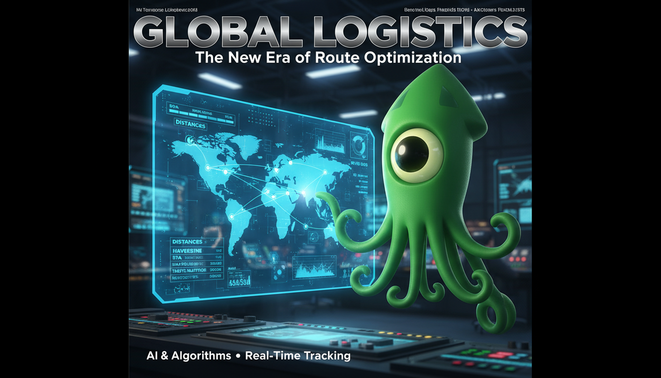
Autonomous AI agents and tool driven workflows enhance logistics through precise deterministic computation. These systems do not guess distances or travel times during execution. Instead, they utilize the Haversine distance function as a mathematical backbone. This method ensures that every routing decision rests on geometric accuracy. Consequently, the agents provide reliable outputs for complex industrial operations.
The system architecture relies on structured data to maintain high performance. Pydantic schemas enforce strict validation for every piece of information. This approach ensures that all outputs remain machine readable and consistent. Moreover, the integration of How AI agents and tool discovery for web automation? – Articles proves how agents find tools. Such precision is vital for large scale production environments where errors are costly.
Speed Profiles and Environmental Factors
To calculate accurate ETAs, agents apply specific speed profiles to different road types. These profiles account for varying conditions across the transportation network.
- Highway travel maintains a speed of 90.
- Arterial roads operate at a speed of 65.
- Local roads are set to a speed of 45.
- A default traffic multiplier of 1.10 adjusts for real world congestion.
Core Domain Data and Resource Management
The agent handles various geographic locations within its workspace. It organizes these sites to facilitate efficient navigation and resource allocation.
- Industrial rigs with exact geographic coordinates.
- Supply yards for equipment storage.
- Central depots serving as primary hubs for the fleet.
Key Routing Features and Capabilities
Modern routing agents offer several advanced features for production workflows. They use callable functions to interact with the environment through a Docker based system.
- Multi stop path support with optional waypoints.
- Candidate route evaluation based on total distance or ETA.
- Per leg metrics for granular trip analysis.
- Automated site suggestions using geographic proximity.
The execution of these tasks occurs within a secure Docker container. This isolation protects the host system while allowing the agent to run complex code. A system prompt guides the tool usage to ensure the agent follows logical steps. Therefore, the combination of math and automation creates a robust solution for global logistics. Every routing decision remains transparent and auditable for human operators.
Streamlining Development with AutoDev Framework and Autonomous AI Agents and Tool Driven Workflows
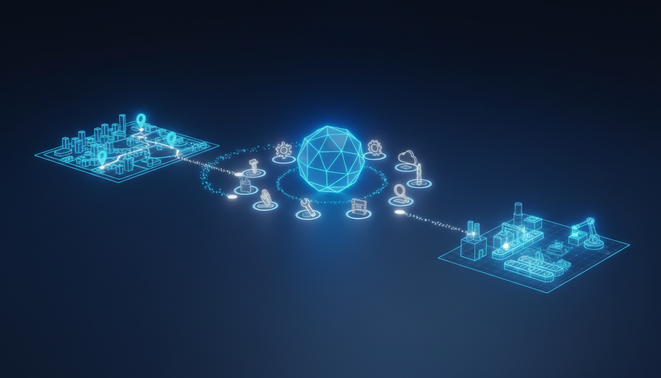
The AutoDev framework represents a major leap in software engineering automation. It functions as a powerful autonomous AI agent designed to handle complex coding tasks. By utilizing GPT 4, AutoDev manages entire development cycles within secure Docker environments. This setup allows the agent to edit files, retrieve information, and execute tests without human intervention. Because it operates in an isolated workspace, the host system remains completely safe from unauthorized changes.
The impact on code generation is evident in recent performance metrics. On the HumanEval dataset, AutoDev achieved a remarkable Pass@1 score of 91.5 percent. This is a significant jump from the baseline GPT 4 performance of 67 percent. Furthermore, the framework excels in test generation with an 87.8 percent success rate. It also reaches 99.3 percent test coverage, ensuring that the generated code is robust and reliable. Such high accuracy makes it a top tier solution for modern production environments.
Enhancing CI CD Pipelines and Code Reviews
AutoDev significantly improves the speed and quality of CI CD pipelines. It automates repetitive tasks like PR reviews and unit testing with high precision. When compared to other frameworks like LATS at 94.4 percent or Reflexion, AutoDev holds its ground as a second best performer on HumanEval. Its ability to signal task completion with a stop command simplifies the integration into existing workflows. Therefore, developers can focus on higher level architecture while the agent handles the technical details.
The integration of Autonomous AI Agents and Tool Driven Workflows ensures that every action is verifiable. Because the agent uses a single GPT 4 core, it maintains a consistent logic across different files. Developers benefit from 99.4 percent human written test coverage parity, which builds trust in the automated output. As a result, software teams can deploy updates faster and with fewer bugs. This framework truly redefines the boundaries of what AI can achieve in a professional coding environment.
| Tool Name | Category | Primary Function |
|---|---|---|
| File Read | File I/O and Workspace | Reads specific file contents for analysis |
| File Write | File I/O and Workspace | Writes or updates data in the workspace |
| Directory List | File I/O and Workspace | Lists all files within a chosen directory |
| File Search | File I/O and Workspace | Finds specific files using keyword matching |
| Workspace Clean | File I/O and Workspace | Removes temporary files from the environment |
| Shell Exec | Shell Execution | Runs bash commands for system tasks |
| Python Run | Shell Execution | Executes Python scripts within Docker |
| Process Monitor | Shell Execution | Tracks active system processes for forensics |
| Network Scan | Shell Execution | Checks active network connections and ports |
| Web Search | Web Retrieval | Searches the internet for external data |
| Page Scraper | Web Retrieval | Extracts text content from specific URLs |
| API Caller | Web Retrieval | Interacts with external RESTful services |
| Site Mapper | Web Retrieval | Maps the structure of a target website |
| Logic Solver | Planning and Logic | Processes complex boolean and math logic |
| Task Planner | Planning and Logic | Breaks down goals into executable steps |
| Recursive Loop | Planning and Logic | Manages agent self correction and depth |
| Schema Validator | Planning and Logic | Checks data against Pydantic definitions |
| Entity Resolver | Planning and Logic | Identifies and links related data points |
| Report Generator | Planning and Logic | Compiles final findings into a document |
CONCLUSION
The integration of Autonomous AI Agents and Tool Driven Workflows marks a new era for industrial production. Organizations now achieve higher precision through deterministic computation and recursive logic. Because these systems use mathematical models like Haversine distance, they eliminate guesswork in logistics. Consequently, businesses experience improved efficiency and reduced operational costs. This transformation allows teams to focus on strategy while machines handle complex execution.
Frameworks like AutoDev demonstrate the power of automated code generation within secure environments. These agents achieve high accuracy in testing and development tasks. Moreover, recursive engines like OpenPlanter offer specialized tools for detailed data processing. These technologies enable seamless scaling for software development and physical supply chains alike. As a result, the speed of innovation continues to accelerate across all sectors.
EMP0 stands at the forefront of this technological revolution as a leading US based company. They specialize in providing advanced AI and automation solutions for various industries. For example, their expertise covers sales and marketing automation with proprietary software. Their AI worker services offer secure and scalable AI powered growth for modern enterprises. Therefore, partnering with EMP0 helps businesses stay competitive in a digital world.
You can explore more about these solutions by visiting the EMP0 blog for technical insights. Furthermore, check out their latest updates on their social channels for more information. Their commitment to excellence ensures that every organization can reach its full potential. Join the movement toward intelligent automation today for a better tomorrow.
Frequently Asked Questions (FAQs)
What defines Autonomous AI Agents and Tool Driven Workflows?
Autonomous AI agents are software entities that execute tasks independently within a digital environment. These systems leverage tool driven workflows to access specific capabilities like web searching or file editing. Because they can choose their own tools, they solve problems more effectively than static scripts. This approach ensures that every step in a production process is both logical and verifiable.
How do these agents improve route optimization?
These intelligent agents use deterministic computation to calculate the most efficient paths between locations. They rely on the Haversine distance formula instead of making simple estimations. Furthermore, the agents incorporate speed profiles for highways and local roads to provide accurate arrival times. As a result, businesses can manage their logistics with much higher precision.
What makes the AutoDev framework unique for developers?
AutoDev serves as a comprehensive agent that automates the software development lifecycle. It operates within a secure Docker based environment to protect the main system from errors. Because it uses GPT 4, it can generate high quality code and comprehensive test suites simultaneously. Therefore, it significantly reduces the time spent on manual debugging and code reviews.
What are recursive agents and how does OpenPlanter use them?
Recursive agents are systems designed to perform loops of reasoning to reach a final goal. OpenPlanter utilizes this method by allowing its engine to dive into data up to four levels deep. It uses a modular architecture with 19 specialized tools for forensic tasks. Consequently, the agent can resolve complex entities and generate detailed reports without human help.
Why is tool driven automation essential for modern production?
Traditional automation often fails when it encounters unexpected variables or new data types. However, tool driven automation provides agents with a library of functions to handle various scenarios. These agents can validate their own outputs using Pydantic schemas to ensure machine readability. Thus, organizations achieve better scalability and reliability in their automated workflows.