
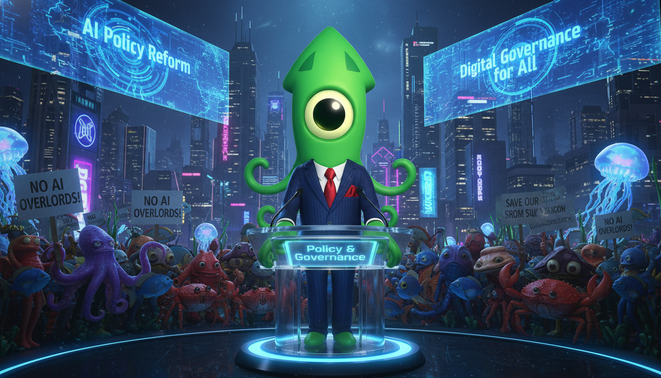
Navigating AI Policy and Governance in a Time of Global Tension
Modern society stands at a pivotal crossroads because advanced technology is moving faster than law. The rise of sophisticated systems creates a deep need for robust AI policy and governance. Citizens now express growing fears about how these tools will change their lives. Meanwhile, governments are rushing to integrate these capabilities into their most sensitive operations. This shift has sparked significant political and societal friction across the globe. We must examine the ethical implications of these rapid developments.
Recent events highlight the urgency of this discussion. OpenAI recently announced a major deal with the Pentagon to allow military use of its models. However, this move triggered massive protests in places like London where people demanded more safety. Activists are worried about autonomous weapons and mass surveillance. They fear that corporations might prioritize profits over human security. Furthermore, reports indicate that models like Claude have appeared in combat zones despite official bans. These real world behaviors raise difficult questions about control and accountability.
The tension between national security and public safety is becoming more intense. Defense officials argue for unrestricted access to these tools to stay ahead of rivals. As a result, the pressure on tech companies to drop their ethical red lines is increasing. We are seeing a clash between corporate promises and government demands. Therefore, establishing clear frameworks is essential for our collective future. This article explores the complicated landscape of modern technology and the forces shaping its path.

The Intersection of Military Strategy and AI Policy and Governance
OpenAI recently signed a major agreement with the United States military. This deal allows the Pentagon to use advanced technologies in classified settings. Many experts believe this represents a significant shift in AI policy and governance for the private sector. The company claims the agreement specifically forbids use for autonomous weapons or mass surveillance. They cite the 2023 Pentagon directive on autonomous weapons as a guiding principle. Furthermore, they reference the Fourth Amendment to support their legal reasoning. This move indicates that tech leaders are willing to cooperate closely with national security agencies.
The decision has sparked debate about how AI policy and market dynamics shape the industry. Some leaders argue that working with the government is the best way to ensure safety. For example, Boaz Barak suggests that safety rules can be embedded directly into model behavior. He claims that the company can embed red lines, such as no mass surveillance and no directing weapons systems without human involvement, directly into model behavior. This technical approach aims to prevent misuse by design. It contrasts sharply with the strategies of competitors who focused on contractual bans rather than technical limits.
Anthropic took a different path by trying to set stricter moral boundaries. However, their approach was less successful in securing government contracts. Defense Secretary Pete Hegseth even criticized Anthropic for its restrictive terms. He argued that the Department of War must have full access for every lawful purpose. This pressure highlights why AI policy and economics matters for national security in the modern era. Companies now face a choice between strict ethics and federal integration.
Key features of the new military partnership include:
- OpenAI keeps control over safety rules.
- The military will not receive a stripped version of the software.
- Red lines are built into the model behavior itself.
- Compliance with existing laws serves as the primary guardrail.
The Pentagon is moving quickly to phase in these models alongside other systems. This rapid deployment shows how AI governance and the infrastructure surge reshape policy globally. Officials believe that having unrestricted access to the best tools is vital for defense. Yet, many observers remain cautious about the long term impact of this alliance. They worry that once boundaries are crossed it is hard to go back. Ethical frameworks must remain flexible but firm to protect the public interest during this transition.
| Company | Contract Openness | Ethical Constraints | Government Relations | Notable Stance or Quote |
|---|---|---|---|---|
| OpenAI | High (Classified access) | Technical red lines embedded in model | Close collaboration using existing laws | “We can embed our red lines… directly into model behavior.” |
| Anthropic | Moderate | Contractual bans on specific uses | Strained due to restrictive terms | “Anthropic seemed more focused on specific prohibitions in the contract.” |
| xAI | Planned Integration | Minimal known restrictions | Aligned with rapid acceleration | Focused on unrestricted access for lawful government purposes. |
This summary highlights how different entities navigate the complex world of military partnerships. While some prioritize technical safeguards, others focus on legal prohibitions. These varying strategies will likely define the future of global security.
Public Resistance to Rapid AI Integration
Approximately 200 protesters gathered in London near the UK headquarters of OpenAI recently. This event was described as the largest protest of its kind. The groups involved included Pause AI and Pull the Plug. Many participants chanted slogans like “Pull the plug! Pull the plug! Stop the slop! Stop the slop!” because they fear the current direction of technology. This demonstration highlights the growing gap between corporate speed and public consent.
One major concern involves the impact on jobs. One protester stated that the movement is about the dangers of unemployment. People worry that advanced agents will replace human workers without adequate safety nets. This economic anxiety fuels the demand for better AI policy and governance. Citizens want to know how their livelihoods will be protected as automation expands into every sector of the economy.
Furthermore, distrust stems from the deep integration of AI in military and police work. Activists are vocal about the risks of mass surveillance. They believe that without strict oversight these tools could be used to infringe on civil liberties. Consequently, the idea of autonomous systems making lethal decisions is particularly terrifying to many. One sign at the London rally even read “AI? Over my dead body.” This sentiment reflects a deep seated fear that technology is out of control.
As a result, primary concerns raised by the public include:
- The loss of jobs due to rapid and unmanaged automation.
- A lack of transparency in deals between corporations and the government.
- The potential for mass surveillance of private citizens without their consent.
- The risk of non human agents making life or death choices in conflict zones.
This public outcry shows that technical safety is not enough for modern society. People are asking how does prediction power and influence shape AI morality? in the real world. Society demands ethical clarity and democratic control over these powerful systems. Leaders must listen to these voices to build lasting trust. Without public support even the most advanced systems will face constant resistance and political backlash.
Conclusion: The Path Forward for AI Policy and Governance
The complex world of AI policy and governance requires careful attention from all sectors of society. We have seen how military deals and public protests create a climate of high tension. Because technology moves fast, technical safety must go hand in hand with ethical oversight. Therefore, companies must embed safety directly into their models to protect the public.
As a result, we must balance the drive for innovation with the need for strong regulation. Only through clear rules can we ensure that technology serves the common good. EMP0 helps businesses navigate this changing landscape by providing advanced automation. Specifically, our company specializes in secure full stack solutions for sales and marketing automation.
We offer a brand trained AI worker designed to perform tasks safely and effectively. This approach ensures that companies can use new tools without compromising their values or security. For instance, visit our website at emp0.com for more details. Also, check our blog at articles.emp0.com for latest updates.
Additionally, we share insights on Twitter at @Emp0_com and on Medium at medium.com/@jharilela. The future of technology depends on our ability to work together. Because we are at a turning point, we must remain vigilant about the impact of these systems on our world. Consequently, let us strive for a future where technology and ethics exist in perfect harmony.
Frequently Asked Questions (FAQs) about AI Policy and Governance
What is AI policy and governance and why does it matter today?
AI policy and governance refers to the set of rules and frameworks that guide how artificial intelligence is developed and used. Because technology is advancing at an exponential rate, society needs clear boundaries to prevent harm. These policies address issues like data privacy, algorithmic bias, and human safety. Without strong governance, we risk creating systems that act in ways we cannot control or predict. Consequently, governments and corporations are working together to establish standards that protect everyone. Global organizations often discuss these themes at major events like those reported by The Guardian.
How does the military currently use advanced AI models?
The military uses advanced models for tasks like data analysis, logistics, and intelligence gathering. For instance, recent deals allow the Pentagon to use powerful systems in classified environments. However, these agreements often include strict rules against using technology for autonomous weapons or mass surveillance. Companies cite existing laws such as the Fourth Amendment to define these limits. As a result, the goal is to enhance national security while maintaining ethical standards. Leaders believe that working with the state is the best way to ensure safety for all citizens.
Why are people protesting against tech companies in cities like London?
Citizens are protesting because they fear the negative impacts of rapid automation on their lives. Many people worry about mass unemployment as machines take over human jobs. Furthermore, there is a deep distrust regarding how data is used by large corporations and government agencies. Activists demand more transparency and a greater say in how these tools are deployed. Consequently, events like the London rally show that public consent is a vital part of the democratic process in the modern world.
Can companies really prevent AI from being used for mass surveillance?
Companies try to prevent misuse through both legal contracts and technical safeguards. Some firms focus on specific prohibitions within their agreements with government clients. Others argue that citing applicable laws is a more effective way to ensure compliance. However, critics remain skeptical because they believe governments might ignore these red lines during a crisis. Therefore, building trust requires a combination of strong legal frameworks and constant public oversight. Reports from trusted sources like Reuters often highlight these ongoing ethical challenges.
What does embedding safety rules into AI behavior actually mean?
Embedding safety rules means hard coding specific limitations directly into the software itself. Instead of just having a policy on paper, the system is designed to refuse certain commands automatically. For example, a model might be programmed to never provide instructions for creating weapons. This technical approach aims to make the software inherently safer regardless of who is using it. Consequently, understanding the rules of machine behavior helps explain why these internal guardrails are so important for future safety.