

The Future of AI Hardware and Efficient LLM Architectures
The tech world is witnessing a massive shift in computing power. We are currently seeing the rise of AI hardware and efficient LLM architectures. This evolution allows machines to process data at speeds we once thought impossible. As a result, companies like Nvidia are hitting record annual revenues of over 215 billion dollars. They provide the vital spark for the next industrial revolution.
Key players like Meta and OpenAI rely on these advanced chips to build smarter tools. Furthermore, the acquisition of Groq shows how fast the market is moving. Geopolitical tensions between the US and China continue to shape the global supply chain. However, innovation remains strong despite these political hurdles. Experts like Gene Munster believe we are only at the start of this growth cycle.
Efficient models now allow complex tasks to run on simple consumer hardware. For example, Liquid AI recently released a model that fits into 32GB RAM. This means powerful inference no longer requires massive data centers. Consequently, we are moving toward a future where every device has its own brain. The synergy between high performance chips and slim models will redefine our world.
Nvidia Leadership in AI Hardware and Efficient LLM Architectures
Nvidia sits at the top of the tech world right now. Its record annual revenue reached 215.9 billion dollars recently. This growth shows a massive hunger for processing power. Consequently, the stock market value of the company hit 4.8 trillion dollars. They provide critical components to giants like Meta.
- Revenue rose 62 percent to 57 billion dollars in a three month span.
- Furthermore, the company acquired Groq for 20 billion dollars in late 2024.
- H200 chips set new standards for high performance computing tasks.
- Additionally, strategic sales now include specialized hardware for diverse global markets.
Jensen Huang believes demand is growing at an exponential rate. For instance, he stated that customers are racing to invest in AI compute. These factories power the industrial revolution of our modern era. Because of this, Nvidia remains a generation ahead of its rivals. Nvidia engineers continue to refine AI hardware and efficient LLM architectures for global business use.
US officials monitor sales of H200 chips to customers in China. Although the government allows some deals, no units have been sold yet. The impact of H200 chips is truly profound. Moreover, these units offer better speed and lower power usage. Therefore, data centers can handle more work without failing. As a result, companies can scale their operations with greater confidence. In addition, Nvidia provides software that supports these systems. Sites like MarkTechPost track these industry updates closely. This balance is vital for the future of global technology.
AI Hardware Components
Efficient processing depends on robust silicon. These units handle complex math for neural networks. High performance chips allow for faster inference. Moreover, edge devices bring this power to the local level. Furthermore, this setup reduces latency for the user. Consequently, modern systems utilize AI hardware and efficient LLM architectures to improve speed.
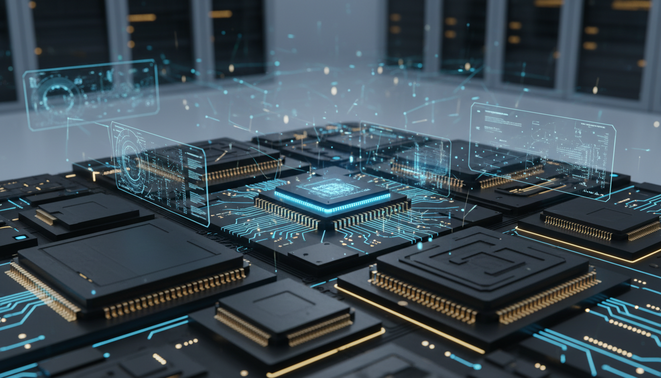
Innovations in AI Hardware and Efficient LLM Architectures
The field of AI hardware and efficient LLM architectures is moving toward smaller and faster systems. Liquid AI released a new model called LFM2 24B A2B to prove this point. This model features a 24 billion parameter scale but remains highly efficient. Specifically, it only activates 2.3 billion parameters per token during use. This design choice makes it perfect for edge devices with limited resources.
Technical features of this architecture:
- It uses a unique 1 to 3 ratio of Grouped Query Attention to gated convolution layers.
- The model includes 30 base layers and 10 attention layers for balanced performance.
- A 32k token context window allows for detailed processing of long documents.
- Because it fits in 32GB RAM, it runs smoothly on standard consumer hardware.
Because of these features, developers can enjoy high speeds on a single H100 unit. For example, it reaches nearly 27k tokens per second with many concurrent requests. This capability is vital for Enterprise AI infrastructure where reliability matters most. Furthermore, users can maintain privacy by running on device models instead of cloud services. Native support for llama.cpp and vLLM ensures easy setup for teams.
Moreover, the LFM Open License v1.0 encourages open innovation within the community. This model excels in benchmarks like MATH 500 and GSM8K. Therefore, it provides a viable alternative to larger and more expensive systems. Efficient models represent the future of private and local intelligence. As a result, businesses can deploy powerful tools without huge costs.
Comparing AI Hardware and Efficient LLM Architectures
The tech industry now offers many tools for different needs. We see a clear split between raw power and smart design. Because the field grows so fast, developers need to look at specific metrics. Consequently, comparing these tools helps teams plan for the future. Therefore, we provide this guide to help you choose the right system.
Comparative Metrics for Tech
| Metric | Nvidia H100 | Nvidia H200 | LFM2 24B A2B |
|---|---|---|---|
| Memory | 80GB HBM3 | 141GB HBM3e | 32GB RAM |
| Type | AI Hardware | AI Hardware | LLM Architecture |
| Parameters | System Limit | System Limit | 24 Billion |
| Context Window | Hardware Bound | Hardware Bound | 32k Tokens |
| Active Parameters | Full Capacity | Full Capacity | 2.3 Billion |
| License | Proprietary | Proprietary | LFM Open License |
This balance of power is vital for data center stability in the modern age. Furthermore, teams can visit Liquid AI to see their latest software code. Groq also builds custom chips for very low latency work. Many users still prefer the Nvidia H100 for its broad industry support. As a result, the market for AI hardware and efficient LLM architectures remains competitive and bold. Additionally, new models focus on running tasks locally to save on costs. However, large training jobs still require the highest tier of silicon power. Every business must weigh these factors before they invest.
Conclusion: Scaling with AI Hardware and Efficient LLM Architectures
The rapid evolution of AI hardware and efficient LLM architectures marks a new era for enterprise growth. These tools enable faster decision making and greater efficiency in high stakes marketing. Consequently, businesses can now deploy intelligence directly within their own systems. This shift ensures data remains private while boosting overall performance levels. Moreover, the synergy between chips and models will continue to drive global innovation.
Employee Number Zero LLC, known as EMP0, leads this transformation in the United States. We offer advanced AI driven sales and marketing automation tools for modern brands. Furthermore, we provide the tools to help you grow. Our team specializes in growth systems that live inside your infrastructure. Because we focus on reliability, your business can scale without fear. You can learn more about our vision and read our blog at Employee Number Zero Blog. Together we can build a smarter future.
Frequently Asked Questions about AI Hardware and Efficient LLM Architectures
How do Nvidia H200 chips improve performance?
These chips offer massive memory and speed for complex tasks. They allow data centers to process information much faster than before. As a result, businesses can train larger models with less effort. This hardware sets a new gold standard for the entire tech industry.
What makes the Liquid AI LFM2 model unique?
This model uses a smart blend of attention and gated convolutions. It only activates a small portion of its parameters for each task. Because of this design, it stays fast and efficient. Users can run high quality AI on standard local machines easily.
Why are AI hardware and efficient LLM architectures popular?
Companies want to reduce costs and improve privacy for their data. Efficient systems allow for local processing without cloud servers. Furthermore, they use less energy while maintaining high accuracy. This combination helps businesses scale their operations more effectively.
Can I run these models on consumer grade hardware?
Yes, many modern models fit within 32GB of system RAM. This means you do not need a massive server farm to use them. Consequently, individual developers can innovate with powerful tools. Additionally, this accessibility drives faster growth across the whole tech sector.
What role does Groq play in the market?
Groq builds specialized units that focus on ultra low latency processing. Their technology complements existing setups to provide instant responses for users. Therefore, the ecosystem becomes more robust and capable for everyone. Innovation continues to accelerate because of these new players.