

Harnessing AI for Small Businesses: From Task Manager to CEO
Are you a small business owner drowning in a sea of daily to dos, from answering emails to scheduling social media posts? Many founders feel they spend more time on repetitive chores than on the big picture vision for their company. This is where the transformative potential of AI for small businesses comes into play. Because artificial intelligence is no longer just a buzzword for large corporations; it is a powerful tool that can help you automate low value tasks and scale your decision making.
Imagine reclaiming hours of your day, consequently allowing you to step out of the weeds and into the role of a true CEO. The real magic of AI is its ability to handle monotonous work, which gives you the freedom to focus on what truly matters. As a result, you can dedicate your energy to customer relationships, strategic growth, and the unique storytelling that sets your brand apart.
This article will explore how you can use AI as a thinking partner. Therefore, you can make smarter decisions driven by data without losing the personal touch that makes your business special. It is time to let technology handle the repetition so you can be more human where it counts.
Freeing Your Focus: How AI Automates Low Value Tasks
For any small business owner, time is the most precious resource. The daily grind of administrative work often pulls focus from strategic growth. However, by automating low value tasks, you can shift your attention to where it is needed most. Artificial intelligence excels at handling the repetitive, time consuming chores that clog up your schedule. This allows you to concentrate on building relationships and making impactful decisions.
As Makena Finger Zannini says, “AI is perfect as a tool to remove repetition so you can be more human where it matters.” Think of AI as a tireless assistant that can manage a variety of tasks for you. Here are a few examples of how can AI for small businesses offload low value tasks:
- Content Generation: AI can draft social media posts, blog outlines, and email newsletters. However, it is important to distinguish between simple content generation vs. true AI use. The goal is to create a starting point, not to produce generic content that lacks your brand’s unique voice.
- Customer Follow Up: AI powered systems can send automated yet personalized follow up emails to clients and customers. This ensures consistent communication without manual effort.
- Data Entry: Tedious data entry from invoices, receipts, or customer forms can be automated with AI tools. As a result, this reduces errors and saves countless hours.
- Marketing Data Analysis: AI can analyze marketing campaign data to identify trends and insights. This helps you understand what is working without needing to sift through spreadsheets manually.
Many founders make the mistake of using AI as a simple content machine. Zannini notes, “A lot of founders treat AI like a content generator. They plug in a prompt, get a caption, post it and move on, but that’s how we’ve arrived at the era of AI ‘slop,’ where AI generated content is becoming both more prevalent and more dumbed down by the week.” The smarter approach is to use AI to enhance your workflow, not replace your unique human touch.
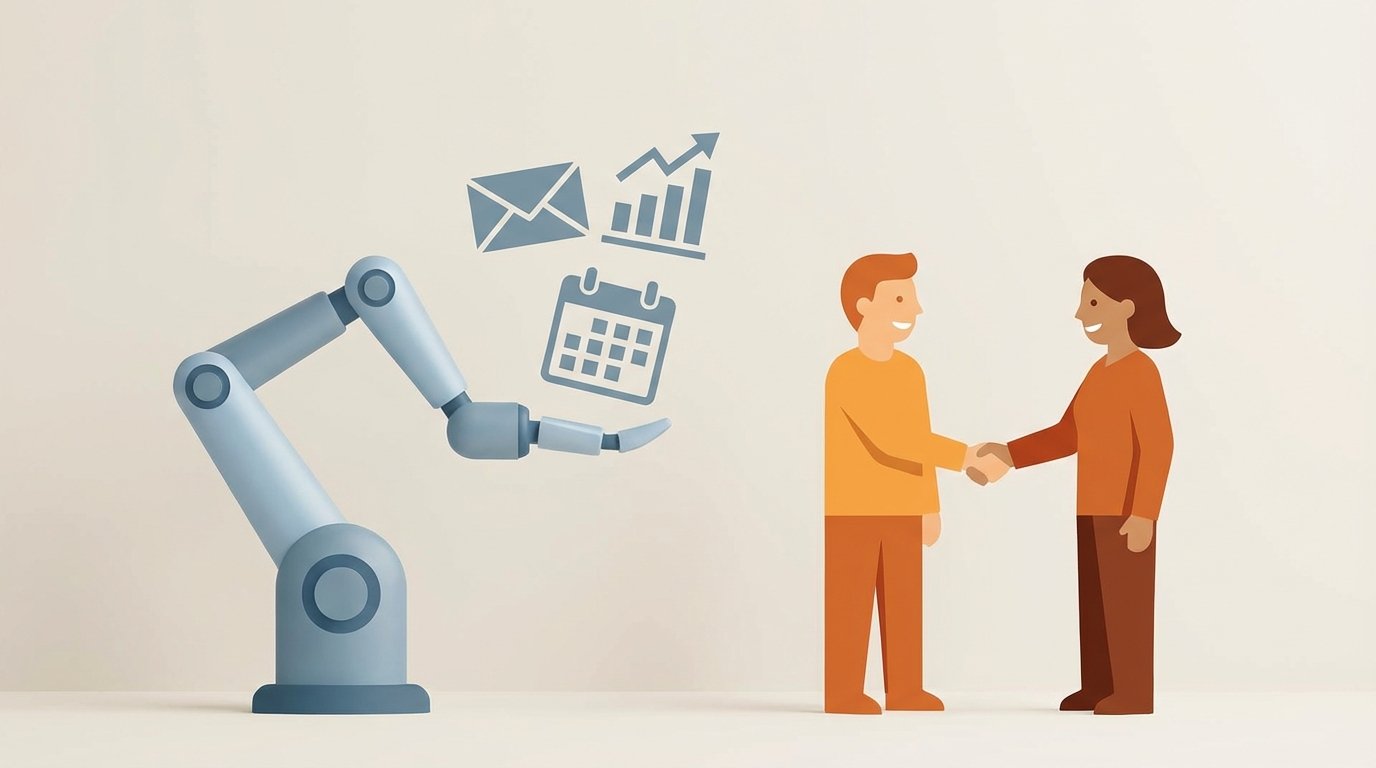
Beyond Automation: AI as Your Decision Making Partner
Automating tasks is only the beginning. The true power of AI for a small business lies in its ability to help you think better and make more strategic choices. Instead of just being a tool for productivity, artificial intelligence can become a valuable decision making partner. It helps you shift from being reactive to proactive. As a result, you can guide your business with clarity and confidence.
Makena Finger Zannini emphasizes this shift, stating, “AI should help you spend more time in CEO mode and make better decisions.” Moving into CEO mode means focusing on strategy, growth, and innovation rather than getting bogged down by operational details. AI facilitates this by processing vast amounts of data quickly, uncovering insights that might otherwise be missed. This capability allows for truly data driven decisions, from marketing spend allocation to product development.
Furthermore, AI acts as a powerful force multiplier. Zannini explains, “AI becomes a true multiplier when it comes to data, allowing you to make decisions like a company with far more resources would.” For example, AI can analyze sales patterns to optimize stock levels, a concept explored in agentic inventory and pricing decisions. This gives small businesses a competitive edge that was once only available to large enterprises.
Ultimately, the goal is to leverage AI as a cognitive partner. “The true power for a small business is to use AI to think better, viewing it as a decision making partner,” Zannini concludes. By doing so, you can scale your strategic thinking and build a more resilient, successful business.
AI Tools to Empower Your Business
Choosing the right AI tools can feel overwhelming, but many are designed specifically for the needs of small businesses. Below is a comparison of popular solutions that help automate tasks and improve decision making.
| Tool Name | Purpose | Key Features | Benefits |
|---|---|---|---|
| Castmagic | Content Repurposing | Transcribes audio and video, generates summaries, identifies key topics, and creates ready to use content like social posts and blog drafts. | Maximizes content value from a single recording, saving hours of manual work and ensuring a consistent brand voice across platforms. |
| Zapier | Workflow Automation | Connects thousands of web applications, allowing you to create automated workflows (Zaps) between them without any code. | Automates repetitive data entry, lead management, and communication tasks, freeing up time for strategic activities. |
| HubSpot AI | Sales and Marketing Automation | Includes AI assistants for content creation, predictive lead scoring to identify the best prospects, and chatbot builders for customer service. | Enhances marketing effectiveness, helps sales teams prioritize efforts, and provides scalable customer support. |
| QuickBooks Online AI | Financial Decision Making | Offers AI powered cash flow forecasting, automated expense categorization, and anomaly detection in spending. | Provides clear insights into financial health, simplifies bookkeeping, and helps you make proactive, data driven financial decisions. |
Embrace AI to Elevate Your Business
The journey from a hands on founder to a visionary CEO is challenging, but artificial intelligence offers a powerful roadmap. As we have seen, AI for small businesses is about more than just automating tasks; it is about reclaiming your time and scaling your thinking. By offloading repetitive work, you can focus on strategy, customer connections, and the creative vision that only you can provide. Using AI as a decision making partner allows you to compete with larger companies by making smarter, data driven choices.
If you are ready to implement these ideas, you do not have to do it alone. At EMP0, we provide comprehensive AI and automation solutions designed for small businesses. Our tools, including the Content Engine, Marketing Funnel, and Sales Automation, empower you to build and deploy sophisticated systems on your own infrastructure. This gives you full control and ownership of your growth.
Explore how EMP0 can help you transition into CEO mode and unlock your business’s full potential.
Website: emp0.com
Blog: articles.emp0.com
Twitter/X: @Emp0_com
Medium: medium.com/@jharilela
Frequently Asked Questions (FAQs)
What are the best low value tasks for a small business to automate with AI first?
The best place to start is with tasks that are highly repetitive and time consuming. Think about the daily or weekly chores that take up your mental energy but do not directly contribute to growth. Good examples include scheduling social media posts, transcribing audio from meetings or podcasts, performing initial data entry, categorizing business expenses, and sending out standard customer follow up emails. These are often considered “quick wins” because automating them can free up several hours a week almost immediately, allowing you to see a tangible return on your investment of time.
How does AI help a small business owner act more like a CEO?
AI helps you shift your focus from operations to strategy. By automating the routine administrative tasks mentioned above, AI gives you back your most valuable asset: time. You can then reinvest this time into high impact activities that define the CEO role. This includes strategic planning, analyzing market trends, building relationships with key partners and clients, and mentoring your team. Furthermore, AI tools provide sophisticated data analysis, which supports better decision making. As a result, you are no longer just managing the day to day; you are actively steering the company’s future.
Will using AI make my small business lose its personal touch?
This is a common concern, but it does not have to be the reality. The goal of AI is not to replace human interaction but to enhance it. AI should handle the impersonal and robotic tasks, which paradoxically frees you to be more human where it matters most. For instance, while an AI can send an initial follow up email, you can personally reach out to the most engaged leads. By taking repetition off your plate, you have more energy and time to dedicate to meaningful conversations and building genuine customer relationships.
What are the biggest challenges when adopting AI in a small business?
The most common challenges include the initial learning curve, the potential cost, and ensuring data quality. Many founders feel they need to become AI experts, but the focus should be on practical application, not technical mastery. While some advanced platforms are expensive, many essential AI tools offer affordable subscription plans or even free tiers perfect for small businesses. Finally, AI is only as good as the data it receives, so it is important to have organized information. The trends seen in broader enterprise AI adoption show that starting small and scaling up is a successful strategy.
What is the first step to get started with AI for my business?
Start small and be specific. Instead of trying to implement AI across your entire business at once, identify a single, significant bottleneck in your current workflow. Is it managing customer inquiries? Is it creating marketing content? Once you have identified a specific problem, research AI tools designed to solve it. Sign up for a free trial and experiment with the tool for a week. The goal is to find one solution that provides a clear and immediate benefit, which will build your confidence to explore more applications later.