
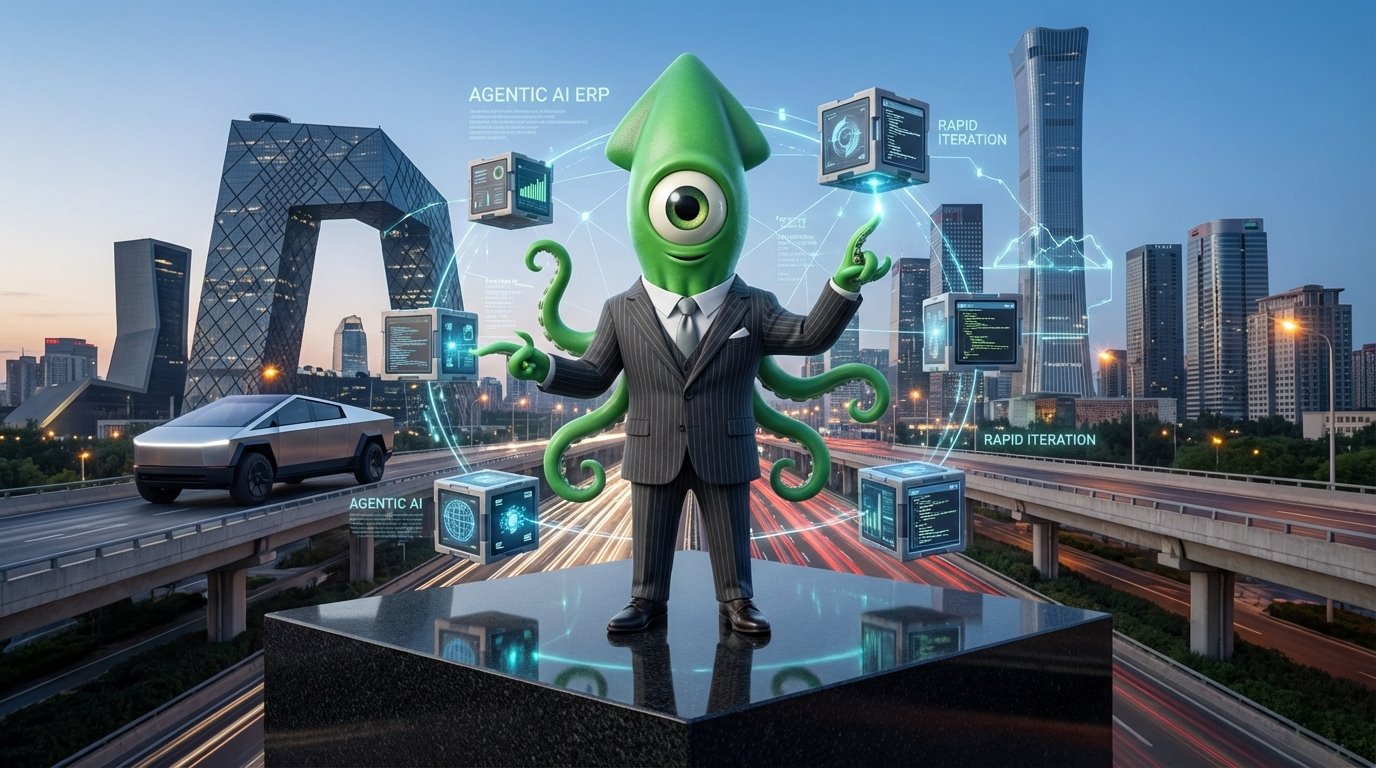
Reimagining Systems: The Dawn of AI Enabled ERP in the Agentic AI Era
Enterprise Resource Planning (ERP) systems have long served as the backbone of modern business. However, they often create rigid structures that limit a company’s agility. For years, organizations have struggled with complex, monolithic systems. These systems frequently lock them into a single vendor’s ecosystem, which makes it difficult to adapt to changing market demands. As a result, the digital transformation journey requires a more dynamic approach to core business processes.
Now, a new technological wave is set to shatter these old paradigms. We are entering a new phase of technological evolution, which brings forth the rise of AI enabled ERP in the agentic AI era. This transformation is not merely about adding a few automated features. Instead, it represents a fundamental shift in how businesses operate and innovate. Agentic AI introduces intelligent agents that can autonomously manage workflows. Furthermore, they coordinate across different applications and make decisions with minimal human intervention. Consequently, these smart systems are reshaping the very foundation of enterprise technology. This article explores how agentic AI is revolutionizing ERP, paving the way for more flexible and intelligent business systems that help organizations thrive.
Orchestrating the Future with AI enabled ERP in the Agentic AI Era
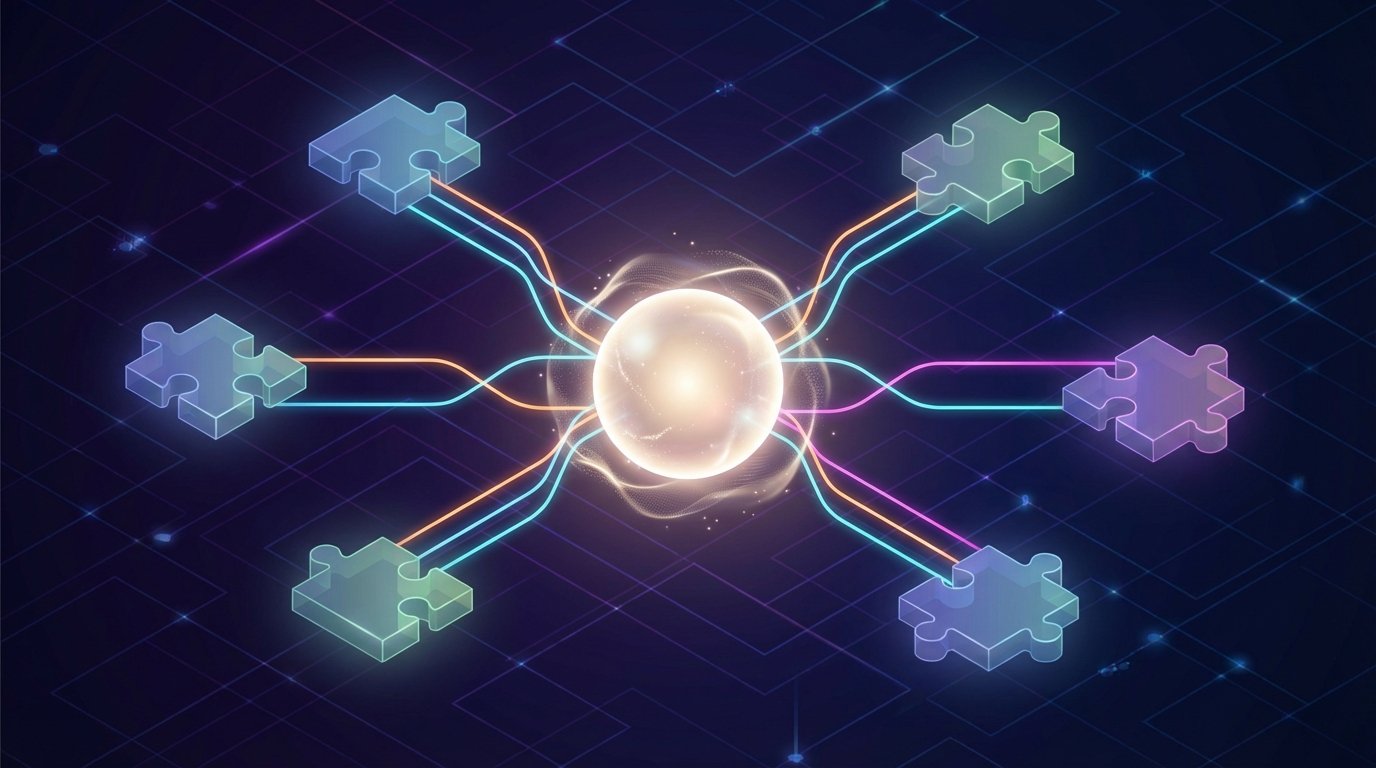
Agentic AI represents a significant leap forward in automation. Unlike traditional AI that follows predefined scripts, agentic AI can reason, plan, and execute complex tasks across multiple systems. These intelligent agents act as a sophisticated user experience and orchestration layer. Consequently, they can coordinate workflows between applications that were never designed to communicate, breaking down data silos and fostering true interoperability. This level of agentic orchestration transforms how businesses operate at their core.
For decades, businesses were constrained by monolithic ERP systems. These massive, all in one solutions forced companies into rigid processes and vendor gridlock, making any upgrade a monumental task. The modern enterprise, however, demands agility. As a result, organizations are shifting toward modular, composable architectures. This modern approach allows them to assemble best of breed solutions from different vendors, creating a system perfectly tailored to their unique needs.
This is where AI enabled ERP in the agentic AI era truly shines. Agentic AI provides the intelligence needed to manage these modular ecosystems, enabling seamless process automation and workflow orchestration across disparate modules. An AI agent could, for instance, pull sales data from one system, analyze it with a tool from another vendor, and update inventory in a third system automatically. This capability not only improves efficiency but also enables rapid iteration, as individual components can be updated without disrupting the entire architecture. Embracing such a dynamic environment requires strong AI readiness in the workplace.
Driving Performance: The Business Impact of AI Enabled ERP
In the era of agentic AI, businesses leveraging AI enabled ERP systems can expect substantial improvements in their operations. Backed by a significant 2024 study, there are clear, quantifiable benefits that resonate across different facets of enterprise functionality.
Key statistics from the study illustrate these potential gains:
- 30% Boost in User Satisfaction: By providing intuitive user interfaces and reducing manual administrative tasks, AI-powered systems significantly enhance user experiences.
- 25% Increase in Productivity: AI agents manage routine tasks and complex operations, freeing up human resources to focus on high-impact activities.
- 45% Reduction in Processing Times: The automation capabilities of AI driven ERP streamline workflows, speeding up processes like data entry, validation, and report generation.
- 60% Improvement in Decision Accuracy: By analyzing vast amounts of data swiftly and effectively, AI tools bolster decision-making processes, ensuring insights are reliable and timely.
These advancements empower businesses through:
- Enterprise Autonomy: With integrated systems, companies can operate more independently, making decisions without reliance on external guidance.
- Process Automation: Repetitive tasks are systematically handled by AI, reducing human error and increasing efficiency.
- Improved Workflow Orchestration: Seamless coordination across different systems ensures that operations align smoothly, minimizing bottlenecks and promoting a fluid exchange of information.
In summary, AI-enabled ERP systems are redefining how enterprises carry out their business strategies. As organizations become more agile and data-driven, these technologies facilitate a shift in focus from maintenance to innovation, helping businesses achieve a significant competitive edge in today’s fast-paced market.
Monolithic vs. Modular ERP: A Comparative Look
| Feature | Traditional Monolithic ERP | Modular ERP with Agentic AI |
|---|---|---|
| Upgrade Flexibility | Upgrades are large, disruptive, and infrequent, often forcing a complete system overhaul. | Components can be updated independently and continuously, allowing for rapid iteration without system wide downtime. |
| Interoperability | Limited to a single vendor’s ecosystem, creating data silos and integration challenges with third party tools. | Agentic AI orchestrates workflows across best of breed applications, ensuring seamless data flow and communication. |
| Customization | Customizations are complex, expensive, and can create complications with future upgrades. | Fit for purpose modules allow for easy customization and swapping of components to meet specific business needs. |
| User Satisfaction | Often lower due to rigid processes, clunky interfaces, and a one size fits all approach. | Higher, as AI powered UX layers simplify tasks and systems are tailored to user specific workflows. |
| Agility | Slow to adapt to market changes because of the rigid, all encompassing system architecture. | Extremely agile, enabling businesses to quickly pivot and adopt new technologies or processes as needed. |
CONCLUSION
The move toward AI enabled ERP in the agentic AI era marks a fundamental transformation in how businesses operate. By abandoning rigid, monolithic systems in favor of flexible, modular architectures, organizations can achieve unparalleled agility and efficiency. This technological leap supports rapid innovation, streamlines complex business operations, and paves the way for scalable, sustainable growth. Agentic AI is the intelligent engine driving this change, orchestrating workflows across disparate systems and converting data into actionable insights.
Leading this revolution is EMP0, a pioneer in full stack AI and automation solutions. We empower businesses to build and deploy powerful, AI powered growth systems securely under their own infrastructure. With our suite of ready made tools and proprietary AI utilities, EMP0 provides the essential building blocks for companies looking to multiply revenue and create a future proof enterprise. By embedding intelligent automation into your core functions, you are not just adopting new technology; you are building a resilient foundation for long term success.
For more insights into AI driven business transformation, follow our work:
Frequently Asked Questions (FAQs)
What is agentic AI and how does it differ from traditional AI?
Agentic AI represents a significant evolution from traditional artificial intelligence. While traditional AI typically operates based on predefined scripts and rules to execute specific tasks, agentic AI is designed for autonomy. It can reason, create plans, and execute complex workflows across multiple, unconnected systems without direct human instruction. In essence, traditional AI follows commands, whereas agentic AI understands goals and orchestrates the steps needed to achieve them.
Why is a modular ERP architecture considered superior to a monolithic one?
A modular ERP architecture provides superior flexibility, agility, and scalability compared to a traditional monolithic system. Monolithic ERPs are rigid, all in one solutions that are difficult to customize or upgrade. A modular, or composable, approach allows a business to select best of breed applications from different vendors and integrate them seamlessly. This avoids vendor gridlock and allows for rapid innovation, as individual components can be updated or replaced without disrupting the entire system.
What are the primary business benefits of an AI enabled ERP system?
The measurable benefits of an AI enabled ERP system are significant. Key advantages include major boosts in productivity and efficiency, with studies showing up to a 25% increase in productivity and a 45% reduction in processing times. User satisfaction also improves considerably, by as much as 30%, due to more intuitive interfaces and less manual work. Furthermore, decision accuracy can see an improvement of about 60% because of faster, more sophisticated data analysis, which gives businesses a strong competitive edge.
How exactly does agentic AI improve workflow orchestration?
Agentic AI functions as an intelligent orchestration layer that sits above your various business applications. It has the unique ability to enable communication between systems that were not originally designed to interact. For example, an AI agent can autonomously pull customer data from one system, use an external tool to analyze it for insights, and then update inventory levels in a third system. This capability breaks down data silos and automates end to end processes for seamless workflow orchestration.
Is it difficult for a company to switch from a monolithic to a modular ERP?
While the transition requires strategic planning, moving to a modular architecture is generally more manageable than the traditional rip and replace approach associated with monolithic systems. Because a modular system is composed of independent components, a business can migrate in a phased manner. This allows you to prioritize the most critical functions first, reducing risk and minimizing disruption. This gradual approach makes the digital transformation journey smoother and allows for continuous improvement over time.