
The Future of Automation: Agentic AI in Software Testing
Software testing faces a massive change today. The rise of Agentic AI in software testing provides a powerful new way to manage quality. Organizations now look for smarter paths to handle complex digital systems. However, this shift requires more than just better scripts. It needs tools that think and adapt to real world changes.
Plus, these systems must work across many different environments without constant human help. UiPath leads this revolution with its 2025 release and latest innovations. Recently, Gartner named UiPath a Leader in its Magic Quadrant for AI Augmented Software Testing Tools. You can find more details at UiPath Newsroom or search for trends on Gartner for more information.
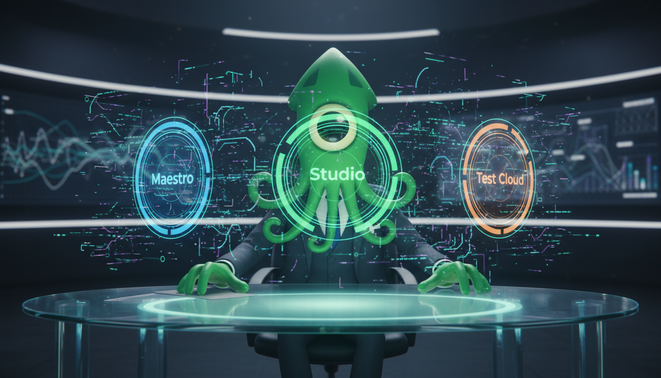
This recognition proves their commitment to excellence and progress. Specifically, tools like Maestro and Test Cloud help teams manage their automation flows better. As a result, companies see faster cycles and fewer bugs in their production environments. Testers benefit the most from these advanced agentic testing systems.
These tools take over the repetitive chores that often cause burnout. Because the AI handles basic tasks, human experts can focus on higher value strategy. They can spend more time on risk assessment and deep investigation. Therefore, the goal is not to replace people but to empower them.
We must stay optimistic about these gains while remaining cautious of the risks. Consequently, a balanced approach ensures that automation creates real value for the enterprise.
Transforming Quality with Agentic AI in Software Testing
UiPath offers a robust suite for modern enterprise needs. This system integrates various tools to improve the testing process. For example, the Studio environment supports unified development for all users. This makes agentic automation more accessible for every team member. Because of this integration, teams can build smarter workflows quickly.
Advanced Orchestration and Maestro
The platform focuses on orchestration through the Maestro tool. Maestro manages the interactions between different autonomous agents. In addition, the Test Cloud provides a reliable space for running these tests. As a result, organizations achieve better results with fewer resources. You can explore more at the official UiPath website for details on their platform.
Empowering Testers through AI Augmentation
The new release introduces the IXP for better data management. This tool helps agents understand the context of their tasks. Consequently, the system performs better at risk focused testing. One powerful quote explains this shift perfectly. It says that “AI is changing testing, not by replacing testers but by revealing what they do.”
Therefore, the focus remains on human judgment and oversight. Testers can now use their cognitive energy for complex problems. While the AI handles the basics, humans explore deeper quality risks. This approach ensures that technology supports people instead of replacing them. For more insights on technology trends, you can visit Microsoft or IBM for industry updates.
Key Benefits of Agentic AI in Software Testing
The use of AI augmentation brings several advantages to the enterprise. Specifically, it allows for scalable automation that adapts to changes.
- Faster test execution cycles for rapid delivery.
- Improved accuracy by reducing manual human errors.
- Better coverage across complex software landscapes.
- Enhanced focus on critical business risks.
However, teams must use these tools with caution. It is important to avoid the illusion of complete test coverage. Even with advanced AI, professional testers must still guide the process. Moreover, staying updated on these trends helps businesses grow and succeed in competitive markets.

Comparing Traditional Methods and Agentic AI
Many teams still use older methods for software quality. These legacy paths rely on static scripts and manual effort. However, Agentic AI in software testing provides a better way. It uses smart agents to explore apps and find bugs. Because the system is dynamic, it adapts to code changes instantly.
This approach improves efficiency for every developer and tester through agentic automation. As a result, companies can release products much faster than before. Organizations often see better results when they embrace change. Because of this progress, the role of a tester evolves for the better. This shift helps everyone achieve more in less time.
You can find more about automation at UiPath or visit Microsoft for tech updates. Another great resource is IBM for enterprise news.
| Aspect | Traditional Testing | Agentic AI in Software Testing |
|---|---|---|
| Testing Speed | Slower manual cycles | Rapid autonomous execution |
| Human Involvement | Heavy manual labor | Strategic human judgment |
| Risk Analysis | Limited static checks | Deep risk focused testing |
| Scalability | Difficult and costly | High scalable automation |
| Coverage Quality | Often limited or static | Dynamic AI augmentation |
Using these tools helps teams focus on complex logic. Specifically, the system manages the boring parts of the job. Therefore, testers use their minds for high level planning. This shift leads to better software and happier teams in the long run. Professional testers still play a key role in this cycle. They ensure that technology serves the needs of the business. Consequently, the quality of the final product remains very high.
The Strategic Balance: Rewards and Risks of Agentic AI
The adoption of Agentic AI in software testing brings many exciting changes to the modern enterprise. One major benefit involves the preservation of cognitive energy for professional testers. Instead of running basic checks, experts can focus on deep risk analysis. This shift allows teams to explore what and why they test rather than just how. As a result, the overall quality of the software improves significantly.
Furthermore, this technology helps with complex test data generation. AI agents can create realistic scenarios that reflect actual user behavior. Consequently, teams find bugs that might stay hidden during manual sessions. This leads to a more robust product for the end user. You can see how AI powered automation for business growth drives similar success in other areas. Organizations that embrace these tools often stay ahead of their competition.
Key Benefits for the Enterprise
- Scalable automation that grows with your business needs.
- Better identification of patterns in test results across large datasets.
- Increased efficiency by offloading repetitive tasks to smart agents.
- Enhanced focus on higher value strategic planning and security.
- Faster feedback loops during the development process.
However, we must approach these tools with a sense of caution. As experts often say, if you automate chaos, you only get faster chaos. Therefore, human judgment remains essential for every project. We cannot rely on AI generated tests alone because they lack human intuition. Successful teams use autonomous AI agents and tool driven workflows to support their goals. This helps prevent errors that might occur if the system runs without any guidance.
Important Considerations for Success
- Avoid the illusion of test coverage by verifying AI outputs regularly.
- Maintain a focus on risk focused testing guided by human insight.
- Ensure that the AI serves as an augmentation tool for testers.
- Monitor agentic automation closely to prevent unexpected errors.
- Integrate human feedback into every stage of the cycle.
Ultimately, the future of testing depends on our ability to merge technology with wisdom. While agentic AI procurement is vital for some, quality assurance needs a different touch. By balancing these factors, companies create a better environment for innovation and growth. This approach ensures that we use technology to empower people rather than replace them. Because of this choice, the entire organization becomes more resilient and efficient.
CONCLUSION
Agentic AI in software testing represents a major leap for the industry. This technology allows teams to move beyond simple scripts. In addition, UiPath tools like Maestro and Test Cloud lead this change. They integrate AI capabilities with human expertise seamlessly. As a result, professional testers can focus on critical strategy. Therefore, the focus shifts to high value tasks.
Specifically, these systems handle the repetitive parts of the workflow. This allows humans to apply their judgment to complex risks. EMP0 stands as a leader in this automation space. Our team provides cutting edge AI and automation solutions. We use proprietary tools to build brand trained AI workers. These agents help multiply client revenue in a secure way.
Because of our methods, businesses see real growth fast. We believe that smart technology empowers every worker. Our systems provide a secure path to success. Specifically, we focus on long term results for every partner. In addition, we ensure that every solution stays safe. As a result, your data remains protected at all times.
In conclusion, the future of testing is bright and bold. By adopting these systems, companies gain a competitive edge. However, always remember that human judgment remains the key. Start your journey towards better quality today. Visit cutting edge AI growth systems. You can also find more resources at UiPath for your automation needs.
Frequently Asked Questions (FAQs)
What is agentic AI?
Agentic AI is a form of artificial intelligence that shows agency. It does not just follow a list of fixed steps. Instead, it perceives the environment and makes choices to reach a goal. This is very useful in software testing because apps change frequently. Because of its flexibility, the AI can handle updates without needing new code every time. This technology helps teams keep up with rapid development cycles.
How does agentic AI improve testing accuracy?
Accuracy improves because agents do not suffer from fatigue or boredom. They execute every step with perfect precision every single time. Moreover, they can generate massive amounts of data for testing. This helps in finding rare bugs that only appear in specific conditions. Therefore, your team can be more confident in the stability of the release. Specifically, it catches errors that human testers might miss during long sessions.
Can agentic AI replace human testers?
No, this technology is meant to augment human testers rather than replace them. The role of the human tester is evolving into a strategic guide. Humans must still decide which risks matter most to the business. While the AI explores the app, the tester analyzes the deeper meaning of the results. This collaboration allows for more creative exploration of quality. As a result, testers can use their expertise where it truly counts.
What are risks of agentic testing?
Relying solely on AI can lead to a false sense of security. Teams might think everything is covered while missing logic errors. Furthermore, AI agents can sometimes behave in unpredictable ways if not monitored. Consequently, maintaining clear boundaries and rules for the AI is very important. Always verify the findings of the AI with a human eye. This ensures that the automation stays aligned with your specific business goals.
How to implement agentic AI in existing workflows?
Start with a small pilot project to test the capabilities of the tools. This allows your team to learn the basics without high pressure. After that, look for ways to scale the automation across different departments. Use orchestration tools like Maestro to manage your digital workforce effectively. This structured approach ensures long term success for the whole organization. Moreover, it helps build trust in the new system among all employees.