
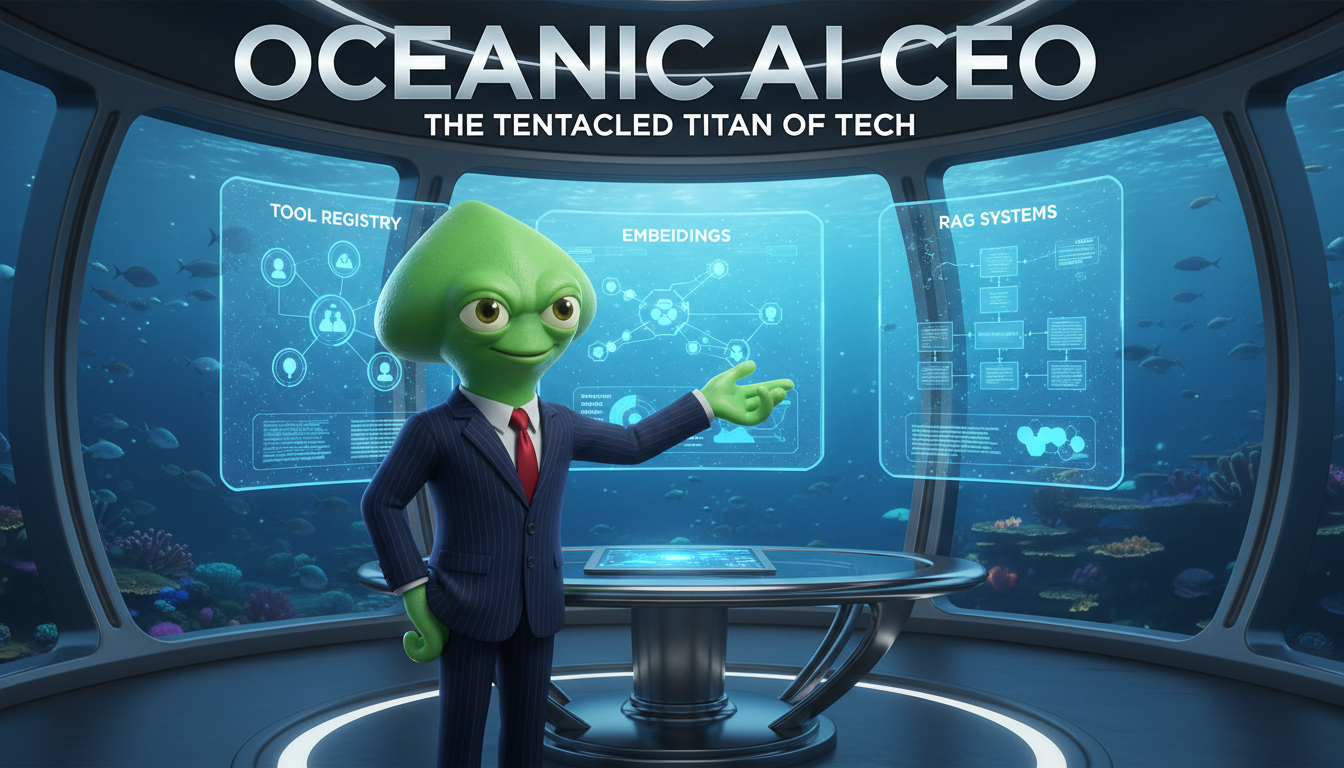
Agentic AI and control-plane tool orchestration: Taming Complexity for Reliable Automation
AI now powers mission-critical workflows, and managing it grows more complex every month. Agentic AI and control-plane tool orchestration offer a new model to coordinate agents, tools, and policies across systems. This approach blends agentic systems, model routing, and a control plane into a unified stack. Because it centralizes safety, retrieval, and tool registries, teams avoid ad hoc integrations and fragile pipelines. As a result, organizations can scale automation with fewer outages and clearer ownership.
Control-plane orchestration acts as a central manager that routes calls, enforces safety, and logs decisions today. It uses retrieval augmented generation, embeddings, and model orchestration to pick the right tool. For engineers, this shift is transformative: it enables dynamic tool selection and smarter error recovery. However, it also raises new design questions around latency, cost, and governance. Therefore, the rest of this article breaks down architectures, orchestrators, and safety patterns for agentic AI at scale.
Agentic AI and control-plane tool orchestration: What it is
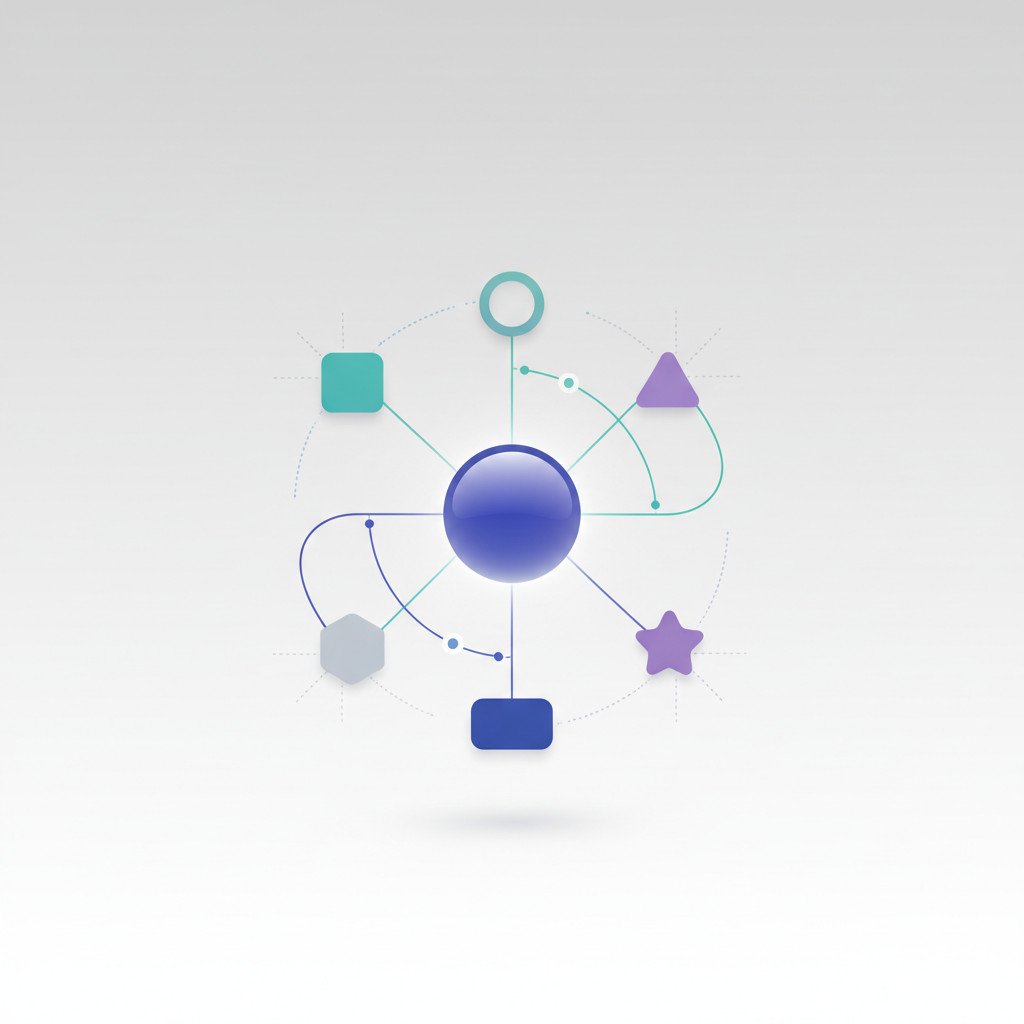
Agentic AI and control-plane tool orchestration describe two complementary layers. Agentic AI refers to autonomous agents that plan, act, and learn. Consequently, these agents make decisions and call tools to complete tasks. The control plane organizes those calls, enforces policies, and logs every decision. Because it centralizes governance, teams gain clearer AI management and traceability. For technical background, see NVIDIA ToolOrchestra research at NVIDIA ToolOrchestra Research and a practical explainer on retrieval augmented generation at Retrieval Augmented Generation Explainer.
Agentic AI and control-plane tool orchestration: Key features and benefits
Agentic AI operates with autonomy, while the control plane provides coordination and safety. Therefore, the architecture separates decision making from orchestration. This split reduces fragile point to point integrations and improves workflow orchestration across services.
Key features
- Central tool registry that lists capabilities and interfaces for each tool
- Model routing and selection based on cost, latency, and accuracy
- Retrieval augmented generation with embeddings and RAG pipelines
- Policy enforcement, safety checks, and access controls
- Observability, logging, and audit trails for every action
Benefits for automation workflows and AI management
- Faster recovery because the control plane can reroute failing calls
- Lower costs since orchestrators pick cheaper models when suitable
- Better accuracy through mixed-model ensembles and smart routing
- Easier governance and compliance with centralized policies
- Scalable workflow orchestration across cloud and on-prem systems
In short, agentic systems act, and the control plane orchestrates. As a result, teams can build resilient, auditable automation workflows while retaining flexible agent behavior.
| Platform | Primary focus | Key features | Usability | Integration and connectors | Pricing model | Learn more |
|---|---|---|---|---|---|---|
| NVIDIA ToolOrchestra | Model orchestration and multi-model routing | Control plane, tool registry, mixed-model routing, RAG support | Research prototype, developer focused | Extensible to LLMs, search, code interpreters; research SDK | Research; no commercial pricing listed | Learn more |
| Orchestrator-8B (research) | Lightweight orchestrator for model routing | 8B decoder-only model, cheap routing, mixed-model ensembles | Experimental; needs engineering integration | Works with hosted models and local retrieval systems | Research/experimental | — |
| LangChain | Agent orchestration and chains for LLM apps | Chains, tool wrappers, model routing, RAG helpers | Developer friendly, high adoption | Connectors for Hugging Face, OpenAI, vector DBs | Open source with ecosystem services | Learn more |
| Hugging Face | Model hub and inference APIs | Model hosting, deployment, inference, model registry | Platform for ML teams, easy hosting | Integrates with transformers, spaces, Datasets | Free tier and pay-as-you-go enterprise options | Learn more |
| n8n | Low-code workflow orchestration for automation | Visual workflows, connectors, conditional logic | Designer friendly for non-developers | 200+ connectors, webhooks, cloud or self-host | Open source core; cloud plans | Learn more |
| Argo Workflows | Kubernetes-native workflow orchestration | Declarative DAGs, scalability, retries and artifacts | Ops focused; requires k8s knowledge | Integrates with Kubernetes ecosystem and CI/CD | Open source; managed offerings | Learn more |
Benefits and Challenges of Agentic AI and control-plane tool orchestration
Agentic AI and control-plane tool orchestration unlock powerful gains for automation workflows. Because agents act autonomously, they reduce manual steps for complex tasks. However, the control plane ensures those actions follow rules and integrate with existing systems. Below are the most important benefits and the realistic challenges engineering teams face.
Key benefits
- Faster and cheaper decision making. For example, lightweight orchestrators like Orchestrator 8B routed calls at an average cost of 9.2 cents and 8.2 minutes latency versus GPT 5 at 30.2 cents and 19.8 minutes. As a result, teams can serve more requests at lower cost while keeping response times reasonable.
- Higher task accuracy through smart routing. Mixed model ensembles and routing improve results. For instance, Orchestrator 8B scored better than GPT 5 on several benchmarks including FRAMES and τ² Bench.
- Stronger governance and observability. The control plane centralizes logs, policies, and tool registries. Therefore, audits and compliance reviews become simpler.
- Resilience and error recovery. Control plane logic reroutes failing calls and retries safely. Consequently, automation workflows suffer fewer outages and show clearer failure modes.
- Easier integration across services. Control planes bridge LLMs, search, code runtimes, and databases. This reduces fragile point to point integrations and speeds delivery.
Common challenges
- Latency and orchestration overhead. Orchestration adds routing steps that increase end to end latency. Teams must balance routing depth against user experience.
- Cost trade offs and model choice. While orchestrators can lower average cost, they may call expensive models for hard cases. Therefore, cost controls and budgets are essential.
- Safety and unintended actions. Agents can chain tools in unexpected ways. As a result, the control plane needs strict policy enforcement and sandboxing.
- Operational complexity. Running a control plane requires monitoring, versioning, and testing. Moreover, teams need clear ownership to avoid sprawl.
- Data and privacy concerns. Tool calls often touch sensitive data. Therefore, access controls and data minimization are mandatory.
For practical guides on retrieval augmented generation and control plane research see the NVIDIA explainer and ToolOrchestra research. Together, these references show how orchestration improves accuracy, cost, and reliability while also highlighting real world trade offs.
Conclusion
Agentic AI and control-plane tool orchestration change how teams build automation workflows. These systems let agents act autonomously, while a central control plane manages tools, policies, and logging. As a result, organizations gain better reliability, clearer governance, and lower average costs. However, teams must still balance latency, safety, and operational complexity when they design orchestration strategies.
In practical terms, orchestration delivers smarter model routing, resilient error recovery, and scalable workflow orchestration across cloud and on-prem systems. For example, lightweight orchestrators cut per‑query cost and latency in research benchmarks while improving accuracy through mixed‑model routing. Therefore, businesses that adopt these patterns move faster and reduce brittle integrations. At the same time, they should invest in strong policy enforcement, observability, and cost controls.
EMP0 (Employee Number Zero, LLC) helps teams turn these ideas into production. The company specializes in AI and automation solutions that run under client infrastructure. EMP0 offers tools to accelerate sales and marketing automation, plus AI driven growth playbooks. Visit EMP0 and the EMP0 blog at here. Also see their n8n creator profile for workflow examples. Partnering with an expert like EMP0 speeds safe adoption and amplifies business impact.
Frequently Asked Questions (FAQs)
What is Agentic AI and control-plane tool orchestration?
Agentic AI and control-plane tool orchestration combine autonomous agents with a central orchestrator. Agents plan and call tools. The control plane routes calls, enforces policies, and logs decisions. As a result, teams get traceability and scalable automation.
How does orchestration improve automation workflows?
Orchestration enables model routing, retrieval augmented generation, and tool selection. For example, research shows lightweight orchestrators lower cost and latency while improving accuracy. Therefore, you can serve more requests and reduce brittle integrations. See NVIDIA ToolOrchestra for technical details.
What risks should teams watch for and how do they mitigate them?
Main risks include unintended actions, data leaks, and cost overruns. To mitigate them, enforce policies at the control plane. Also sandbox tool calls, add rate limits, and monitor logs. Finally, run red team tests and phased rollouts.
Which platforms are useful for pilots?
Start with developer-friendly stacks like LangChain or Hugging Face. For low-code flows use n8n. For Kubernetes-native orchestration consider Argo. Each option scales differently, so evaluate connectors and governance.
How do I run a safe, fast pilot?
Pick one high-impact use case and define success metrics. Then build a minimal control-plane with logging and cost limits. Use RAG for knowledge retrieval, route models by cost, and test thoroughly. Measure accuracy, latency, and cost before wider rollout.