
Adaptation of Agentic AI: Why agentic systems impress in demos but fail in real-world use
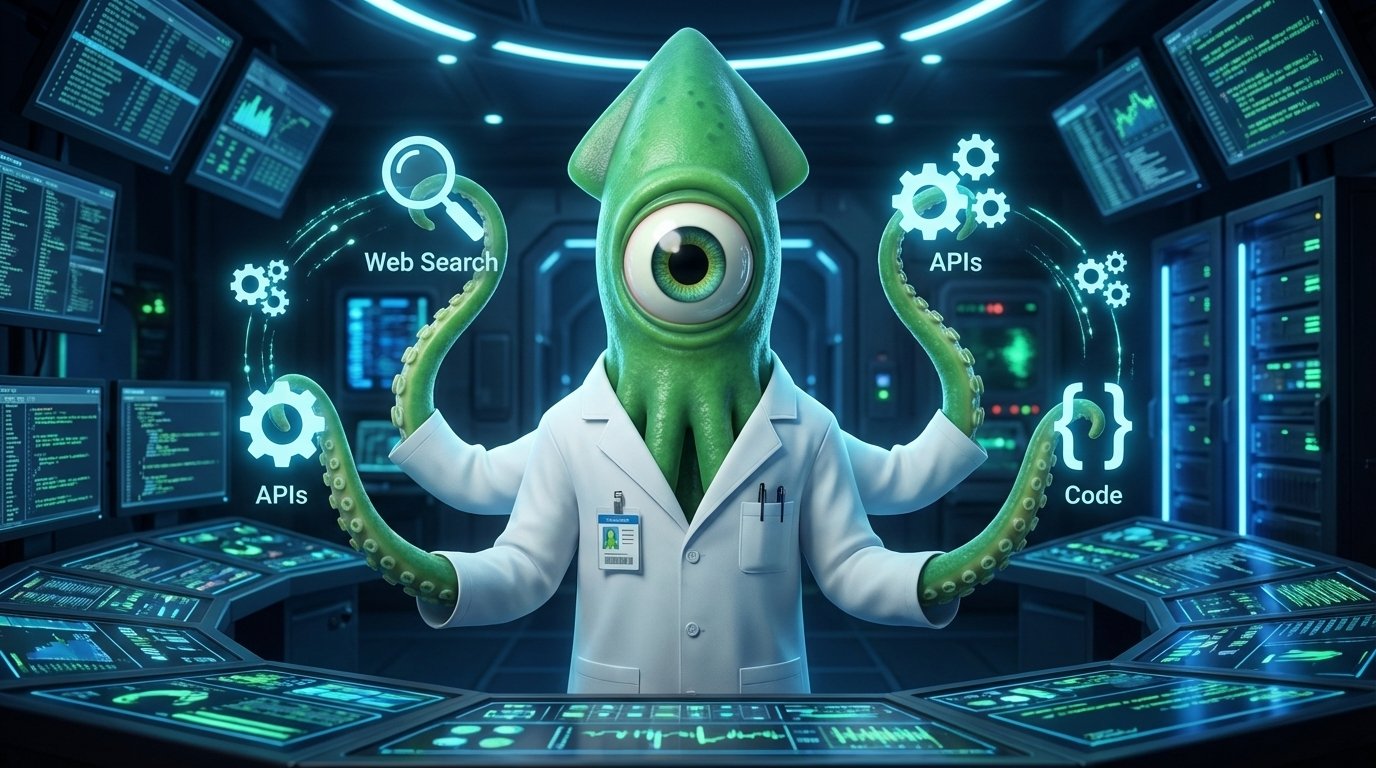
Adaptation of Agentic AI matters because agents must generalize beyond tidy demos. Agentic AI refers to systems that plan, call tools, and carry out multi-step tasks autonomously. In controlled demos, these agents chain together web searches, code execution, and API calls to solve crisp examples; however, when deployed in the wild, they face noisy inputs, changing APIs, and ambiguous objectives that break assumptions and reveal brittle behavior.
Therefore, researchers study adaptation paradigms such as agent adaptation versus tool adaptation and tool execution versus agent output, because these formal distinctions guide whether we train the agent, the tools, or both, and thus determine which learning signals, reward definitions, and verification steps are practical at scale and therefore impact reliability, safety, and user trust.
Like a navigator who reads a map but never updates it, an agent that cannot adapt fails when terrain shifts.

Adaptation of Agentic AI: The Four Paradigms
The Adaptation of Agentic AI framework defines four concrete adaptation paradigms. These paradigms arise by crossing two binary choices. The first choice is whether we adapt the agent or the tools. The second choice is whether learning signals come from tool execution or from the agent final output. Below we summarize each paradigm, give technical clarity, and cite representative examples.
A1 Tool Execution Signaled Agent Adaptation
- Description: The agent receives input x and emits a structured tool call a. Tools execute and return y. The learning objective O_tool measures tool success, such as execution correctness or retrieval quality.
- Training signal: Supervised imitation of successful tool trajectories or reinforcement learning that rewards verifiable tool outcomes. For example, DeepRetrieval trains a query reformulation policy using retrieval metrics like Recall and nDCG and a KL-regularized Proximal Policy Optimization objective.
- When to use: Use A1 when tool execution can be checked objectively. This supports robust agent adaptation and reliable tool execution.
A2 Agent Output Signaled Agent Adaptation
- Description: The agent is optimized directly on the final output o. The objective O_agent depends only on o.
- Limitation: Supervising only final output cannot reliably teach internal tool usage. Consequently, tools may remain undertrained for subtasks.
- Example context: End-to-end fine tuning of agents for user-visible metrics. This approach favors holistic behavior but it can obscure tool-level failures.
Adaptation of Agentic AI in Practice: Tool Adaptation Paradigms T1 and T2
T1 Agent-Agnostic Tool Adaptation
- Description: Freeze the main agent and optimize tools to be broadly reusable. The objective O_tool measures retrieval accuracy, ranking quality, simulation fidelity, or downstream task performance.
- Practical example: Improving a retriever so multiple agents can reuse it. This approach focuses on modularity and generalization across agents.
T2 Agent-Supervised Tool Adaptation
- Description: Keep the agent fixed and train tools using signals derived from the final agent outputs O_agent. A special case is memory as a T2 component. Memory acts as an external store that read and written by learned functions while the agent remains frozen.
- Representative systems: The s3 model trains a large searcher, while AgentFlow trains a planner to orchestrate mostly frozen Qwen2.5 modules using Flow GRPO. These systems illustrate practical T2 workflows.
Why these distinctions matter
- Transitioning between paradigms changes which components require labels, simulators, or verifiable checks. Therefore the choice affects sample efficiency, safety, and deployment cost.
- For a complete technical reference and the formal framework, see the arXiv paper: arXiv paper.
Related resources and further reading
Keywords
Adaptation of Agentic AI, agent adaptation, tool adaptation, tool execution, agent output, A1, A2, T1, T2, DeepRetrieval, s3, AgentFlow, memory module, retrieval augmented generation
| Paradigm Name | Optimization Focus | Learning Objective | Agent Status | Example Models or Tools | Key Metrics Used |
|---|---|---|---|---|---|
| A1 Tool Execution Signaled Agent Adaptation | Agent adaptation for tool calls | O_tool measures tool execution success | Agent adaptive | DeepRetrieval, query reformulators | Recall, nDCG, execution correctness |
| A2 Agent Output Signaled Agent Adaptation | End to end agent adaptation | O_agent depends on final output only | Agent adaptive | End to end fine tuning setups | Task accuracy, human preferences |
| T1 Agent Agnostic Tool Adaptation | Tool adaptation for reuse across agents | O_tool measures retrieval and simulator fidelity | Agent frozen | Retrievers, modular simulators | Retrieval accuracy, ranking quality |
| T2 Agent Supervised Tool Adaptation | Tool adaptation supervised by agent outputs | O_agent-derived signals train tools | Agent frozen | s3 searcher, AgentFlow planner, memory modules | Downstream task success, simulation fidelity |
Why agentic systems fail in real use, despite impressive demos
Agentic AI often shines in controlled demonstrations but degrades in production. Demos isolate target tasks, provide curated inputs, and remove noisy edge cases. In contrast, real environments present shifting distributions, ambiguous goals, and integration failures. Therefore systems that rely on brittle assumptions will fail when those assumptions break.
Key technical challenges
- Distribution shift and real world complexity. Models see narrow demo distributions. Consequently agents struggle with out of distribution inputs and adversarial phrasing. For example, a retrieval policy trained with clean queries underperforms on noisy user requests.
- Limitations of supervised fine tuning. Supervised fine tuning aligns models to labeled examples. However labels often omit tool trajectories and intermediate checks. As a result, tools remain undertrained and hidden failure modes persist. Moreover end to end signals can obscure which subcomponent caused an error.
- Tool execution fragility. Tools such as web search engines, APIs, and code execution environments return noisy, delayed, or schema changing outputs. Therefore an agent that trusts tool responses without verification will propagate errors. For instance, automated API changes can silently break planners.
- Memory reliability and consistency. Memory modules provide context and state. However stale or inconsistent memory can lead to hallucinations and incorrect actions. In T2 workflows, memory write and retrieval policies must be robust. Otherwise the frozen agent acts on wrong facts.
- Reasoning modules and protocol brittleness. Techniques like Chain of Thought and Reflexion improve reasoning in demos. Yet long reasoning traces increase context usage and latency. Consequently timing, token limits, and prompt fragility cause performance drops.
Practical implications and mitigation strategies
- Adopt verification loops and tool outcome checks whenever possible. Use objective signals to reward correct tool execution.
- Prefer modular evaluation and diagnostics. Therefore isolate failures to agent, planner, or tool components.
- Invest in robust memory systems and monitoring for drift. For example, train retrievers with diverse queries and simulate API changes.
Finally, systems such as DeepRetrieval, s3, and AgentFlow illustrate tradeoffs. DeepRetrieval uses reinforcement learning to optimize retrieval. However in production, retrieval metrics vary across users. Likewise s3 and AgentFlow show that freezing agents reduces instability. Nonetheless planners and memory modules still require careful adaptation and maintenance.
Conclusion
The Adaptation of Agentic AI framework condenses a complex design space into four actionable paradigms. It clarifies when to adapt agents or tools and whether to rely on tool execution or agent output as the learning signal. As a result, engineers can pick A1, A2, T1, or T2 with clearer expectations about verification, sample efficiency, and deployment risk. In practice, this distinction explains why many demo systems appear robust yet fail under real distribution shifts and integration drift.
Practically, teams must instrument tool execution, monitor memory consistency, and adopt modular evaluation pipelines. Therefore verifying tool outcomes and isolating failures matters. For example, DeepRetrieval shows how RL with retrieval metrics helps A1, while T2 patterns like memory and s3 illustrate the value of frozen-agent tool training. Consequently a rigorous adaptation strategy reduces brittle behavior and improves long term reliability.
EMP0 applies these lessons in production. EMP0 is a US based company that builds full stack, brand trained AI systems and automation solutions. EMP0 deploys models inside client infrastructure so enterprises retain control and security while scaling revenue. Moreover EMP0 ships ready made tools and proprietary AI utility tools to accelerate integration and lower operational risk. Learn more at EMP0 website and explore technical posts on the EMP0 blog.
Stay connected for updates and case studies on social channels: Twitter, Medium, and n8n. These resources provide implementation notes, demos, and engineering guidance to operationalize agentic systems safely.
Frequently Asked Questions (FAQs)
What is the Adaptation of Agentic AI framework?
The Adaptation of Agentic AI framework formalizes how to adapt agents and tools. It splits the design space along two axes. One axis contrasts agent adaptation with tool adaptation. The other axis contrasts learning from tool execution versus agent output. As a result, the framework yields four paradigms labeled A1, A2, T1, and T2. These paradigms guide which components to train, what signals to collect, and how to verify outcomes.
How do agent adaptation and tool adaptation differ in practice?
Agent adaptation trains the agent to produce better plans and tool calls. For example, A1 uses tool execution signals to reward correct calls. Conversely, tool adaptation improves external modules while freezing the agent. T1 makes tools broadly reusable. T2 trains tools under supervision from a fixed agent. Therefore tool adaptation emphasizes modularity and reuse.
Why do agentic systems impress in demos but fail in real deployments?
Demos use curated inputs and narrow tasks. Consequently, agents avoid noisy edge cases and integration failures. Real environments include API changes, ambiguous objectives, and distribution shift. Moreover, supervised fine tuning often hides tool trajectories, so internal failures remain undetected. As a result, agents break when assumptions no longer hold.
What mitigation strategies reduce real-world failures?
Adopt verification loops that check tool outcomes automatically. Use objective metrics such as Recall or nDCG for retrievers. Train memory modules robustly and monitor for drift. Simulate API changes and test browser automation under varied schemas. Additionally, instrument model context protocols and reasoning traces, like Chain of Thought and Reflexion, but limit trace length to control latency.
What should organizations consider before deploying agentic AI?
Assess data quality, governance, and infrastructure readiness first. Decide whether to deploy adaptive agents or frozen-agent tool stacks. Evaluate tool reliability for web search engines, APIs, and code execution environments. Finally, plan for ongoing monitoring, retriever retraining, and safe rollout to minimize operational risk.