

The Future of Industrial Efficiency: Humanoid Robotics and AI Automation Convergence
Last year, visionary investors poured 4.3 billion dollars into humanoid robotics companies. This capital represents a six fold increase in funding since 2018. Such an influx accelerates the rapid rise of Humanoid Robotics and AI Automation in global supply chains.
We are currently seeing the emergence of a sophisticated hybrid workforce. Additionally, this workforce brings physical agents and digital logic together into one ecosystem. Billions of dollars are betting that physical labor is about to get a lot cheaper. Every business that depends on it should be thinking about what comes next. Consequently, companies must rethink their future operational strategy.
The merging of hardware and software creates a powerful synergy for modern enterprises. Digital agents now process complex instructions while robotic frames handle heavy lifting. Because of these advances, the barrier between digital planning and physical execution disappears. When evaluating Why Prioritize AI Startup Innovation and Implementation Now?, the speed of innovation becomes clear.
Furthermore, companies now use synthetic data to train robots in virtual environments. This method significantly reduces the time required for deployment in industrial settings. Local inference allows these machines to react to their surroundings in real time. Therefore, the old reliance on static automation is quickly fading. As a result, organizations that adopt this technology early will gain a massive competitive advantage.
The Industrial Power of Humanoid Robotics and AI Automation
Modern factories are changing because of high performance hardware. Industrial automation is no longer limited to fixed arms on tracks. Companies now deploy mobile machines that walk and lift like people. Therefore, the physical world is becoming more accessible for machines. This shift allows for greater flexibility in complex warehouse tasks.
Agility Robotics is leading this charge with their Digit platform. Specifically, Digit moved more than 100,000 totes at a GXO Logistics facility in Georgia. This successful deployment shows that bipedal machines can handle repetitive labor. Moreover, the integration of Digit proves the viability of large scale fleet operations. Because these robots work alongside humans, safety protocols are critical.
Figure 02 recently completed an impressive pilot program at BMW. During this 11 month test, the robot logged over 1,250 hours of work. It successfully positioned sheet metal parts with extreme accuracy. As a result, the automotive industry sees a clear path to full automation. This pilot demonstrates that humanoid frames can handle delicate industrial materials.
Advanced sensors and motors drive these physical capabilities. For instance, Orbbec provides critical stereo vision technology for spatial awareness. This allows the robot to see its environment in three dimensions. Additionally, Maxon precision actuators enable smooth and fluid movements in robotic limbs. A humanoid robot is only as capable as its ability to perceive and navigate the physical world. Therefore, hardware quality remains the foundation of every successful machine.
Businesses are now adopting the Robots as a Service (RaaS) model to lower costs. This RaaS approach allows companies to rent hardware rather than buying it. Consequently, small and medium enterprises can access high end technology. You can learn more about What does Tech in 2026 mean for humanoid robotics? to understand these trends. Shipments of these units will likely reach 90,000 by 2026. This rapid growth suggests a fundamental change in how we view labor.
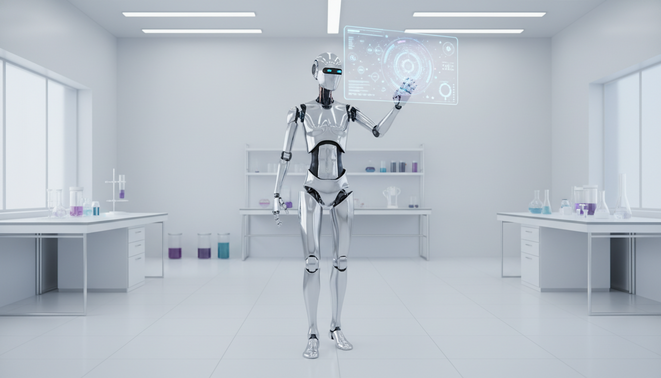
The Digital Brain: Local AI Agents and Computer Use Agents
Sophisticated software serves as the central nervous system for modern robots. This technology allows machines to interpret complex environments with high precision. Specifically, NVIDIA Isaac GR00T provides a comprehensive foundation for robot learning.
This platform enables humanoid systems to understand natural language instructions. Furthermore, it allows them to emulate human movements by watching videos. Consequently, robots become much more versatile in unpredictable factory settings.
The Holo3.1 35B A3B model represents a major breakthrough in computer use agents. This model recently achieved a performance score of 79.3 percent on AndroidWorld. In comparison, previous versions only reached 67 percent.
Holo3.1 is a major step toward our vision of universal computer use agents. These systems can operate across environments. They integrate into any agent stack. Also, they run wherever the workflow lives.
Because of this adaptability, these agents can manage digital tasks alongside physical ones. Speed is a critical factor for effective robot response times. Therefore, developers utilize NVFP4 quantization on the DGX Spark system.
This technical optimization reduced the average step time for AI agents to 3.3 seconds. Previously, these steps required 6.8 seconds to complete. Such improvements allow for much smoother interactions in real time.
Additionally, local inference ensures that data stays on the machine for better security and speed. Modern training also relies heavily on synthetic data generation. This process creates vast amounts of simulated experience for the AI.
As a result, robots can practice dangerous tasks without any risk to physical hardware. These advancements thrive within a collaborative community of developers. You can explore Why the Open Source AI Ecosystem Wins in 2026? to see how these models evolve. Open source contributions continue to accelerate the development of specialized local agents.
Current Applications of Humanoid Robotics and AI Automation
This table compares current real world applications for humanoid systems. Consequently, these machines already perform valuable tasks across different industries. Furthermore, you can see how specific models handle heavy workloads.
| Company/Robot Model | Industry Sector | Primary Use Case | Key Performance Metric/Fact |
|---|---|---|---|
| Agility Robotics Digit | Logistics and Warehousing | Autonomous tote movement | Over 100000 totes moved at GXO facility |
| Figure 02 | Automotive Manufacturing | Sheet metal part positioning | 1250 hours logged during BMW pilot |
| Orbbec Visual Systems | Robotics Components | Vision and spatial perception | 66 percent revenue growth in 2025 |
Ecosystem growth remains strong as component manufacturers expand their reach. Specifically, Orbbec reported 66 percent revenue growth in 2025 while launching new wrist cameras. Therefore, the supporting infrastructure for these robots is maturing rapidly. As a result, future models will have better vision and precision.
CONCLUSION: Navigating the New Industrial Frontier
The convergence of physical robotics and digital intelligence represents a massive shift. This transformation is much more than a simple technology story. Instead, it is a fundamental business story for every sector. Companies must adapt to these changes to remain competitive. As a result, the way we perceive labor and efficiency is changing forever.
Strategic leaders are already preparing for this hybrid future. Scott Baradell states that this movement is a business story. He suggests that if you run a company of any size, you should be paying attention. Consequently, ignoring these trends could lead to significant operational risks. Therefore, proactive planning is essential for long term success.
Employee Number Zero, LLC, also known as EMP0, offers the perfect solution. EMP0 is a United States based provider of full stack brand trained AI workers. These digital agents integrate seamlessly into your team. They allow your company to scale without adding high overhead costs. Moreover, they ensure that your brand voice remains consistent across all platforms.
These systems multiply revenue through specialized automation engines. For example, the Content Engine streamlines your marketing efforts significantly. Additionally, Sales Automation tools help your team close more deals with less effort. These tools work tirelessly to support your business goals every day. Because of this efficiency, your human employees can focus on high value creative tasks.
EMP0 also possesses deep expertise in n8n Discord trigger bots. They build robust and secure infrastructure for all their clients. This ensures that your data remains safe while your systems run smoothly. Furthermore, they provide the technical support needed for successful deployment. You can find more details and insights on the official blog.
If you want to stay updated on the latest trends, check the blog. You will find insightful articles at the EMP0 blog regularly. Also, follow the team on Twitter at @Emp0_com for real time updates. The future of industrial efficiency is already here. Finally, start your journey into AI automation with a trusted partner today.
Frequently Asked Questions (FAQs)
What is the current scale of investment in the humanoid robotics sector?
Last year, investors put 4.3 billion dollars into humanoid robot companies. This represents a significant six fold increase since 2018. Because of this massive funding, hardware and software development is moving at a record pace. Consequently, physical labor solutions are becoming more affordable for global enterprises.
What does Bank of America project for robot shipments in the near future?
Bank of America projects that global shipments will reach 90000 units in 2026. Furthermore, they expect this number to grow to 1.2 million units by 2030. This rapid growth suggests that humanoid robots will soon become common in industrial settings. As a result, companies need to prepare for this shift in workforce dynamics.
What are computer use agents and how do they function?
Computer use agents are advanced AI systems that can operate software just like a human does. For example, the Holo3.1 model can navigate complex digital environments across various platforms. These agents integrate into existing workflows to handle repetitive administrative tasks. Therefore, they bridge the gap between digital planning and physical execution.
How does quantization like NVFP4 improve AI performance?
Quantization reduces the precision of numbers used in AI models to speed up processing. Specifically, NVFP4 quantization on DGX Spark reduced average step time from 6.8 seconds to 3.3 seconds. This allows robots to react to their environment much faster than before. Thus, local inference becomes more efficient for real time applications.
How can EMP0 assist businesses in adopting these new automation tools?
EMP0 provides full stack and brand trained AI workers for diverse business needs. They offer secure infrastructure deployment for systems like Sales Automation and Content Engines. Additionally, their team has deep expertise in n8n Discord trigger bots for better communication. Therefore, businesses can scale their operations effectively without increasing their headcount.