The Blueprint for AI Agent Management and Performance Optimization
Many modern AI agents struggle with focus. As a result, they often mirror the executive function challenges found in ADHD brains. Specifically, these systems suffer from context loss and mental drift. They might even produce confabulation when they lose track of their goals.
This creates a significant hurdle for enterprises seeking reliable automation. Because of these traits, we must treat agents as more than just software. Effective AI Agent Management and Performance Optimization is now a vital business requirement. Companies need a structured approach to oversee autonomous units.
This strategy ensures that agents remain aligned with specific corporate objectives. Therefore, developers must build robust frameworks to monitor these digital workers. Without proper oversight, even the most advanced models will eventually fail. We must manage AI agents like a professional team.
Furthermore, every agent requires a defined role and clear guidelines. This methodology prevents the chaos of uncoordinated workflows. Consequently, organizations can scale their operations with much greater confidence. Understanding why autonomous AI agents and tool driven workflows are essential helps clarify this need. Managing these systems properly leads to sustainable business growth and better technical results.

Core Frameworks for AI Agent Management and Performance Optimization
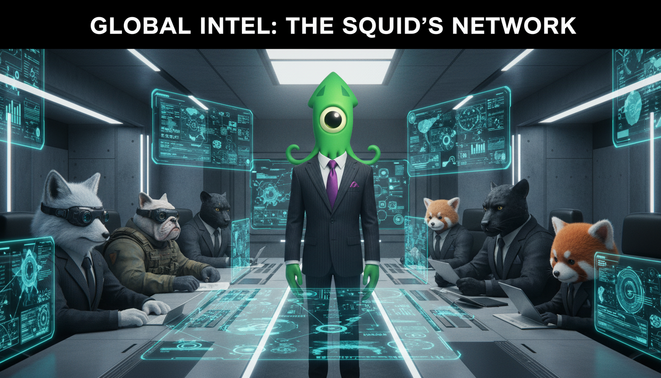
AI agents perform best when managed like a team with defined roles. Because of this, they need clear guidelines and a proper structure to succeed. This philosophy is central to AI Agent Management and Performance Optimization. When we treat agents as employees, we improve their reliability. Consequently, businesses can avoid the common pitfalls of unmanaged automation.
Alexander van Rossum highlights the role of cognitive offloading in modern workflows. This process involves moving mental tasks from humans to machines. However, this shift requires a high level of trust and precision. If the agent lacks structure, the offloading process fails. Therefore, developers must create frameworks that support consistent execution.
Denise Holt focuses on the necessity of vendor governance. Companies often use tools from various providers to build their agentic systems. Because of this, they must maintain strict oversight of all external components. Effective governance ensures that every part of the stack meets safety standards. Thus, organizations protect themselves from unexpected technical failures.
Structure also helps mitigate the risk of context loss in multi agent systems. Each agent should have a specific task within the larger project. For example, one agent might handle data retrieval while another focuses on analysis. By separating these duties, you reduce the chance of confusion. As a result, the entire system becomes much more reliable.
Implementing these frameworks is essential for long term success in AI. Managers must actively monitor performance to ensure goal alignment. Furthermore, they should update guidelines as the technology evolves. You should explore How to secure Agentic AI Governance and Operations (AgentOps)? to refine your strategy. Finally, remember that better management leads to better model results.
Benchmarking Model Performance for AI Optimization
Performance metrics are crucial for AI Agent Management and Performance Optimization. Different models offer unique benefits depending on the specific task. For example, TabPFN represents a major shift in tabular machine learning. The fit time is just 0.47 seconds. This is significantly faster than the tree based models since the system performs no actual training. Instead, it leverages a pretrained model to achieve results. Therefore, it saves time during the setup phase. However, the inference takes 2.21 seconds. Consequently, teams must balance speed and accuracy when choosing a model. Understanding these specific numbers helps organizations build the best architecture for their needs.
| Model Name | Accuracy (%) | Fit Time (seconds) | Inference Speed (seconds) |
|---|---|---|---|
| TabPFN | 98.8 | 0.47 | 2.21 |
| Random Forest | 95.5 | 9.56 | Not Provided |
| CatBoost | 96.7 | Not Provided | 0.0119 |
Technical Payoff: Scaling with AI Agent Management and Performance Optimization
The landscape of tabular data analysis is changing rapidly. TabPFN represents a significant shift in tabular machine learning. Traditional models often require extensive training phases. However, this new approach relies on in context learning. It uses a pretrained transformer to make predictions instantly. As a result, users skip the tedious hyperparameter tuning process. This efficiency is a core part of AI Agent Management and Performance Optimization.
Additionally, the introduction of TabPFN 2.5 further expands these capabilities. This version supports much larger datasets than its predecessor. It also maintains high accuracy across various synthetic datasets. Therefore, it competes directly with established methods like gradient boosting. Many developers find this flexibility very attractive for rapid prototyping.
A key innovation in this framework is the distillation approach. This method converts complex predictions into smaller neural network models. Because of this, the final system runs much faster. Smaller models require fewer computational resources. Consequently, organizations can deploy these solutions on edge devices. This process significantly lowers the cost of maintaining high performance agents.
Moreover, technical teams often prioritize inference speed for real time apps. While initial models might be slow, distillation solves this problem. This technical payoff directly impacts the bottom line. Efficient agents reduce server costs and improve user experience. You can see how How can AI Agent Development Tools cut latency 80%? provides more details on this.
Investing in these tools ensures long term scalability. Well managed agents produce more reliable data. For instance, they adapt better to changing business needs. High ROI becomes possible when technical excellence meets strategic oversight. Thus, mastering these new models is vital for any AI leader.
CONCLUSION
In summary, AI Agent Management and Performance Optimization is a complex journey. It requires a balance between technical skill and management strategy. Because agents can lose focus, we must treat them as a professional team. Managers should set clear goals and provide steady oversight. Therefore, businesses can avoid common errors like drift or context loss. Successful automation depends on this structured approach. Consequently, your organization can achieve its growth targets with much less friction.
EMP0, also known as Employee Number Zero LLC, is a leader in this field. They provide full stack and brand trained AI workers. These digital employees integrate perfectly into existing workflows. As a result, companies can scale their operations without hiring more staff. Their growth systems are designed for high performance and efficiency. Therefore, you get reliable results from every autonomous unit.
EMP0 offers several specialized tools for modern businesses. Their Content Engine automates the production of high quality material. Furthermore, their Sales Automation helps teams close more deals faster. They also provide Revenue Predictions to help with financial planning. Because these tools are optimized, they deliver immediate value. Thus, your business stays ahead of the competition.
Start your transformation today by visiting their main site at EMP0. You can find more insights at EMP0 Articles. Additionally, follow @Emp0_com on X for the latest updates. You can find Jay EMP0 on n8n to see their workflows in action. Finally, follow their profile at Jay EMP0 on Medium to learn more. Taking these steps will help you master AI Agent Management and Performance Optimization.
Frequently Asked Questions (FAQs)
Why do AI agents suffer from context loss during complex tasks?
AI agents often lose context because of limited token windows and the cognitive drift typical of large models. This phenomenon occurs when the system fails to maintain the original goal across multiple reasoning steps. Consequently, agents may produce irrelevant outputs or lose track of essential data points.
What is the main difference between TabPFN and traditional tree based models?
TabPFN uses a pretrained transformer architecture for in context learning rather than training from scratch. Traditional models like Random Forest require a dedicated fit phase for each new dataset. Because TabPFN skips this training, its fit time is nearly instantaneous at approximately 0.47 seconds.
How does the distillation approach improve agent performance?
Distillation converts large model predictions into smaller and more efficient neural networks. This process reduces the computational load required for every inference call. As a result, systems achieve much lower latency while maintaining high accuracy levels for production use.
Why is role based management important for autonomous AI agents?
Role based management provides agents with specific boundaries and clear operational guidelines. This structure prevents different units from interfering with each other in a multi agent environment. Therefore, it ensures that every agent stays focused on its unique contribution to the business objective.
How can organizations mitigate drift in multi agent workflows?
Organizations mitigate drift by implementing strict governance frameworks and continuous monitoring. Setting clear roles and using structured management tools keeps agents aligned with their intended tasks. Furthermore, regular performance audits help identify and correct deviations before they impact the final output.