
The Rise of Nordic AI Data Centers and Edge Compute in the Global Tech Race
The global landscape of technology is shifting rapidly toward the north. Nordic AI data centers and edge compute infrastructure are now at the center of this massive transformation. Therefore, the region is becoming the backbone of the next industrial revolution. In places like Borlänge, facilities that once produced paper now house powerful servers. Consequently, the raw material of the newspaper age is giving way to the raw material of intelligence.
Major tech giants like OpenAI are already moving into the Arctic Circle. Because they need vast amounts of energy, Microsoft is also investing heavily in these cold climates. As a result, the Nordic region currently sees the fastest capacity growth in all of Europe. This surge happens because the area offers abundant green power and a naturally cool climate.
Furthermore, companies like EcoDataCenter are leading this charge with sustainable facilities. This optimistic trend promises to revive rural economies through high performance technology. Because demand is rising, Mistral AI is also leasing local infrastructure. However, the Nordics remain a unique place for building gigafactory style compute clusters.
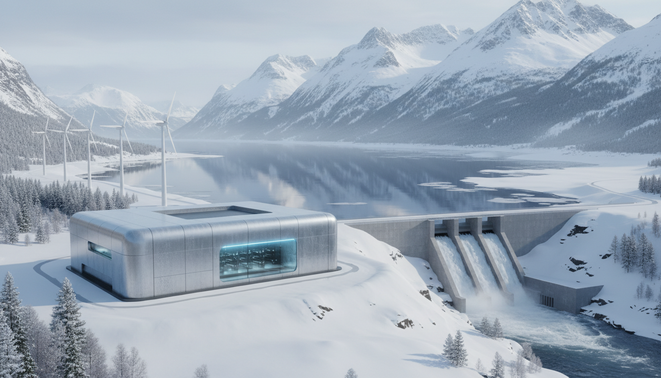
This visual demonstrates the strategic integration of a renewable energy Nordic data center within a cold climate. Arctic cooling provides natural thermal management for massive server clusters. Additionally green power infrastructure ensures sustainable operations for global technology leaders. Consequently these facilities reduce environmental impact while scaling capacity. Furthermore the natural environment provides a competitive edge.
The Strategic Value of Nordic AI Data Centers and Edge Compute
The Nordic region offers a unique combination of natural resources and infrastructure. Because AI requires massive energy, the abundance of hydropower and wind energy is vital. For example, Norway and Sweden provide low cost renewable electricity for large scale operations. Therefore, companies can meet strict sustainability targets while scaling their compute power. Philippe Sachs says, “Power is an increasingly precious commodity, and there’s a scarcity of it.” However, the Nordics provide a solution to this growing European energy crisis.
Growth and Infrastructure in the Arctic North
Capacity growth in the region is currently outpacing the rest of the continent. Consequently, major players like OpenAI and Microsoft (Microsoft) are securing large sites in the Arctic Circle. These locations benefit from a naturally cool climate that reduces cooling costs. Because the air is cold, facilities use less energy for thermal management. Companies like atNorth (atNorth) are also expanding rapidly across Sweden and Finland. Furthermore, Mistral AI (Mistral AI) is leasing over a billion dollars in infrastructure at the Borlänge facility.
High Performance and Nordic AI Data Centers and Edge Compute
Unlike central Europe, the Nordics have less competition for industrial power. This makes it the best place for building gigafactory style compute clusters. Additionally, land values near these sites are rising as developers seek more space. Business Finland (Business Finland) reports that the region is a unique proposition for land and energy. Because the infrastructure is modern, it supports high performance Python pipelines and edge computing. As a result, rural economies are seeing a revival through these massive tech investments. This shift ensures that Nordic AI data centers and edge compute will lead the future of global tech.
Comparing Key Nordic Data Center Investments
The following table summarizes the primary projects and investments within the Nordic region. Because energy demand is high, these sites prioritize green power sources. This infrastructure supports the expansion of Nordic AI data centers and edge compute capabilities across northern Europe.
| Location and Project | Key Companies | Investment and Scale | Power Source | Strategic Advantages |
|---|---|---|---|---|
| Borlänge Facility Sweden | Mistral and EcoDataCenter | 1.4 Billion Dollars for infrastructure | Hydropower and Wind energy | Low cooling costs and repurposed site |
| Arctic Circle Site Norway | Microsoft and OpenAI | 100,000 GPUs for AI training | Arctic Hydropower | Natural cooling and high density clusters |
| Finland Expansion Projects | atNorth and Nscale | Multiple site developments planned | Wind and Geothermal power | Land availability and green power grid |
Revitalizing Rural Economies through Nordic AI Data Centers and Edge Compute
The rise of Nordic AI data centers and edge compute is breathing new life into rural landscapes. Because developers need vast space and power, remote areas are seeing a massive influx of capital. For instance, forest land values near active sites are currently 4 to 9 times higher than standard forest plots. This economic shift provides a strong foundation for future local growth and infrastructure projects. Local governments are fielding more inquiries than ever before from global developers. The rapid evolution of this sector highlights the immense potential of the Nordic territory.
Consequently, neoclouds now drive the majority of capacity expansion across the region. These specialized providers focus on serving intensive AI workloads that require substantial GPU fleets. Furthermore, the presence of these facilities enables tech innovation at a massive scale. High performance Python pipelines are becoming a standard for data processing in these environments. This interest creates a virtuous cycle of investment and talent attraction.
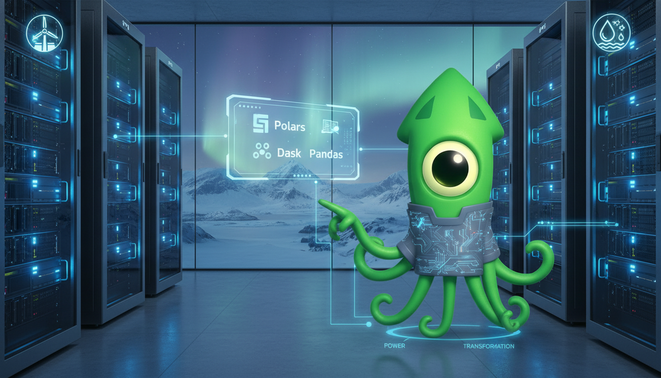
Tools like Polars and Dask thrive on the low latency and high throughput of these networks. As a result, even Pandas users benefit from the advanced edge compute capabilities found in the north. The transformation of old industrial sites into modern compute hubs represents a bright future for the entire continent. Therefore, Nordic AI data centers and edge compute will continue to define the next generation of global technology.
Conclusion: Future Horizons and Secure AI Solutions
The expansion of Nordic AI data centers and edge compute marks a pivotal moment for global technology. These regions provide the scale and sustainability required for the next era of innovation. Therefore, the combination of renewable energy and natural cooling makes the north an ideal hub. Additionally, this infrastructure ensures that compute power remains accessible and green as AI workloads grow.
Consequently, businesses can leverage these advancements to deploy robust automation systems. Furthermore, EMP0 is a provider based in the United States that specializes in AI and automation solutions. We help companies accelerate growth because we use systems powered by AI. Our team deploys these systems securely on client infrastructure.
Ready made tools from EMP0 include the Content Engine and Sales Automation. Because these tools are effective, they allow enterprises to maximize the value of modern AI infrastructure. For more insights, visit our blog at our blog. Also, you can find our latest technical updates through the EMP0 platform online.
Frequently Asked Questions (FAQs)
Why are Nordic AI data centers and edge compute sites growing so fast?
The region offers a cool climate and massive green energy. Consequently, companies reduce cooling costs and hit sustainability goals. Therefore, the area attracts the fastest capacity growth in Europe.
How does renewable energy benefit these facilities?
Abundant hydropower and wind energy provide a steady power supply. Because energy is cheap, operators can run massive GPU clusters efficiently. As a result, this green power supports large scale AI training.
Which companies lead investments in the Nordics?
Tech leaders like OpenAI and Microsoft (Microsoft) are building in the Arctic. Additionally, Mistral (Mistral) is leasing large facilities in Sweden. Furthermore, companies like atNorth (atNorth) continue to expand their reach.
What is the economic impact on rural Nordic areas?
Land values often rise by four to nine times near new sites. Consequently, these projects create jobs and revitalize local communities. Therefore, old industrial towns become modern technology hubs.
How does this infrastructure support edge compute?
Modern facilities allow for low latency processing near data sources. Because of this, developers use high performance pipelines with tools like Polars. As a result, Nordic AI data centers and edge compute drive global innovation.