
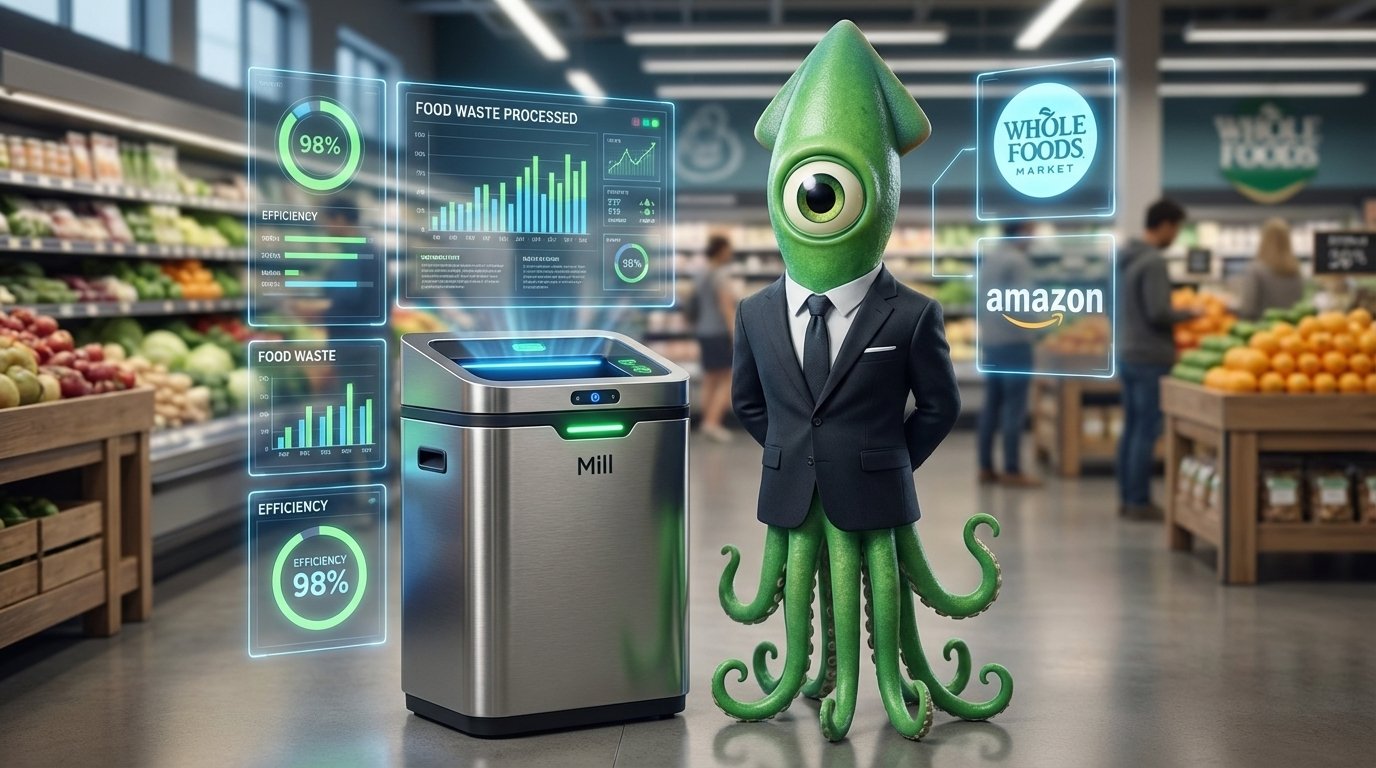
Mill’s commercial food waste bin deal with Amazon and Whole Foods: AI cuts shrink, speeds productization
Mill’s commercial food waste bin deal with Amazon and Whole Foods signals a bold shift toward AI-powered retail automation that promises real, measurable change. The smart bins use sensors and models to flag salvageable produce, and therefore reduce shrink at scale. As a result, stores can cut landfill fees and convert waste into feed or resources.
Moreover, real-time data helps teams understand what is wasted and why, which speeds productization of better inventory strategies. Mill’s approach blends consumer proof points with enterprise deployments, and this speeds adoption. Importantly, large language models let Mill iterate faster with fewer engineers than older efforts required.
Consequently, grocery leaders can test insights quickly and act on them within weeks. The outcome is strategic: lower costs, stronger margins, and more sustainable operations. Optimistically, these bins unlock new revenue streams while shrinking environmental impact.
For retailers, the choice becomes competitive advantage rather than compliance. Ultimately, the deal illustrates how sensors and AI can turn a perennial problem into a productized solution.
Mill’s commercial food waste bin deal with Amazon and Whole Foods
Mill’s commercial food waste bin deal with Amazon and Whole Foods begins a Whole Foods rollout in 2027. Commercial-scale units grind and dehydrate produce waste, reducing landfill fees and creating feed for egg producers. Mill’s sensors and AI flag salvageable items in real time, therefore cutting shrink and speeding restocking. Moreover, the bins collect data that shows what gets wasted and why, aiding cost control.
Technically, Mill pairs on-device sensors with cloud models and modern large language models. As a result, Mill delivered a commercial version faster with fewer engineers than past efforts. Leaders say, “Ultimately, our goal is not just to make their waste operations more efficient, but also to move upstream so they actually waste less food.” They add, “AI is a huge enabler.”
Key benefits
- Lower landfill and disposal costs
- Reduced shrink and higher margins
- Actionable waste analytics for buyers
- Byproducts and sustainability credits as revenue

Role of AI and LLMs in enhancing Mill’s food waste bins
Mill pairs on-device sensors with cloud models and large language models to power its commercial bins. Sensors read weight, color, and texture. Models decide if an item should still be on the shelf. As a result, teams catch salvageable produce before it becomes waste. Moreover, LLM-driven analytics accelerate pattern recognition across stores. Consequently, Mill iterates product features faster with fewer engineers. By contrast, Nest Cameras took dozens of engineers and more than a year to train similar recognition tasks.
“AI is a huge enabler.” This quote captures the shift in development speed and scope. Leaders add, “Ultimately, our goal is not just to make their waste operations more efficient, but also to move upstream so they actually waste less food.”
Key AI capabilities
- Real-time classification that reduces false discard rates
- Aggregated waste analytics that reveal category and timing patterns
- Rapid retraining and remote updates that speed productization
Together, these layers cut shrink, lower disposal costs, and turn waste data into strategic actions.
Comparative features: Mill’s smart food waste bin versus traditional waste management
| Feature | Mill’s smart food waste bin | Traditional waste management methods |
|---|---|---|
| Technology use | AI sensors, on-device vision, LLM-driven analytics for classification and decisioning | Manual sorting, human inspection, basic sensors or none |
| Cost implications | Reduces landfill fees, lowers shrink, creates byproduct value such as feed | High disposal fees, higher shrink, limited revenue recovery |
| Data collection and analytics | Real-time waste analytics, trend detection, inventory insights for buyers | Sparse or delayed data, limited traceability and insights |
| Environmental impact | Grinds and dehydrates waste, reduces landfill, enables circular uses | Mostly landfill or compost, higher emissions and lost value |
| Speed to productization | Fast iteration with fewer engineers due to LLMs and cloud updates | Slower R&D cycles, more manual training and longer deployments |
Conclusion: Mill’s commercial food waste bin deal with Amazon and Whole Foods as a strategic advance
Mill’s commercial food waste bin deal with Amazon and Whole Foods marks a strategic advance in retail automation and sustainability. The rollout blends AI sensors, on-device models, and LLM-driven analytics to cut shrink and lower disposal costs. Therefore retailers gain operational savings and richer waste insights. Leaders note, “Ultimately, our goal is not just to make their waste operations more efficient, but also to move upstream so they actually waste less food.” Moreover the tech turns byproducts into circular value streams like feed for egg producers.
EMP0 mirrors this innovation. Our AI-powered growth systems automate sales and marketing while keeping data under client infrastructure. Consequently clients boost revenue, reduce operational friction, and scale securely. EMP0 helps teams productize insights rapidly, just as Mill productizes waste data for buyers. As a result, systems that embed AI deliver both margin improvement and sustainability gains.
For more about EMP0 and our approach see Website: emp0.com Blog: articles.emp0.com Twitter/X: @Emp0_com Medium: medium.com/@jharilela n8n: n8n.io/creators/jay-emp0
Adopters can expect measurable ROI within months and improved customer satisfaction scores. Contact EMP0 today.
Frequently Asked Questions (FAQs)
What is Mill’s commercial food waste bin deal with Amazon and Whole Foods?
Mill will supply commercial scale food waste bins to Whole Foods, starting a store rollout in 2027. The bins grind and dehydrate produce waste. Moreover, Whole Foods will use data to adjust ordering and promotions. They also collect sensor and analytics data to reduce shrink and landfill fees.
How does AI powered retail automation work in these bins?
On device sensors capture weight, color, and texture. Cloud models, including LLM enhanced analytics, classify items and flag salvageable produce. Therefore stores recover saleable items and improve inventory rules. This reduces false positives and daily waste volume by category.
What are the main benefits for retailers?
Retailers lower disposal costs, cut shrink, and gain actionable waste insights. Moreover they can turn byproducts into feed or other value streams. As a result margins improve and sustainability targets progress. They also improve compliance and reporting for sustainability programs.
How fast did Mill productize this compared to older efforts?
Advances in LLMs let Mill iterate faster with fewer engineers. By contrast, Nest Cameras required dozens of engineers and more than a year to train similar recognition tasks. Consequently Mill shortened R D time. Faster iterations also reduce deployment costs and speed ROI.
Can other organizations adopt similar systems?
Yes. Mill plans municipal offerings, and EMP0 builds AI powered growth systems for sales and marketing. EMP0 helps clients secure data and scale automation under their infrastructure. For pilot timelines contact Mill, Whole Foods, or EMP0 for updates.