

Introduction
Agent-driven interfaces and multi-agent AI systems are reshaping how software and humans interact. For example, Google’s open A2UI specification and the automation platform n8n act as pioneering examples of this shift. These systems let intelligent agents produce structured UI descriptions instead of raw HTML. As a result, clients render native widgets from declarative JSON, improving portability and security.
This introduction will show why these approaches matter now. First, they reduce UI injection risk because the UI is data and not executable code. Second, they make LLM friendly interfaces because agents can describe components and data models. Finally, they enable multi-agent workflows where specialized agents coordinate tasks, increasing reliability and scalability.
Therefore, the article walks through the technical design, security tradeoffs, and developer workflows. You will also find practical examples and tools to experiment with A2UI and n8n. By the end, you will understand how agent-driven design powers modern automation and multi-agent collaboration.
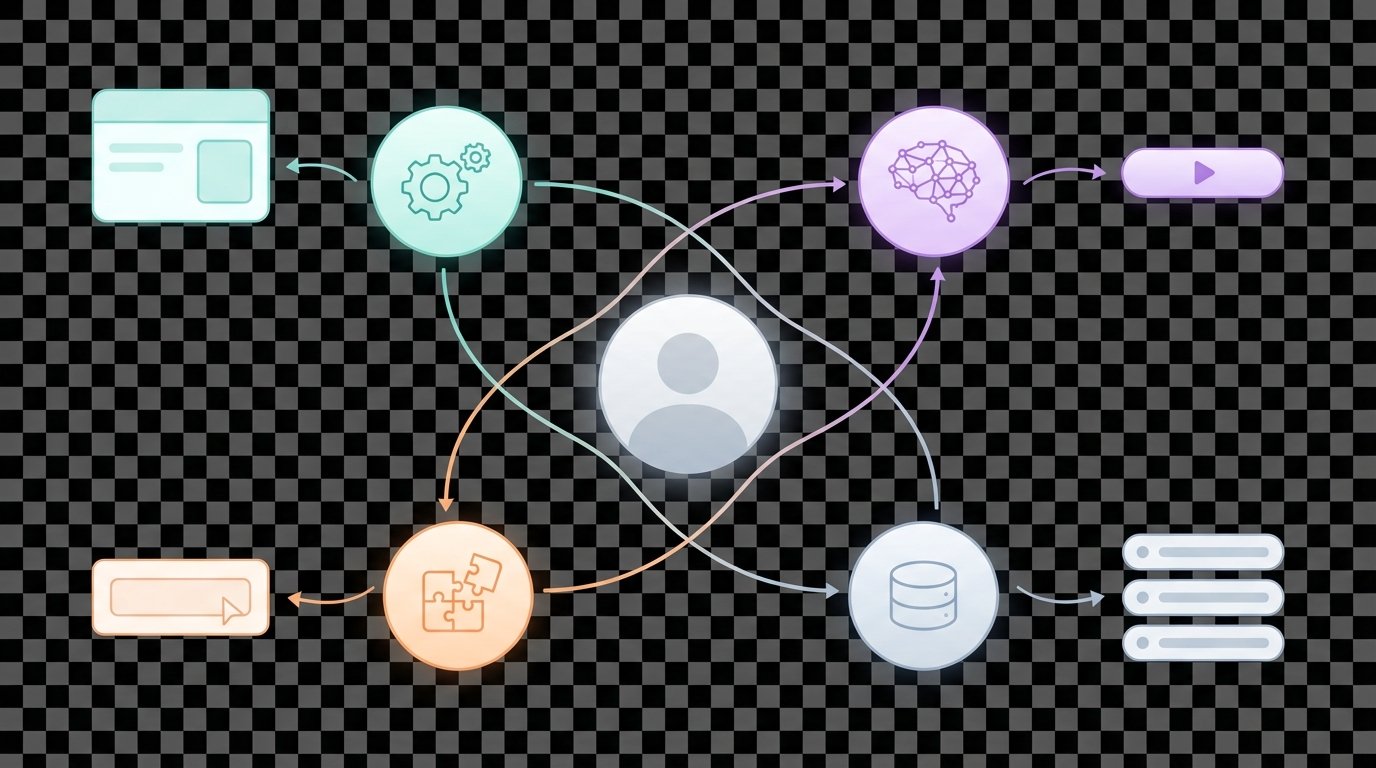
What is A2UI and why it matters
A2UI stands for Agent to User Interface. It is an open standard and set of libraries that lets agents describe user interfaces as structured data. Because agents output a declarative JSON payload, clients can render native widgets in a secure way. For example, Google maintains the A2UI codebase on GitHub at GitHub A2UI and the project uses a permissive Apache 2.0 license at Apache License 2.0.
A2UI changes the UI contract. Instead of returning HTML or executable code, an agent returns a JSON description of components and a data model. As a result, front ends map components to native renderers such as Angular, Flutter, React, web components, or SwiftUI. Therefore, developers gain portability and consistency across platforms.
Agent-driven interfaces and multi-agent AI systems: core features
A2UI fits naturally into Agent-driven interfaces and multi-agent AI systems. First, it separates generation, transport, and rendering into a clear pipeline. Second, it favors a safe declarative data format. Third, it pairs well with orchestration tools like n8n for multi-agent workflows. See n8n for a practical automation platform that complements agent pipelines.
Key technical features
- Declarative JSON payloads that describe components and a data model, not executable code
- Trusted catalog of components to reduce UI injection and malicious rendering risks
- Transport agnostic architecture compatible with A2A and AG UI protocols
- Client-side mapping to native widgets across frameworks such as Angular, Flutter, React, and SwiftUI
- Streaming-friendly format for progressive rendering and better user experience
- Pipeline separation so agents, transport layers, and renderers evolve independently
Benefits for developers and products
- Improved security because UI is data instead of executable scripts, which lowers injection attack surface
- LLM friendliness since models can output structured component trees and data schemas directly
- Cross-platform portability that reduces duplicate UI code and speeds iteration
- Better UX because agents can return structured forms instead of long instructions, for example date, time, and submit fields
- Easier auditing and testing due to declarative schemas and a trusted component catalog
In short, A2UI provides a practical foundation for agent-first applications. It blends security, developer ergonomics, and multi-agent coordination. Therefore, teams building agent-driven products gain a safer and more portable way to let AI drive interfaces.
| Metric | Multi-agent systems | Single-agent systems | Notes |
|---|---|---|---|
| Relative performance | +90.2% (higher task success) | Baseline | Anthropic internal tests showed multi-agent outperformance |
| Token usage | 15× more tokens | 1× (baseline) | Higher token consumption drives much of the gain |
| Token influence on performance | Explains ~80% of differences | N/A | Token usage correlated strongly with performance |
| Reliability & robustness | Higher due to specialization and redundancy | Lower; single point of failure | Multi-agent consensus improves outcomes |
| Scalability | Better at complex workflows; parallelism | Easier to scale vertically but limited | Agents can specialize and parallelize subtasks |
| Latency and cost | Often higher latency and compute cost | Lower latency and cost | Tradeoff between accuracy and efficiency |
| Coordination overhead | High; needs orchestration and protocols | Low; simpler control flow | Requires tooling like n8n, orchestration layers |
| Implementation complexity | Higher engineering complexity | Lower complexity | More components to design, test and monitor |
| Best use cases | Complex reasoning, long workflows, research | Simple tasks, low-cost real-time apps | Choose based on requirements and budget |
n8n in agent-driven workflows
n8n is an open automation platform that connects APIs, services, and custom code using visual workflows. Because it supports HTTP, webhooks, and custom nodes, n8n integrates cleanly with multi-agent systems. Agents can trigger workflows, call external services, and coordinate multi-step pipelines through n8n nodes.
Agent-driven interfaces and multi-agent AI systems: how n8n helps
n8n plays several roles in agent-driven systems. First, it acts as an orchestrator that sequences agent tasks. Second, it translates agent outputs into API calls, database writes, or UI events. Third, it provides developer-friendly debugging and monitoring for complex flows. For example, agents that produce A2UI JSON payloads can send those payloads to an n8n workflow to render a form, persist user choices, or call downstream services.
Key integration points
- Webhooks for real-time agent triggers and streaming data
- HTTP request nodes to call LLMs, vector databases, or custom agent endpoints
- Custom nodes to implement domain-specific logic or security checks
- Credential management for secure access to services and APIs
Community and ecosystem
n8n has a vibrant open-source community and a marketplace of nodes at n8n.io where contributors share integrations. The GitHub repository GitHub n8n offers source code and examples. Additionally, the n8n docs at n8n Documentation provide guides for building automation that complements agent orchestration.
Why n8n matters for multi-agent systems
- Lowers coordination overhead by providing visual orchestration and reusable workflow components
- Enables safe integration of A2UI outputs into backend processes and UIs
- Accelerates prototyping of multi-agent interactions with drag-and-drop workflow design
- Fosters a community-driven ecosystem of nodes and integrations to extend agent capabilities
In practice, teams use n8n to glue agents together, manage credentials and data flows, and simplify deployment. Therefore, n8n amplifies the value of agent-driven interfaces and multi-agent AI systems by making orchestration accessible to developers and operations teams.
Conclusion
Agent-driven interfaces and multi-agent AI systems are transforming modern AI applications. They improve UI security by treating interfaces as data rather than executable code. As a result, teams reduce UI injection risk and simplify audits.
These approaches increase portability and developer productivity. Because agents output declarative JSON, front ends render native components across platforms. Therefore, teams reuse logic and ship interfaces faster while maintaining consistency.
Multi-agent designs also boost performance for complex tasks. Studies show multi-agent systems outperform single agents by large margins, though they use more tokens and compute. However, the tradeoff often favors accuracy and reliability for mission critical workflows.
EMP0 is a US-based AI and automation company using these technologies. EMP0 builds ready-made tools and proprietary AI solutions for sales and marketing automation. To learn more, visit EMP0’s official site and explore our blog at EMP0 Articles.
Ready to prototype an agent-driven workflow? Contact EMP0 through the site and demo our automation toolset.
Frequently Asked Questions
What are agent-driven interfaces and multi-agent AI systems?
Agent-driven interfaces and multi-agent AI systems let intelligent agents produce structured UI descriptions. Agents output A2UI style JSON describing components and data models. As a result, clients render native widgets across platforms. This approach improves clarity and machine readability.
How does A2UI improve security and portability?
A2UI uses declarative JSON rather than executable code. Therefore the UI surface prevents many injection attacks. In addition, a trusted component catalog enforces safe rendering. As a result, teams port the same UI across web and native apps easily.
When should I choose multi-agent systems over a single agent?
Choose multi-agent when tasks require specialization, parallelism, or robust consensus. Multi-agent systems raise accuracy and reliability. However they consume more tokens and compute. Therefore evaluate cost against performance needs.
How does n8n fit into multi-agent workflows?
n8n provides visual orchestration for agent tasks. It handles webhooks, HTTP calls, and custom nodes. As a result, teams glue agents, manage credentials, and monitor flows without heavy code. The community offers many prebuilt integrations.
How do companies like EMP0 implement these technologies?
EMP0 builds automation for sales and marketing using agent-driven designs. They combine A2UI style payloads with n8n orchestration. Consequently they deliver ready made tools and proprietary AI models for faster deployment.