

An actionable software test plan saves time and money by preventing rework and catching defects earlier. Because teams document scope, approach, and responsibilities, they avoid duplicated effort. A software test plan is a roadmap for validating an application’s quality and readiness. It outlines objectives, scope, environments, test data, risks, and responsibilities. Therefore, the plan guides testers, developers, and product owners during each release.
When teams align on a clear plan, testing becomes faster and more predictable. However, a plan must remain flexible and evolve with Agile iterations. This article will show practical steps to create test plans that scale with your project. You will learn how to define entry and exit criteria, prioritize risks, and integrate automation. As a result, you will reduce costly bugs in production and speed delivery.
Also, you will see examples that balance manual testing and automation for efficiency. We will cover cross-browser, mobile, and CI pipeline considerations so testing stays reliable. Furthermore, you will find templates and checklists to speed plan creation. Ready to build a test plan that saves time and cuts costs? Let’s begin.
Key Components of a software test plan
A strong software test plan lists what will be tested and how. Therefore, teams reduce surprises and speed execution. Below are the essential components you must include.
software test plan: Test objectives
Clear test objectives state success criteria and priorities. For example:
- Verify critical workflows work end to end
- Validate performance under expected load
- Confirm security controls prevent common attacks
- Support User Acceptance Testing and release decisions
“A test plan documents how quality will be validated for a given project or release.” Use this statement to align stakeholders.
software test plan: Test scope
Define what is in scope and what is out of scope. This prevents scope creep and rework. Include:
- Features and modules to test
- Integrations and third party services
- Excluded areas and known limitations
software test plan: Test environments
List environments and configurations required for testing. Include browsers, devices, and OS versions. Also cover CI and staging pipelines. For automation guidance see Selenium docs.
software test plan: Entry and exit criteria
Entry criteria determine when testing starts. Exit criteria decide when testing stops. Typical examples include:
- Entry: feature branch merged, environment green, test data seeded
- Exit: all critical defects fixed or mitigated, test execution complete, test summary approved
software test plan: Test data and responsibilities
Specify test data needs and ownership. Also assign responsibilities clearly. Use bullets for accountability:
- Test data: anonymized production datasets, synthetic data, edge cases
- Roles: QA lead, test engineers, developers, product owner, release manager
In addition, document risk assessment, test deliverables, and automation strategy. Because automation reduces manual effort, link to automation resources like Mabl Alternatives for options. Also consider collaboration changes driven by AI features at AI Embedded Collaboration. Finally, align planning with broader technology strategy at Technology Leadership.
Related keywords: test objectives, test scope, test environments, test data, risk assessment, CI pipelines, test cases, test automation.
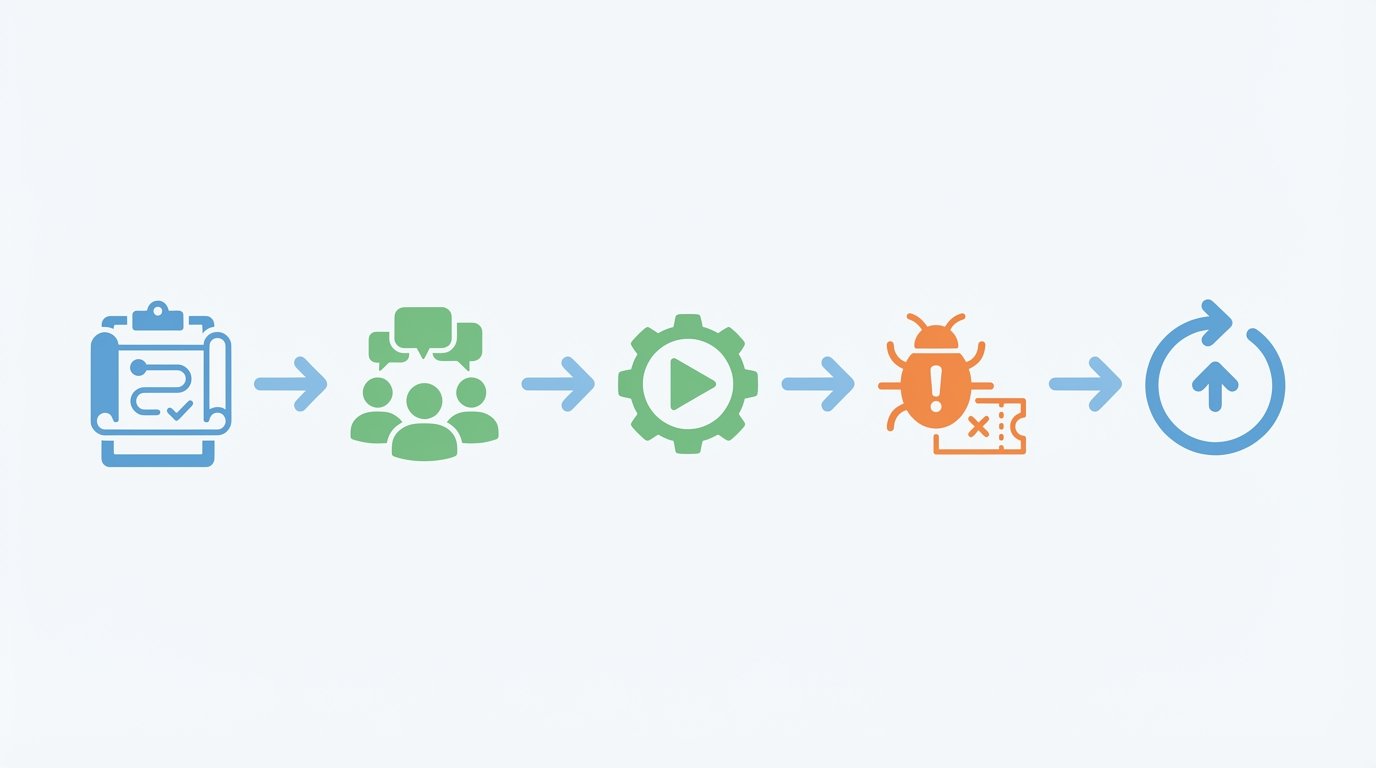
Waterfall vs Agile approaches in test planning
Choosing between Waterfall and Agile changes how teams build a test strategy. Waterfall and Agile differ in timing, iteration, and collaboration. Because each model affects risk and predictability, your test planning must match the development approach.
Waterfall: test planning characteristics
Waterfall favors upfront planning and detailed documentation. Therefore, teams create a comprehensive software test plan before testing starts. Key traits:
- Timing: planning happens early and once
- Iteration: limited during execution; changes are costly
- Collaboration: handoffs between teams at stage gates
- Risk handling: risks are identified early, but discovery can be late
Use Waterfall when requirements are stable and regulatory needs demand traceability.
Agile: test planning characteristics
Agile treats the test plan as a living artifact. As a result, teams iterate planning alongside development. Key traits:
- Timing: incremental planning each sprint
- Iteration: continuous updates to scope and tests
- Collaboration: cross functional teams plan together
- Risk handling: frequent feedback reduces unknowns early
Agile supports shift left testing and automation in CI pipelines. In addition, Agile encourages lightweight documentation and regular reviews.
Practical trade offs for test planning
- Predictability versus flexibility: Waterfall gives predictability, but Agile gives adaptability
- Documentation versus speed: Waterfall demands more documents; Agile focuses on working tests
- Team dynamics: Waterfall needs clear role separation; Agile needs tight collaboration
Therefore, pick the approach that fits product risk, team maturity, and release cadence. Adjust your test planning and test strategy accordingly.
Types of software test plans
| Type | Purpose | When to use | Key characteristics |
|---|---|---|---|
| Master test plan | Provides a project level testing roadmap across teams and releases. | Use for large projects or programs with multiple teams. | Project scope, mapping to test deliverables, roles and responsibilities, entry and exit criteria, risk register. |
| Level test plan | Defines strategy for a specific test level, such as integration, system, or UAT. | Use when a specific phase needs detailed coverage and traceability. | Detailed test cases and scenarios; environment and test data specifics; pass criteria; traceability to requirements. |
| Sprint or release test plan | Lightweight plan for an Agile sprint or a single release. | Use for short iterations, continuous delivery, or feature releases. | Iterative updates; prioritized test lists; automation and CI integration; quick sign off and feedback loops. |
Actionable software test plans save time and money by improving coordination, communication, and continuous improvement. When teams document objectives and responsibilities, they reduce duplicated effort and cut rework. As a result, releases become more predictable and less costly. Clear entry and exit criteria speed decision making, and consistent test environments reduce flaky results.
Furthermore, a living test plan encourages continuous improvement. Teams can iterate on automation, CI pipelines, and defect tracking. Therefore, testing moves from a gate to a growth enabler. Better collaboration between QA, developers, and product owners shortens feedback loops. Consequently, organizations catch defects earlier and avoid expensive fixes in production.
EMP0 helps businesses automate and optimize testing and sales and marketing processes with AI powered growth systems. With EMP0, teams can integrate test workflows, automate repetitive tasks, and scale validation across releases. Visit EMP0 for platform details and solutions. For practical guides and case studies, read the blog at EMP0 Articles.
If you want to reduce bugs and speed delivery, start by making your software test plan actionable. Then, iterate and automate where it helps most. Happy testing and continuous improvement!
Frequently Asked Questions about software test plans
What is a software test plan?
A software test plan is a structured document that describes how testing will be executed. It defines objectives, scope, environments, test data, and responsibilities. Because it documents the test strategy, teams use it to validate quality and readiness before release.
How does a software test plan save time and money?
A clear plan reduces duplicated effort and prevents late surprises. As a result, teams fix defects earlier when fixes cost less. In addition, defined entry and exit criteria speed release decisions. Finally, automation and CI integration lower manual test effort over time.
What are the key components of a software test plan?
Core components include:
- Test objectives and acceptance criteria
- Test scope and exclusions
- Test environments and configurations
- Entry and exit criteria
- Test data requirements
- Roles and responsibilities
- Risk assessment and mitigation
These elements help teams plan resources and prioritize tests.
How do Waterfall and Agile test planning differ?
Waterfall favors detailed upfront planning and documentation. Therefore, teams create a comprehensive plan before testing starts. However, Agile treats the test plan as a living artifact. As a result, planning happens iteratively each sprint with frequent updates. Choose the approach that fits team maturity and release cadence.
How can automation improve test plans?
Automation increases test coverage and speeds execution. In addition, automated tests integrate with CI pipelines for continuous validation. However, automation requires upfront investment in tools and test data. Therefore, start by automating high value, repeatable tests and expand over time.
If you still have questions, review the earlier sections for practical checklists and templates. Also consider piloting a lightweight sprint test plan to measure time saved and defect reduction.