
3D-Native AI Models for Game Design
3D-native AI models for game design are poised to transform how teams build worlds and characters. Furthermore, they significantly speed up prototyping and let designers explore ideas faster than before. AI in gaming now moves beyond scripts and textures to full 3D scene generation.
This shift promises huge creative gains, because developers can iterate on characters, environments, and interactions in minutes. However, it also raises questions about job displacement and the need to label AI-made content. As a result, studios must adopt responsible pipelines while embracing game development innovation. In short, 3D-native models could rewrite player experiences and studio workflows within a single development cycle.
Already, companies such as Tencent and Riot Games use similar tools to prototype characters and scenes faster. Therefore, designers, producers, and players should pay attention to emerging tools and standards. Ultimately, thoughtful adoption will determine whether this technology elevates creativity or creates friction in production.
3D-native AI models for game design: what they are
3D-native AI models for game design are machine learning systems trained to produce three dimensional assets and environments directly. They output 3D models, meshes, textures, and interactive scenes. As a result, they differ from image-only or 2D generative models. These systems learn 3D vision, spatial layout, and physical consistency. For example, Tencent’s HunyuanWorld generates explorable 3D scenes from text or images. See the HunyuanWorld repository for details: HunyuanWorld Repository. Moreover, World Labs’ Marble builds persistent 3D worlds ready for export to game engines: Marble AI.
AI models in game design and 3D AI technology in gaming: why they matter
Game studios adopt 3D AI technology in gaming because it speeds up creative work and reduces repetitive tasks. Therefore, teams can prototype faster and test more play ideas. They can also scale content generation across levels and characters. For instance, Riot Games uses Tencent’s 3D-native tools to prototype Valorant characters in minutes rather than weeks. For background reading, Wired covered how these models reshape game workflows: Wired Article.
Key benefits
- Improved realism and spatial coherence because models learn 3D geometry and lighting
- Faster asset creation and iteration therefore teams ship prototypes sooner
- Smarter NPC behavior through simulated physics and scene-aware decision making
- Consistent interactive scenes that persist across sessions, aiding level design
- Lower barrier to entry for indie developers because exportable meshes simplify pipelines
Related concepts and keywords
3D models, 3D objects, 3D meshes, interactive scenes, 3D vision, AR, VR, game content generation, rapid prototyping. Additionally, these models raise practical issues. For example, studios must consider labeling AI made content and potential job displacement. However, when combined with responsible pipelines, 3D-native AI models can unlock new forms of player experience and creative expression.
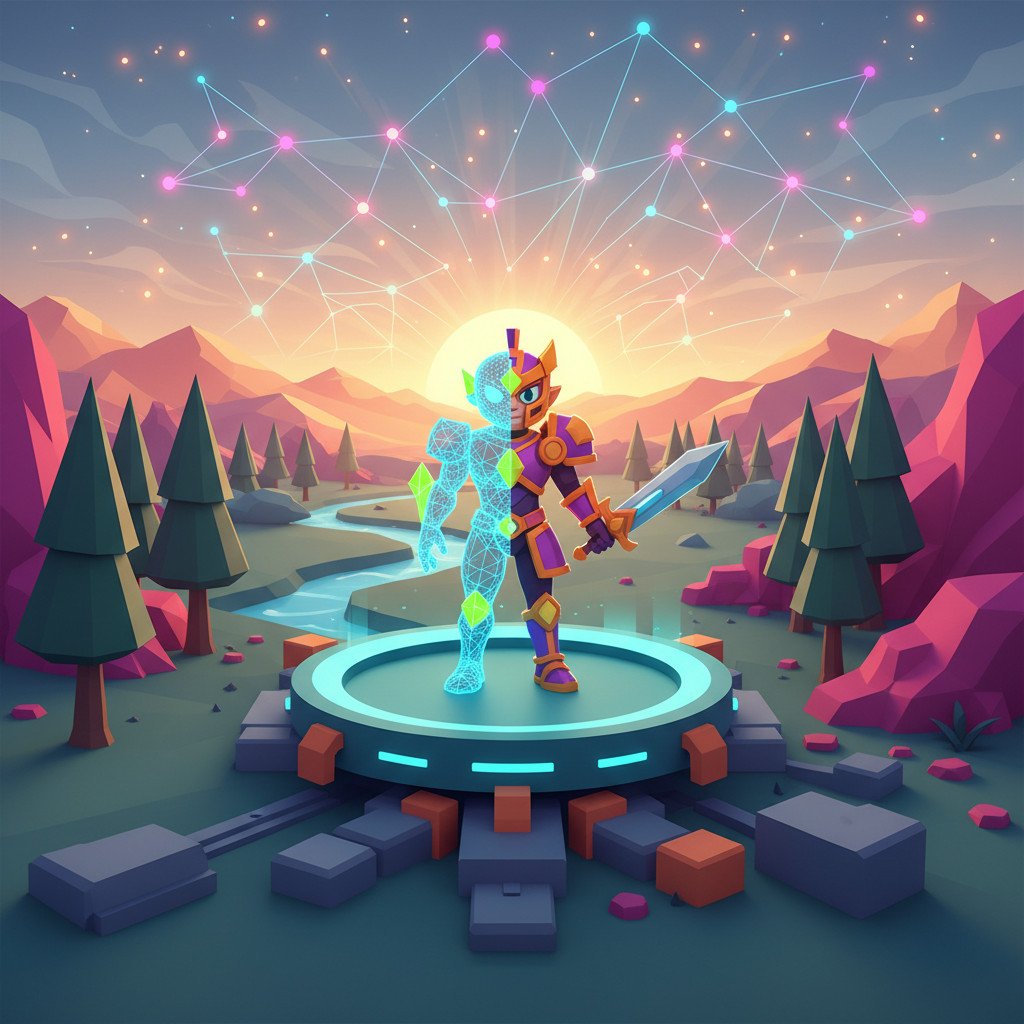
Comparison: Traditional AI models versus 3D-native AI models for game design
| Category | Traditional AI models | 3D-native AI models | Practical outcome |
|---|---|---|---|
| Asset creation time | Days to weeks; manual modeling and cleanup | Minutes to hours; automated 3D meshes and textures | Faster prototyping and more iterations |
| NPC intelligence | Rule-based or 2D-trained; limited spatial awareness | Scene-aware agents with physics-informed behaviors | Smarter and more believable NPCs |
| Integration ease | Requires conversion, retopology and asset tuning | Direct exportable meshes, scene graphs, engine-ready formats | Lower technical handoff and fewer pipeline bottlenecks |
| Realism and coherence | Texture and lighting inconsistencies across assets | Physically consistent geometry, lighting and materials | Higher visual fidelity and player immersion |
| Development speed | Slow; iterative cycles take weeks | Rapid; text-to-3D and video-to-scene tools accelerate work | Shorter development cycles and faster QA |
| Cost efficiency and scalability | High per-asset cost; labor intensive | Lower marginal cost per asset at scale | Better ROI for large projects and frequent updates |
Evidence and case studies: real impact of 3D-native AI models for game design
Adoption of 3D-native AI models for game design moved quickly in 2025 and 2026. Major studios and startups tested these tools in production. As a result, teams reduced iteration time and experimented with new player experiences.
Tencent’s HunyuanWorld offers a clear case study. Wired reported that HunyuanWorld 1.0 can generate interactive scenes from text and images. The article also notes a later update that accepts video as input. For more detail see the Wired coverage: Wired Coverage and Tencent’s release notes archived on AIbase: AIbase Release Notes. Riot Games used these tools to prototype Valorant characters and scenes quickly. As Wired quotes the development team: “Previously you would need a month to design a character. Now you can just type in some text, and Hunyuan can give you four choices in 60 seconds.” This workflow cut design cycles dramatically, and therefore it changed how concept teams allocate time.
World Labs’ Marble shows another path. Marble produces persistent and consistent 3D scenes that port into engines. Consequently, level designers can skip many manual retopology steps and focus on gameplay. Learn more on Marble’s site: Marble AI.
Academic and research projects also support the trend. For example, Stanford’s 3D Generalist prototypes used language models to plan scene edits. Meanwhile, Google DeepMind’s SIMA 2 highlights agent interaction inside generated worlds. These projects demonstrate that research and industry converge on scene-aware AI.
Key findings and adoption insights
- Rapid prototyping gains: studios reported orders of magnitude faster concept cycles. Therefore teams test more gameplay ideas.
- Production readiness: models now output engine-ready meshes and scene graphs. As a result, pipelines require fewer manual conversion steps.
- Quality tradeoffs: generated assets still need artist polish, but base realism improved. Consequently, lead artists focus on refinement rather than base builds.
- Cost and scale: initial compute and tooling costs remain high. However, marginal cost per asset drops with scale, improving ROI for live services.
Industry voices reinforce these points. For example, researchers said, “There’s a real explosion of 3D vision research nowadays,” and engineers noted, “Outputting 3D meshes is your typical kind of bread and butter of game development.” These quotes capture both the excitement and the practical focus of modern teams.
Overall, case studies show strong early benefits. However, studios must invest in validation, labeling, and ethical pipelines. When they do, 3D-native AI models can become a reliable engine for creative and technical scale.
3D-native AI Models for Game Design
3D-native AI models for game design deliver clear benefits. They speed asset creation, boost realism, and enable smarter NPCs. As a result, studios iterate faster and explore more gameplay ideas.
Looking ahead, the potential is vast because these models scale content while improving coherence. However, teams must also manage risks such as job displacement and AI-made content labeling. Therefore, responsible tooling and validation pipelines will decide how broadly studios adopt this tech. In short, AI in gaming and game development innovation can both enhance creativity and require governance.
EMP0 (Employee Number Zero, LLC) stands ready to help businesses adopt these advances. EMP0 offers AI and automation solutions that streamline pipelines and unlock growth. Visit EMP0’s website for services and case studies: EMP0’s website. For technical articles and product notes, see EMP0’s blog. Also explore EMP0’s creator tools on n8n for integrations. Together, these resources show how AI expertise translates into practical wins. Finally, studios that combine 3D-native AI models with strong processes will likely lead the next wave of player experiences.
Frequently Asked Questions (FAQs)
What are 3D-native AI models for game design?
3D-native AI models for game design are systems that output three dimensional assets and scenes directly. Specifically, they generate 3D meshes, textures, and interactive environments. As a result, they differ from 2D image models and speed up game content generation.
What benefits do studios get from these models?
- Improved realism and consistent lighting because models learn 3D geometry and materials
- Faster asset creation so teams prototype and iterate quickly
- Smarter NPC behavior via scene-aware agents and physics-informed logic
- Greater scalability and cost efficiency for large live services
How do studios implement 3D-native AI models?
Start with a small pilot to test text-to-3D and video-to-scene tools. Then integrate exports into your engine and toolchain. Also set up human-in-the-loop review and labeling workflows. Finally, automate validation and asset porting to reduce handoffs.
What challenges should teams expect?
Teams face compute costs, quality gaps, and IP concerns. Additionally, AI-made content needs labeling and audit trails. Therefore, adopt governance, artist oversight, and ethical pipelines to reduce risk.
What will the future bring?
Expect tighter engine integrations and multi agent simulations. Moreover, video-to-3D pipelines and AR VR adoption will grow. As a result, game development innovation will accelerate while studios balance automation and human craft.